Promoting a Medical Services Website
Discover how to grow traffic to a medical clinic’s website fourfold in five months using a comprehensive digital marketing strategy for healthcare services.
Medical marketing is a field unlike any other. It comes with its own specialized vocabulary, complex and often expensive services, and fierce competition not just from other clinics but also from large healthcare portals. So what should a brand-new clinic with no established name, but with state-of-the-art equipment, highly qualified staff, and a genuine desire to build its own online brand, actually do? This article walks through a digital marketing strategy for a full-service medical clinic, drawing on real-world experience.

We’ve covered healthcare marketing before in our case study on promoting a medical equipment store.
Characteristics of Medical Center Websites
A typical medical center website is either:
- A site for a full-service clinic covering a wide range of specialties, from orthopedics to dentistry, or a site for a smaller, highly specialized medical center.
- Regarding geographic reach: the initial priority is local promotion within the city and the surrounding areas. Over time, the goal is to build the clinic’s reputation across Ukraine by attracting patients from other regions for complex procedures in priority specialties.
- On service pages, clinics typically post standard SEO-focused copy. Some include video testimonials about successful complex procedures in their top specialties.
Digital Marketing Goals for the Clinic
- Increase targeted regional traffic, starting with the city and surrounding area, while progressively building the clinic’s national brand recognition.
- Increase the number of appointment inquiries and service requests.
Healthcare Marketing: Niche Analysis
For a full-service medical clinic, competitor analysis should be conducted separately for each specialty, with priority specialties examined first.
In analyzing competitors, particular attention was paid to the following elements of their strategies:
- Traffic sources.
- Website structure, both for specialized clinics and for full-service clinics.
- Content on competitor service pages.
- Link-building strategies.
Traffic Sources for a Medical Website
Many regional clinics receive a solid share of referral traffic from major medical portals and regional forums.
Referral Traffic from Medical Portal Rankings
Medical portals offer clinic and doctor listings on their platforms (for example: medinfo.dp.ua, hnb.com.ua, and doc.ua), with listing costs varying considerably. These portals maintain targeted pages with clinic and doctor rankings that perform well in search results.
In addition, medical portals run paid search advertising to ensure that listings deliver measurable value for the clinics they feature. This makes it worthwhile for many healthcare providers and physicians to list on these portals and attract highly targeted patients.
Direct or Branded Traffic
Many medical centers generate significant branded traffic. For well-known clinics, this can represent a substantial share of total traffic. Typically, these are clinics that have been operating for years and are widely recognized, or clinics that actively invest in offline advertising to build brand awareness.
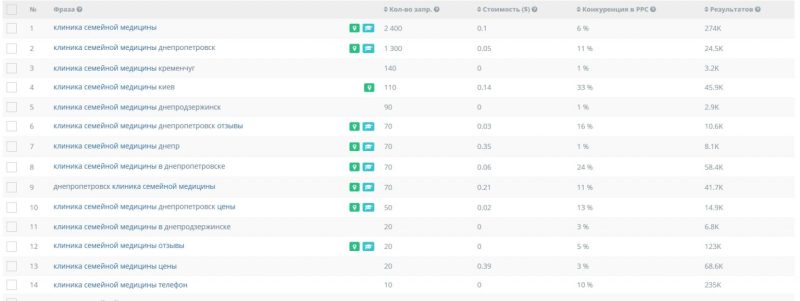
One example of a clinic with a highly developed brand is the “Family Medicine Clinic,” for which even a subset of branded search queries in Google shows considerable search volume.
Organic Search Traffic
Free organic traffic across different medical specialties is distributed between full-service medical centers and specialized clinics that have maximized their presence in a particular area.
Following Google’s medical algorithm update, it is especially important to focus on the depth of expertise and credibility of the content published on the site.
Paid Traffic + Remarketing
When planning a paid search strategy in the healthcare niche, it is critical to accurately identify user intent: is the person looking for treatment, or are they researching information?
In addition to standard search campaigns, remarketing should also be set up. It allows the clinic to re-engage users who previously visited the website, whether or not they completed a specific action.
Email marketing for a medical center allows you to reach different audience segments based on their interests and level of brand loyalty. This means applying different engagement strategies for each segment. Through the email channel, you can monitor service quality, promote special offers, and bring patients back for follow-up care. Particular attention can be given to VIP patients and those currently undergoing treatment. Email marketing helps sustain the clinic’s reputation and strengthen patient loyalty.
Content Considerations for a Medical Website
Medical services fall into the category of complex, and often high-cost, offerings. They require that potential patients trust both the clinic and its physicians as qualified professionals.
It’s important to remember: your target audience consists of people without a medical background. After reading the content on a clinic’s website, a visitor should clearly understand what a given procedure involves and feel confident enough to book an appointment.
When analyzing competitors, particular attention was paid to the following questions:
- What type of content does the competitor use on procedure pages?
- How thoroughly does the content describe the procedure?
- How easy is the content for patients to understand and absorb?
- Does the content include trust-building elements such as patient reviews, certificates, licenses, and physician names and photos?
As the analysis revealed, a number of clinics simply use SEO-oriented copy on their service pages, content that reads more like a Wikipedia article about the procedure than an actual description of what the clinic offers.

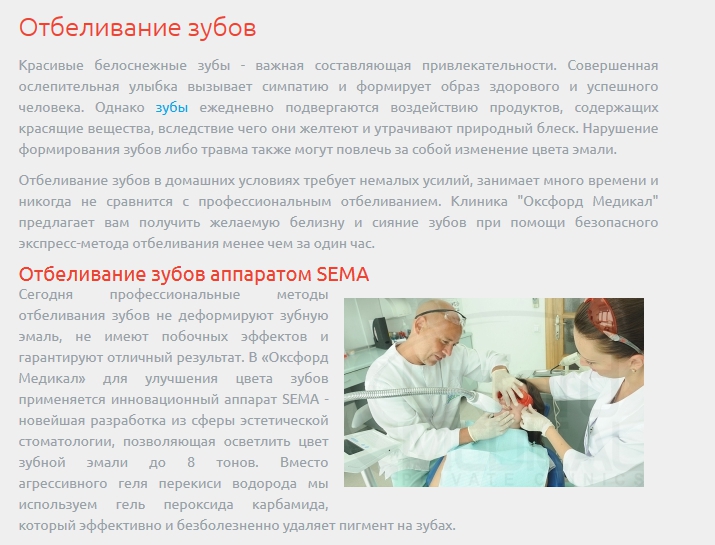
Other clinics, by contrast, use well-crafted procedure descriptions with conversion-oriented elements, covering the nuances of how each procedure is performed at that specific clinic, the equipment used, and the techniques applied. Only a small number of clinics include patient reviews on their service pages, which could substantially boost trust.
SEO Strategy for a Medical Clinic Website
Keyword Strategy and Website Architecture
For SEO promotion of medical services, conversion-driven search queries should be used across all specialty, physician, and service pages:
| Keyword Template | Example |
| {Procedure/operation name} + {city} | hysteroscopy Kyiv |
| Treatment + {condition} + {city} | varicose vein treatment Kharkiv |
| {Medical specialty / doctor} + {city} | gynecologist Dnipro |
| {Clinic specialty} + {city} | dentistry Odesa |
| {Doctor’s name} + reviews | Borys Todurov reviews |
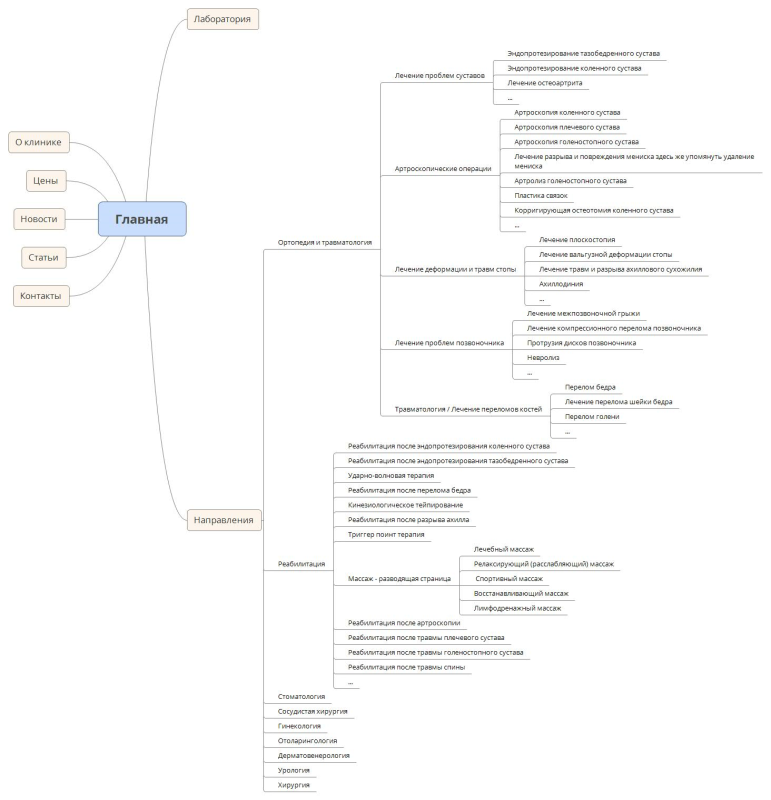
To improve conversion rates, the site structure should be reorganized to be more logical and easier for patients to navigate.
Content
Content should receive the highest level of attention. These pages represent the public face of your business, and the goal of healthcare marketing is not simply to drive traffic but to convert it into real appointment bookings. The purpose of every page on a medical website is to sell the service.
Service and department pages need to be rewritten and redesigned to provide in-depth, conversion-oriented descriptions of each clinic service.
It is also important to list at least a starting price range for each service, so that prospective patients can gauge what to expect.
The goal is to make every page genuinely useful, commercially effective, easy to read, and trust-inspiring.
This is an area that SEO specialists often overlook because it requires deep analysis of the target audience, their interests, and the competitive landscape.
Clinic owners are frequently put off by the cost of this type of content. There are several reasons for that:
- Medical content is expensive to produce in its own right, as it cannot be written by a general copywriter.
- It rarely fits within the typical word count of 1,500 to 2,000 characters.
- Finding a skilled copywriter who can write persuasive, conversion-oriented content on medical topics is genuinely difficult.
In practice, however, investing in this type of service page content pays off fully. It turns readers into patients and helps them understand why they should choose your clinic. That is why it is essential that SEO copywriting services are delivered by true professionals in the field.
Please note: The effectiveness and lead-generation potential of your content depend entirely on the coordinated work of an SEO specialist, a copywriter, and the clinic’s medical professionals. Each can evaluate the quality of their own contribution, but the final output depends on all three working together.
Link-Building SEO Strategy
Our objective is to build a natural backlink profile by using every available website that reaches your target audience.
Paid Search Advertising for a Medical Clinic
The majority of search queries will not lead to phone calls or appointment bookings. For paid search campaigns, it is essential to target highly specific queries, for example:
- Book an appointment with an ENT specialist.
- Gynecology clinic.
Geo-specific queries perform particularly well, for example:
- Laser corn removal in Dnipro.
Queries related to service pricing should not be overlooked either. This is why it is important to include a price list on service pages.
Address questions users are actively searching for, such as:
- Where to get the best laser hair removal.
- Laparoscopy cost.
- Kidney stone ultrasonic lithotripsy price.
Queries like these clearly indicate that the person is ready to see a doctor, rather than seeking home treatment options or general information about their condition.
Important: Give users exactly what they are looking for.
Ad Account Structure for a Medical Center
The account structure must be planned carefully. The simplest and most effective approach is to mirror the website’s structure.
Each ad must also link to the most relevant landing page. If a user is looking for peptic ulcer treatment, the ad should direct them to the page specifically dedicated to that service, not to the homepage or a general gastrointestinal conditions page.
Geo-Targeting
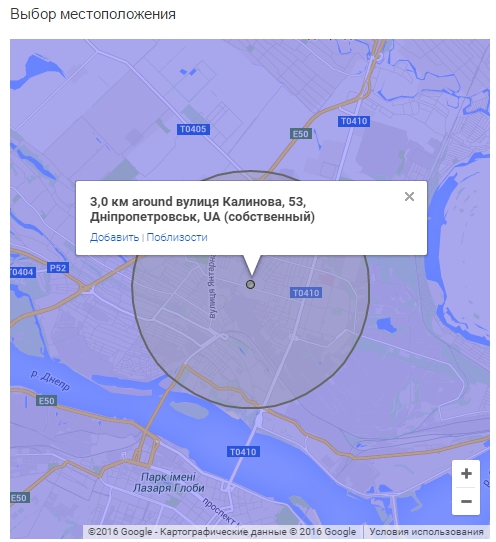
In many cases, patients look for a clinic that is as close to home or work as possible, especially for appointments, lab tests, or other routine medical services. This is particularly true in large cities where time is a premium. It is therefore worth using precise geographic targeting.
For example, if your clinic is located at 2 Abrykosova Street, setting a targeting radius of 5 km (adjusted based on your city’s characteristics) ensures your ads appear prominently to users in that area. It is also important to add the clinic’s address to your ad extensions.
Remarketing for Healthcare Websites
Remarketing allows you to re-engage users who have previously visited your website, regardless of whether they completed a specific action.
In the healthcare space, this tool is especially valuable. However, for it to deliver results, user segmentation must be carefully considered.
People who visit your website fall into distinct groups:
Those who booked an appointment: Collect these users into a separate list, segmented by the type of service they requested. This allows you to offer them complementary or follow-up services later. For example, if someone booked a full-body health checkup, you can offer them the same checkup at a discount a year later.
Those who did not book: Note which service page they visited and continue showing your offer for a defined number of days, based on the typical decision-making timeline for that service. Ad frequency should also be adjusted according to the nature of the patient’s need.
Those who booked a consultation before making a decision: For example, a patient who scheduled a consultation with a plastic surgeon about a specific procedure is unlikely to make a decision at that first appointment. You can be confident they are genuinely interested in the service — the goal is simply to encourage them to take the next step. Limit ad exposure for this group to the number of days typically needed to make a decision.
Email Marketing for a Medical Clinic
Build your subscriber list from multiple sources:
- Online appointment bookings from the website.
- “Ask a Doctor” inquiry forms.
- Blog subscription forms.
- Landing pages for promotions and special offers.
- White Papers (valuable content offered in exchange for a subscription).
- Social media subscriptions.
- Offline subscriptions (data collection at the clinic).
Each channel brings in a different audience segment with varying levels of interest and brand loyalty. Apply tailored engagement strategies to each segment.
For example, send White Paper subscribers a series of emails showcasing the clinic’s full range of capabilities and benefits. For users who inquired about a specific service, send targeted recommendations and patient reviews. For existing patients, focus on collecting testimonials.
Segmenting the patient database is the single most important condition for profitable email marketing, as well as for protecting the clinic’s reputation and patient loyalty.
Segment 1: Subscriber
Learn as much as possible about your subscribers. One of the first things to send is a survey email. Basic demographic details such as gender can often be inferred from a first name, so the survey can focus on age, location, number and ages of children, services of interest, preferred email topics, and desired frequency of communication. Offering preset response options makes the experience easier for recipients. The survey should be engaging and brief, with a bonus offered as an incentive for participation.
Create separate mailing lists segmented by gender, city, neighborhood, and services of interest. Exclude irrelevant segments when planning broadcast campaigns. Determine the subscriber’s nearest clinic location and reference it in their emails.
Segment 2: New Patient
Once a subscriber becomes a patient, record the appointment date, service category, and service name in your database. Use this information to create related offers and upselling opportunities.
Exclude from broadcast campaigns those whose conditions are incompatible with the services being promoted. For example, do not promote physiotherapy to oncology patients. Even when launching a campaign that seems broadly relevant, exclude anyone who recently used that same service. Pay close attention to any communications sent to VIP patients.
Segment 3: Returning Patients
Patients who are currently receiving ongoing treatment can be segmented by diagnosis, stage of recovery, and treating physician. Do not reference a patient’s condition explicitly in your emails, and do not interpret test results or clinical data in email communications. Preserve confidentiality at all times while using this information to inform your strategy. Segmenting by patient condition enables you to recommend the most relevant complementary services and share useful content about new technologies, equipment, and medical advances in their area of care.
Segment 4: Recovery
Always account for the stage of recovery. If a patient has overcome an illness, ensure they are no longer receiving emails related to that treatment. Redirect their personalized content toward rehabilitation and preventive care.
Invest seriously in your content strategy. Share valuable, expert information with your subscribers. Make use of video content. Craft newsletters that are engaging and visually appealing, while staying consistent with medical best practices. Keep patient data in mind; for instance, if you are planning a pediatrics-focused campaign, exclude patients who are unable to have children.
Develop re-engagement strategies for inactive subscribers and patients who have not visited the clinic in a long time. Emphasize the value of preventive care and offer meaningful incentives.
Case Study: Promoting a Private Clinic
At the time of engagement:
- Organic search traffic: 30 to 40 visitors per day.
- The clinic had just opened, one month after its official launch.
- The clinic was managing a Facebook page and running paid social media ads.
Technical Website Optimization
The first step was compiling a set of recommendations to address technical errors on the client’s website. Several of these issues were quite serious and had been overlooked when the clinic initially accepted the site from the developer.
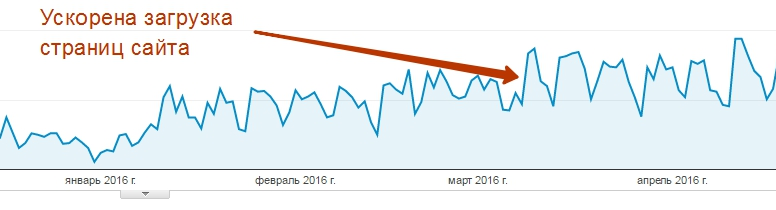
As one example, slow page loading times were reaching up to 15 seconds due to an incorrect site configuration. Fixing this single issue resulted in a 15% increase in website traffic immediately after implementation.
Content Revisions
Recommendations were provided covering:
- Information structure for each service page.
- Page layout and design.
- Use of photography, written reviews, and video testimonials.
An example content brief is shown in the screenshot.

Building the Backlink Profile
Based on the competitor analysis, a multi-channel approach was taken to build the clinic’s backlink profile:
- City and regional portals: Many carry strong domain authority, have their own organic traffic, and their clinic directory pages frequently appear in top search results.
- Listing the clinic in Google My Business and other directories: An important step, as certain queries trigger map results in search, which can drive additional traffic to the site.
- Medical portals: These are sources of targeted traffic and appear in the top 10 results for many relevant queries. Listing the clinic and its physicians, as well as publishing articles about their services, is a natural and effective step.
- Press releases and service articles placed on regional portals and news sites: This establishes the clinic as a recognizable brand and attracts targeted traffic.
- Placement of partner run-of-site links: This generates targeted referral visits and strengthens the overall backlink profile.
- Brand support on regional forums: The ongoing goal here is to attract targeted visitors, provide consultations to the target audience, and sustain interest in the clinic and its specialists.
Results of the Medical Website Promotion
Website traffic grew fourfold over 5 full months of promotion.
The result was a measurable increase in both branded and organic traffic.

Referral visits began flowing from forums where brand awareness work was conducted.

Referral traffic also appeared from several regional portals.
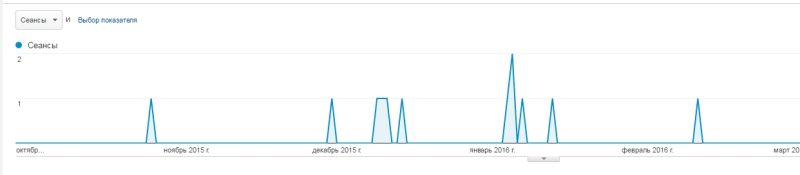
The volume of appointment inquiries for the clinic’s services also increased. And there is still significant room for growth, as optimizations were carried out on priority categories and services, while a number of other services and pages have yet to be fully addressed.
Case Study 2: Marketing for a Medical Center
Growth in traffic to a medical center’s website.

Case Study 3: Local Promotion for a Private Clinic
Traffic growth through a comprehensive advertising campaign for a small private clinic.

Conclusions
Promoting medical centers through both organic and paid search, combined with patient email engagement strategies, does more than increase a clinic’s online visibility. It builds patient loyalty throughout the treatment journey. Attention to detail can make a significant difference in the quality of your marketing campaigns, your search engine rankings, and the number of referrals your clinic generates.