



1 min reading
Review of Cooperation with Livepage from MISSIA Bridal


In the beauty niche, particularly in the premium segment, having a well-established brand and a robust offline presence no longer guarantees online success. Users actively compare fragrances, brands, and prices in search engines, and if a website doesn’t hold stable positions in Google, a significant share of potential demand goes to competitors. That’s why SEO in this niche is not just a supporting channel, but an important source of customers with clear commercial intent.
This was exactly the challenge we faced when starting work with one of the largest premium perfume projects in Ukraine. Despite a broad assortment and strong customer trust, the organic channel was not showing the expected growth, and the potential of search traffic was only partially realized. Our goal was to turn SEO into a systematic growth engine with no sharp spikes but a clear focus on tangible business results.
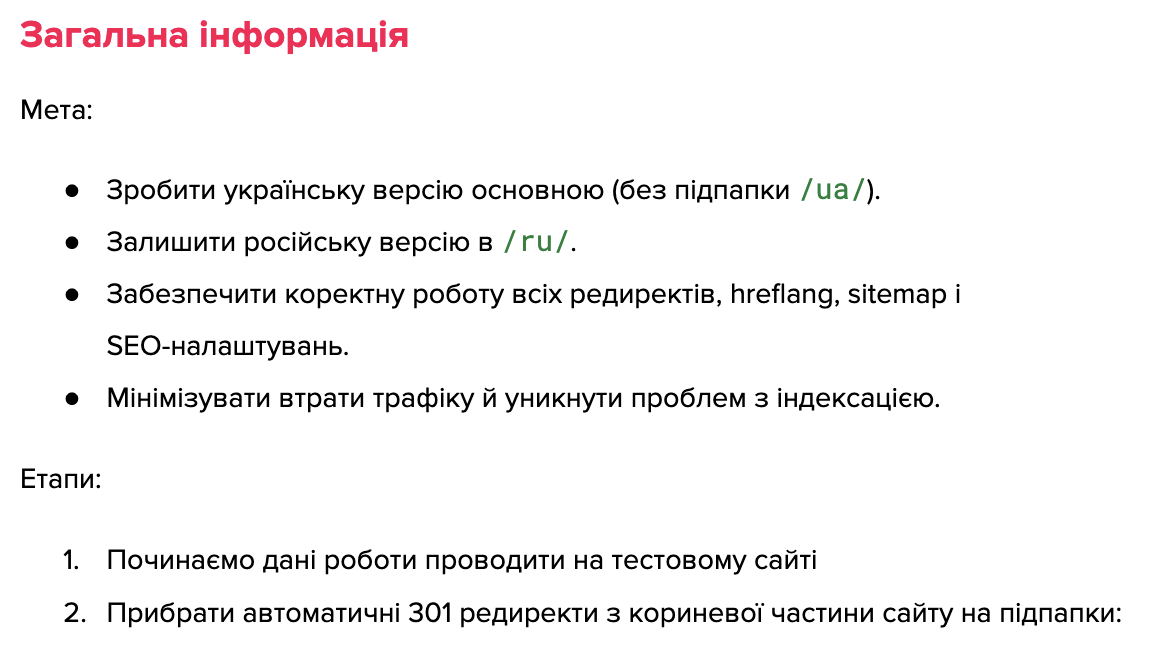
At the start of the project, the website already had a large number of pages, a wide selection of niche luxury perfumes and cosmetics, as well as several supported language versions. At the same time, this content mass looked overly complex and technically unstructured for search engines. Some brand and category pages were duplicated, while others suffered from low visibility due to indexing issues and flaws in the internal structure. Also, the site was preparing for a major migration — changing the primary language version to Ukrainian (without the /ua/ subfolder).
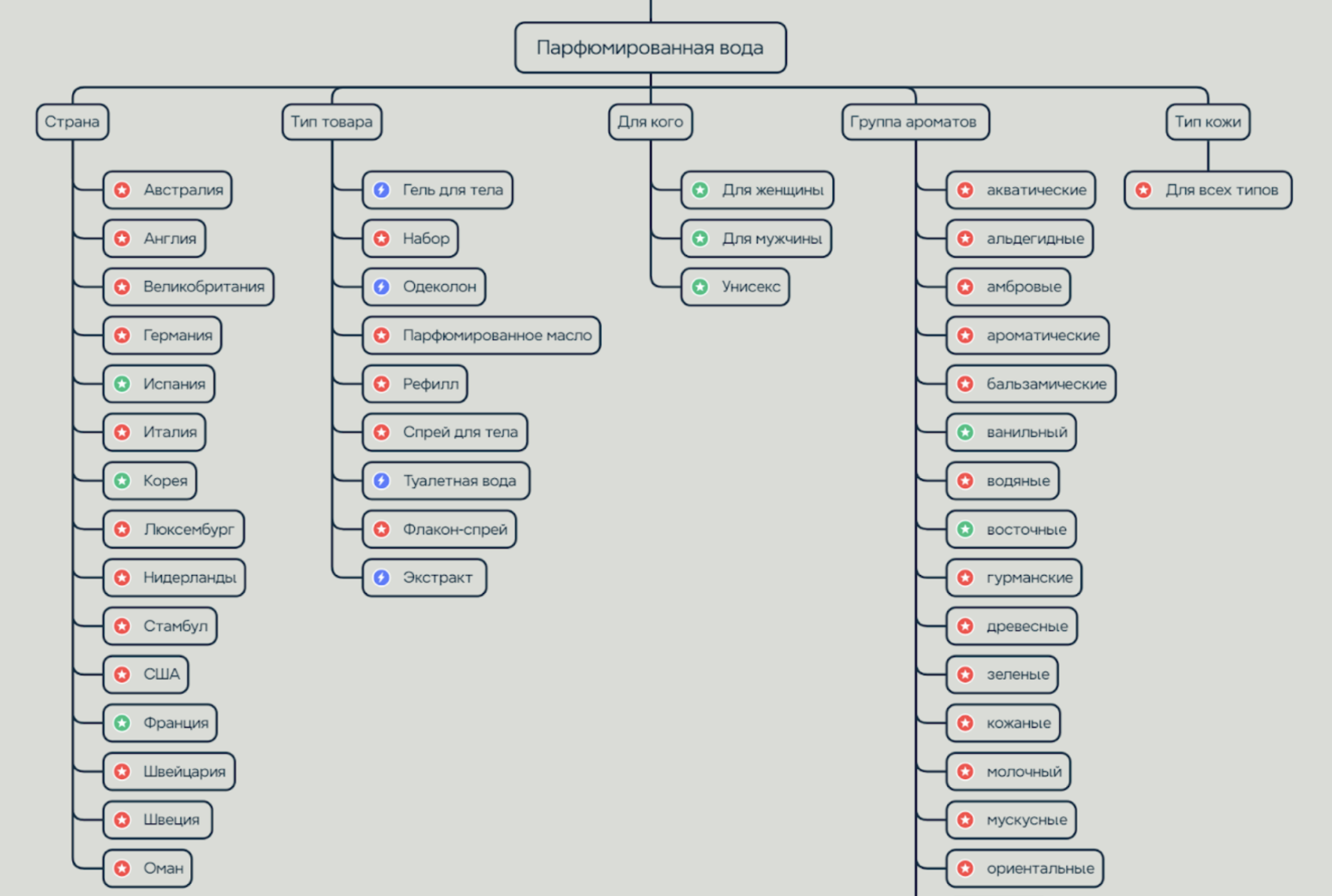
Another major limitation was the lack of a clear SEO hierarchy between categories, brands, and product pages. Search engines struggled to understand which pages were priority and which ones played a supporting role. As a result, the site had strong commercial potential, but organic traffic and search-driven sales were growing much more slowly than they could have.
The first step was technical stabilization of the website. We streamlined server response rules, redirects, and page indexing logic, updated the sitemap and robots.txt, and fixed issues related to language versions and hreflang implementation. A dedicated redirect map was created to migrate pages from the UA version located in the /ua/ subfolder to the site root. We also set up proper 301 redirects to eliminate duplication across brand pages and promotional sections. Special attention was paid to page load speed and Core Web Vitals, particularly the LCP metric, which had a direct impact on both performance and user behavior.
Once the technical foundation was in place, the focus shifted to scaling organic visibility. The main growth driver became brand and category pages, as they generate the majority of commercial demand in this niche. We optimized existing brand pages, created new ones to support assortment expansion, opened selected filters for indexing, and built a clear internal linking structure between categories, brands, and product pages.
At the same time, the website was prepared for further growth. We rolled out updated markup, refreshed the site header and footer, added FAQ blocks, and laid the groundwork for future content scaling. A separate step involved preparing the site for AI-driven search, including the creation and implementation of the llms.txt file.
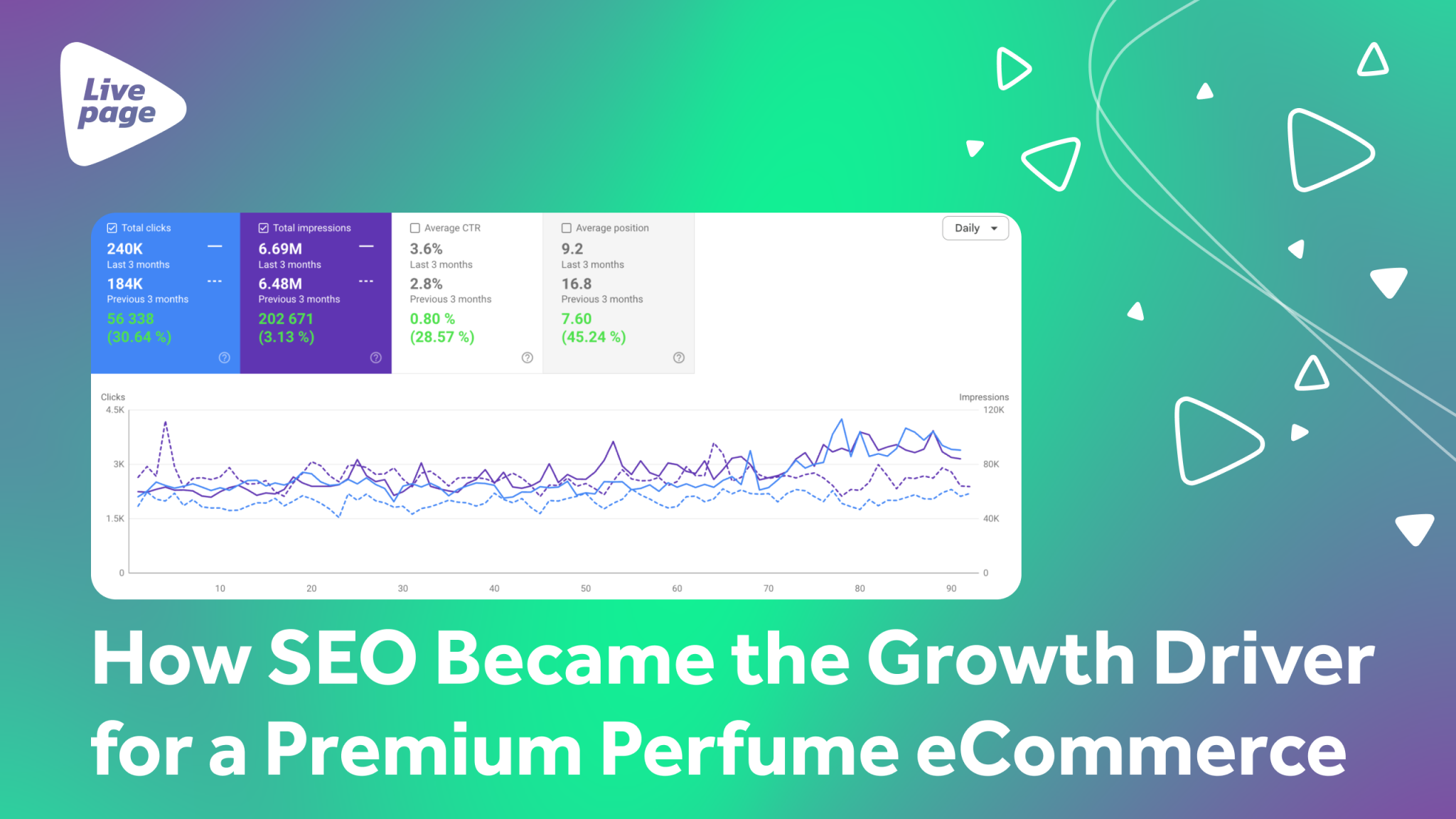
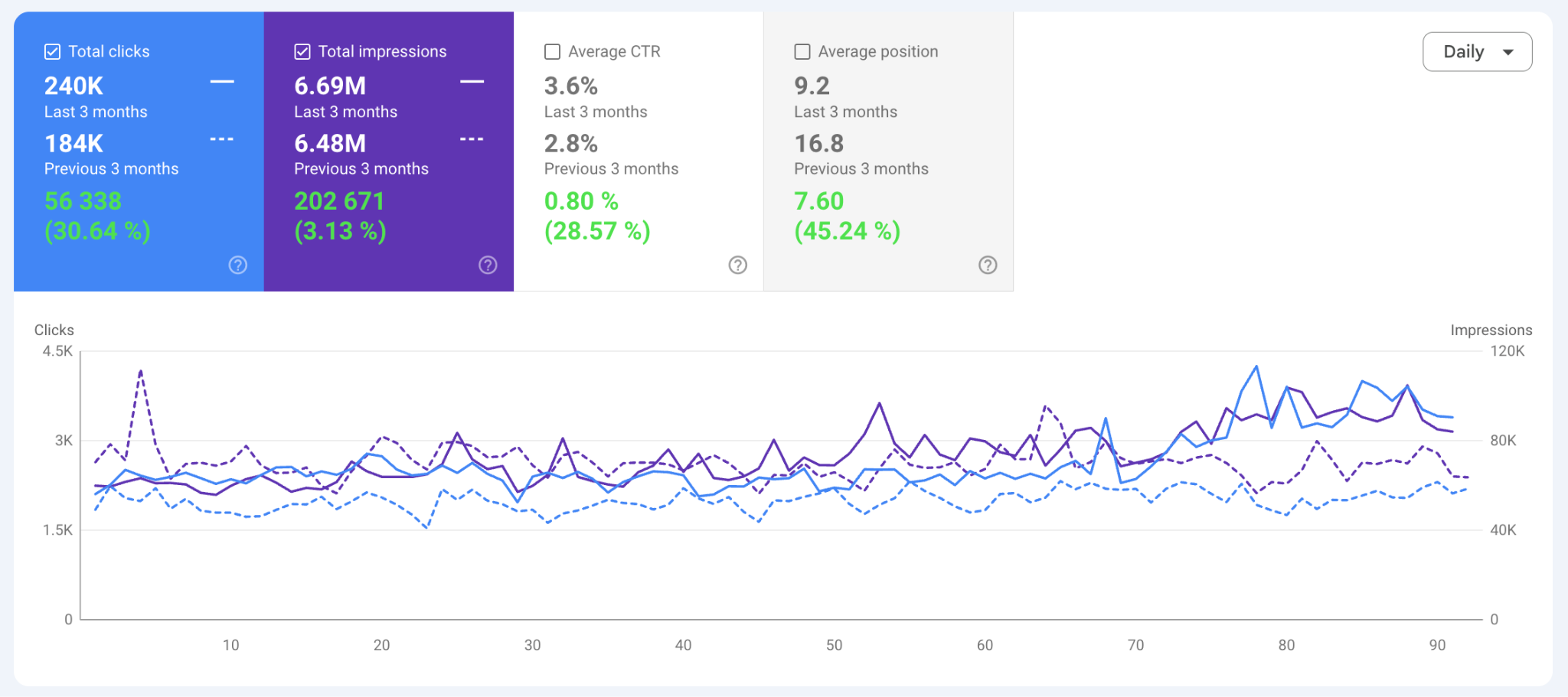
Within the first year after implementing the SEO strategy, the organic channel began showing steady positive momentum, with robust growth over the last three months. Between September and December 2025, Google clicks increased by more than 30%, CTR improved noticeably, and the site’s average rankings across search results rose significantly.
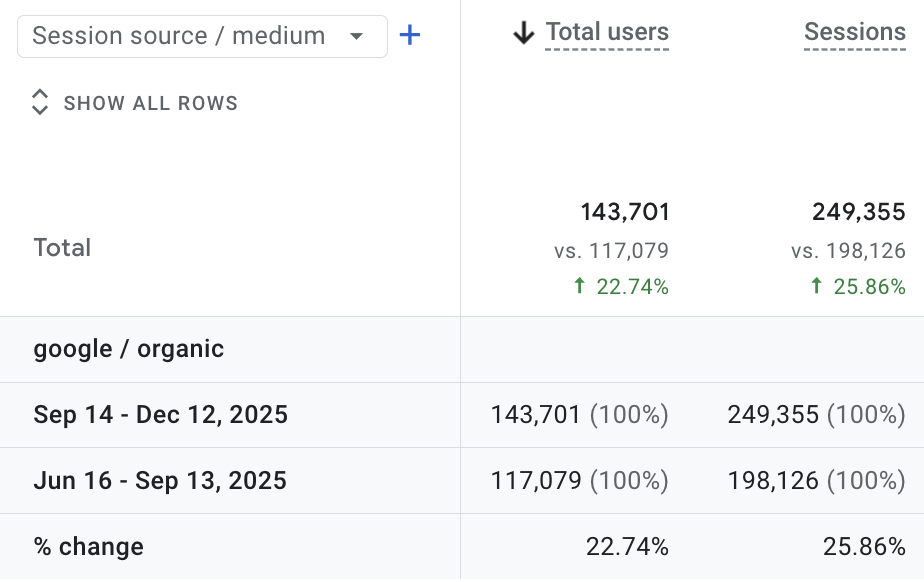
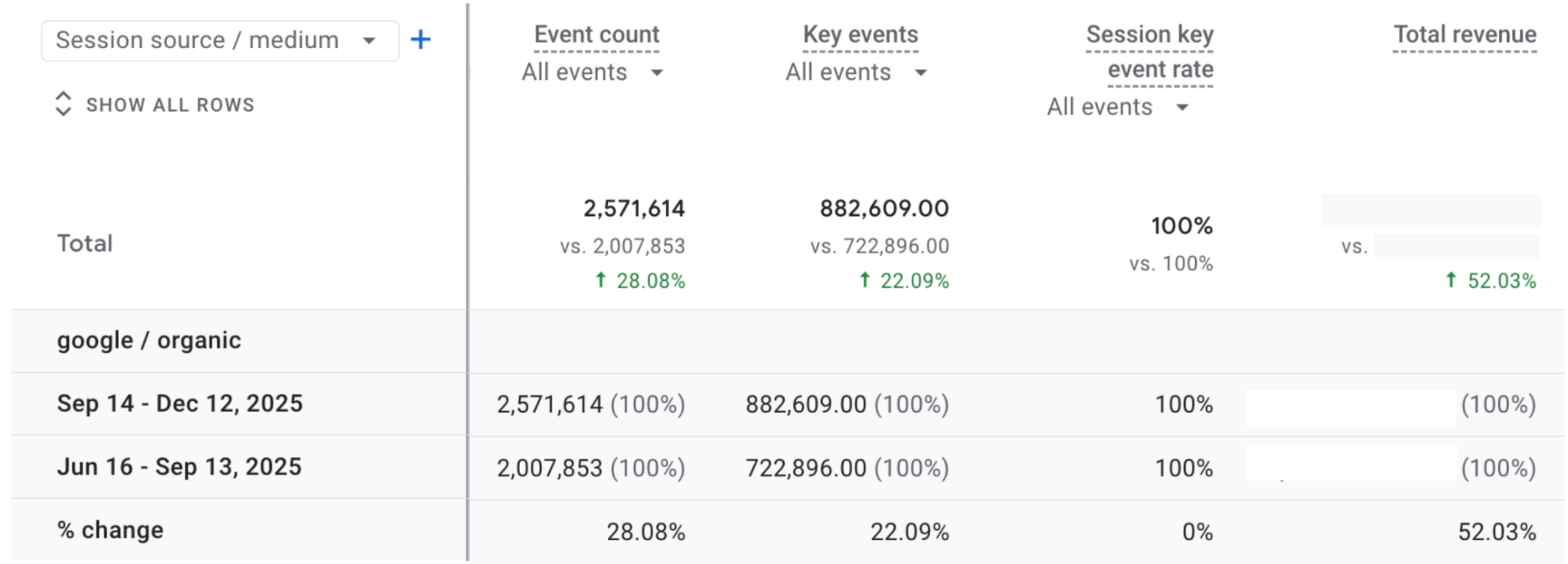
From a business perspective, the data from Google Analytics proved to be even more important. Organic traffic increased by more than 20%, the number of sessions grew by nearly 26%, and revenue from the organic channel jumped by over 50%. This clearly showed that SEO wasn’t just driving more users, but was attracting an audience genuinely ready to make a purchase.
As a result, in a relatively short time, SEO evolved from a “secondary” traffic source into a full-scale growth driver for premium perfume eCommerce. A systematic approach, a strong focus on technical quality, and the scaling of brand and category pages laid a solid foundation for long-term, sustainable growth without relying solely on paid advertising traffic.
In perfume eCommerce, having a strong product range and well-known brands in your catalog is no longer enough. What truly matters is that every page, from category pages to filters, works toward business goals and is equally clear to both users and search engines. SEO became the tool that transformed organic search from an unstable traffic source into a consistent driver of sales growth.
If you see that your organic traffic isn’t reaching its full potential and search isn’t contributing to revenue as expected, it’s a clear signal that your SEO needs a comprehensive review. The Livepage team works with projects where the goal isn’t optimization for its own sake, but real, measurable business results. Get in touch, and we’ll find an SEO solution that works for your eCommerce business.


“Livepage has proven to be a reliable source for rapid online growth. We started with 2,000 visitors per month. In 3 years together with Livepage we have reached 70,000 visitors and more than 100 leads from the site per month.”


“As for the results, we’ve been working together since 2015, and our traffic has increased 10x. I cannot say that Livepage was our first SEO company, but they have become the first SEO partner that helped us to achieve the success we were looking for.”


“Livepage delivers SEO efforts that have led to an increase in the site’s users, traffic, and conversions. The team uses a wide range of tools to achieve the client’s goals. They are attentive to the client’s needs, working with them in real-time and bringing in additional specialists when needed.”


“I am pleased with the quick task execution and the instant replies to my messages.”


“I like the complex approach that the Livepage team offers. Absolutely all team members work together; everyone is aware of what is happening on the project. We have one common goal – to increase our service sales, and the team is making every effort to achieve the goal as soon as possible.”


“We’ve been really impressed by how Livepage quickly understood our business and centred our PPC campaign around our objectives. We have achieved good results within a very short time in both revenue and ROI.”


“Everything is clear, timely, and understandable.”


“They have leveraged ideal opportunities to reach our business goals.”