




9 min reading
GA4 BigQuery Export: When You Really Need It


Google’s algorithms continue to evolve, but they don’t introduce entirely new rules for conversion and lead generation. These algorithm updates redistribute organic search visibility across websites, adjust the weight of ranking factors, and reassess overall content quality.
Wondering whether it’s still worth investing in SEO in 2026? You just need to understand that SEO remains the strongest lead generation method, and organic search is among the most effective channels for attracting potential clients.
The AI search has already changed the way leads discover brands, so next year the focus won’t be on chasing clicks, but on building deep trust with your audience. Trust, relevance, focus on quality over quantity, and long-term ROI are the main principles to follow in 2026.
Previously, the primary SEO KPI for marketers and business managers was traffic volume.
Wow, my site got about 400–500 visits from search last month!
Sometimes, this focus on traffic led to the mindless adding of links and keywords for the search engine rather than for the clients.
Now the situation is different. Google and other search engines no longer evaluate just the number of clicks. The value is the quality of visitors and how well your content matches their intent.
The secret to success is attracting leads that move through the sales funnel and become high-quality ones. Below are the main factors you should consider when adapting your SEO for B2B lead generation and broader lead generation strategies.
The core stages of the sales funnel are TOFU, MOFU, and BOFU. To improve lead conversion, brands should create content that matches the current user’s position in the decision-making process.
If you put your entire budget into attracting this audience, you’ll get a lot of traffic, but almost no one will become a real client.
AI in search is increasingly filtering general information. So the best SEO practices are to focus on MOFU and BOFU. Yes, you get less traffic, but the leads are of much higher quality, and they also convert better.
In 2026, SEO content should be created not just to gain “400–500 visits from search;” content that converts, supports decision-making.
High-performing pages need to:
Your focus in 2026 is on shifting from attracting passive readers to providing real value for clients.
Trust… It sounds like something obvious, like “be helpful to your customers.” But in 2026, “building trust” is no longer just a nice-sounding phrase.
Google now prioritizes content that demonstrates a company’s adherence to Google’s set of content quality evaluation principles. These principles are called E-E-A-T, which stands for experience, expertise, authority, and trust. E-E-A-T is especially important to stand out in AI-powered search.
From an SEO lead generation perspective, trust signals increase form completion/demo requests, shorten decision cycles, and improve conversion.
Many potential customers who could have taken that step (finally a sale!) abandon your site due to technical issues.
Is your site slow to load and difficult to navigate? This definitely needs to be addressed.
Key lead-impacting elements of technical SEO include:
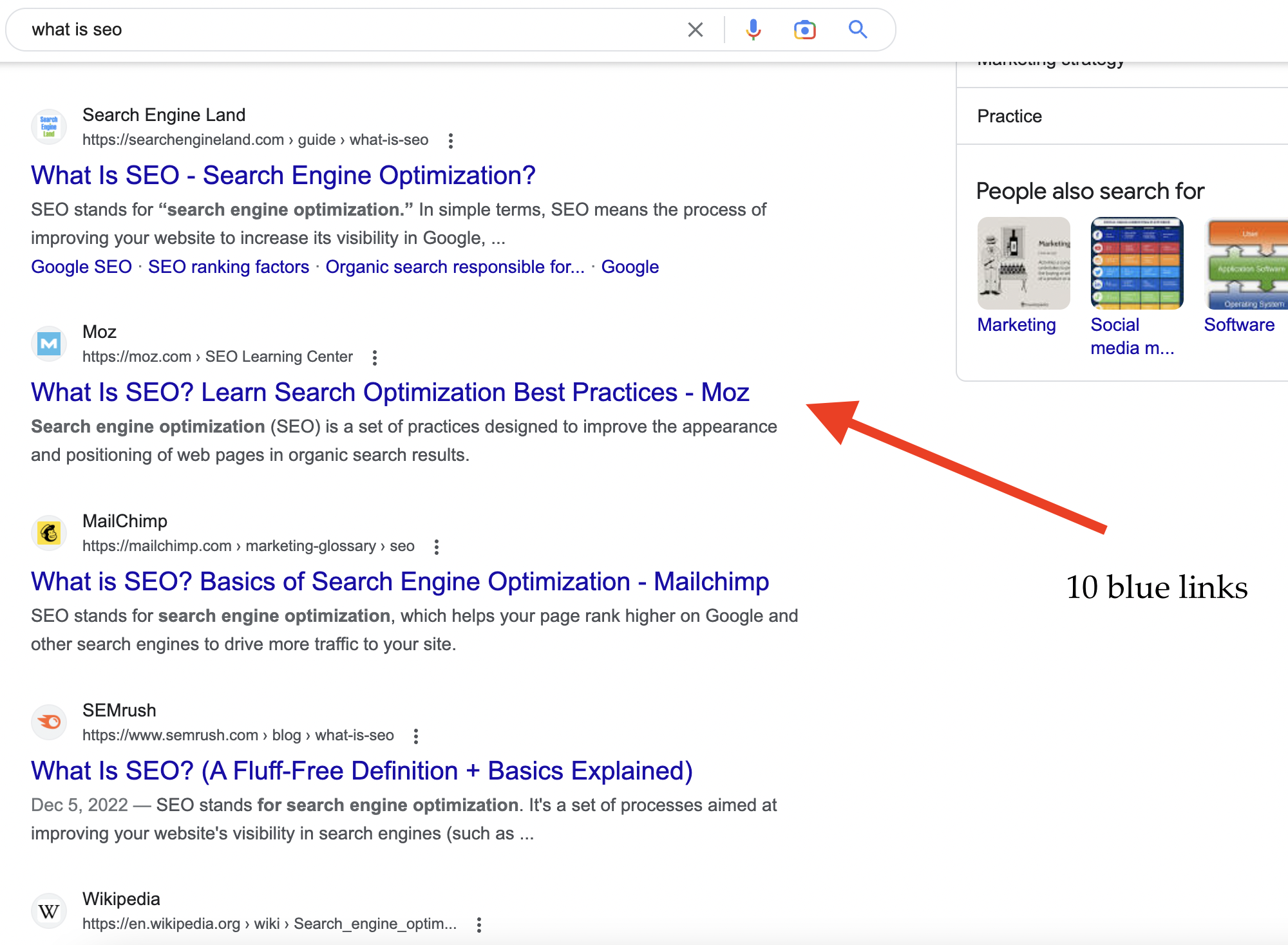
Search visibility now extends beyond the traditional “top 10” blue links (these are the basic search results that are a blue title with a description and a link to the site).
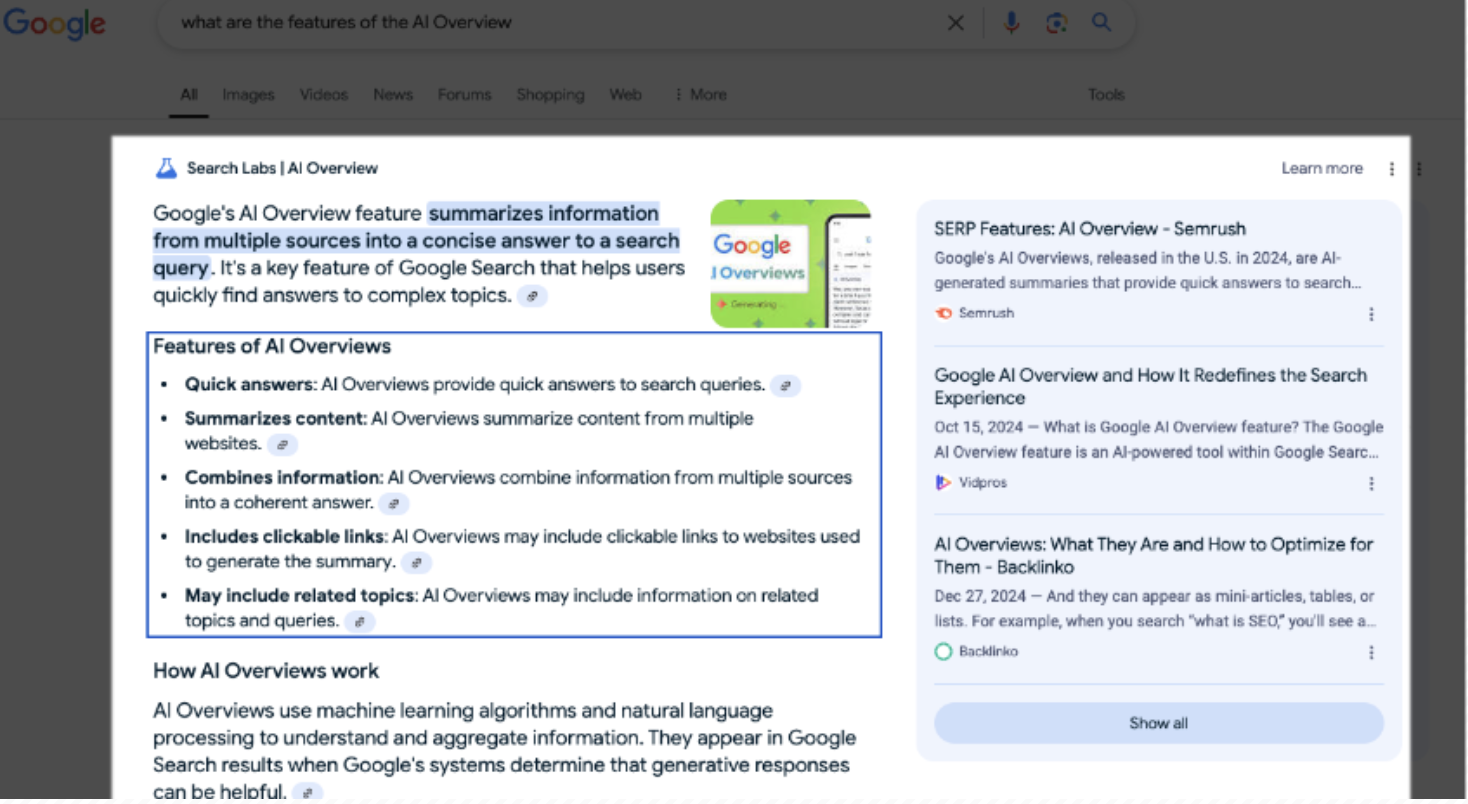
Getting to the top of blue links is still important, but new ranking surfaces are becoming important as well. This means AI overviews, featured snippets, and other search engine results page (SERP) elements like images, videos, reviews, and more.
Visibility in these new ranking surfaces:
If you want to generate leads in 2026, there are two main approaches, and they work in opposite ways.
You can invest in paid advertising and get immediate visibility and traffic, or you can focus on SEO lead gen strategies, which take time but serve as a reliable source of high-quality leads over time.
| Factor | SEO | Paid ads |
| Cost per lead (CPL) | Site authority is earned over time, so when you stop paying intensely, your trusted website continues to generate leads | The cost per lead can be high in competitive markets and volatile because it directly depends on the cost per click (CPC) |
| Scalability | Scales gradually; growth depends on content authority, topical expertise, and your brand credibility | Immediate scaling possible: the higher your ad budget, the proportionally more leads you get |
| Stability | Stable traffic appears as soon as content ranks high in search results. SEO is less sensitive to budget cuts | Traffic stops when your ad spend stops |
| Long-term ROI | High. Content when ranks support generate leads with minimal ongoing cost | Short-term but immediate ROI. Ads require continuous investment to bring in leads |
As paid advertising becomes more expensive, SEO becomes more effective for organic lead generation because SEO doesn’t rely on СPCs.
The sweet spot for success is combining rapid lead generation through advertising with a steady flow of leads from SEO.
Now we’ve reached the most practical part of the article about SEO trends in 2026: top strategies to generate leads effectively.
Instead of targeting isolated keywords and creating content for keywords, not for the users, organize content into topic clusters centered on real problems and needs of your audience.
Here is how to maintain cluster logic to boost your topical authority and trustworthiness:
To attract high-quality leads, your landing pages should target users who have already moved beyond the TOFU stage.
Checklist for high-converting mid- and bottom-funnel pages:
Programmatic SEO is a way to automatically create multiple pages on a website that answer all possible customer questions. Creating such a large volume of content manually is a challenging task, and what’s more, long-tail queries are often too specific.
Examples of automated tools in programmatic SEO:
These tools attract qualified traffic because they directly provide a specific answer or help. Those who use these tools are already interested in your product or service.
Every step on your page should be aimed at converting the visitor into a contact or lead, not just reading the content.
You need to not only generate content but also direct visitors to pages where they can convert (buy, order your service, leave a contact form, download materials). Here comes internal linking. This means you should:
In this way, your high-intent pages receive more qualified traffic.
If you want your site to rank in AI overviews or featured snippets to attract high-quality leads, do the following:
These steps will help you succeed with AI search SEO in 2026.
How can you measure SEO’s impact on business results? Use the following KPIs.
You track which leads come from organic search:
Lead attribution means identifying the role SEO played in the lead’s journey. There are several models:
The goal of SQL/MQL attribution is to determine which channel brought the user, and how SEO contributed to attracting these leads and guiding them through the funnel.
This metric measures the percentage of organic visitors who complete a desired action (form submission, demo request, trial signup).
Organic Conversion Rate (%) = (Number of conversions from organic traffic ÷ Total number of organic visitors) × 100
This rate shows how well organic content converts visitors and readers into leads.
This metric shows how SEO helps along the lead journey, even if it’s not the last channel of conversion. For example, a user first searches for your article on Google, then converts into a lead through email or advertising.
To track this metric, you can use Google Analytics / GA4 (Advertising → Attribution → Conversion paths).
This metric shows how many times your website/page was visible in search results, Google AI overviews, and featured snippets, even if the user didn’t click. This helps companies assess brand awareness and trust.
Track this metric using Google Search Console and featured snippets/rich results reports.
Measures the contribution of SEO to your actual ROI. For example, a lead from organic search becomes an SQL, you add this lead to your CRM (HubSpot, Salesforce), and track the revenue it generated. You can also set KPIs for pipeline attribution, like SEO leads must generate ≥ $100,000 in revenue into the pipeline.
This section isn’t about SEO vs. Lead Generation. SEO complements lead generation, but there are several situations when it may not generate leads as you want.
Certain cases can limit the impact of lead generation SEO tactics:
SEO is a powerful tool for business growth, but it requires time, resources, and SEO expertise to be effective. In cases where you find it difficult to increase leads with SEO exclusively, combine SEO with other strategies. For example:
In 2026, we’re leaving old approaches of how can SEO generate leads behind: SEO is about attracting the right traffic rather than flexing the number of clicks. The power of SEO is still strong. It’s a strategic, cost-effective, and scalable channel for lead generation for the coming year, and, most likely, beyond.
The key insight for 2026 is: “Less traffic, more leads.”
By focusing on user intent, brand and topic authority, conversion-optimized content, and technical SEO optimization, companies can generate leads that are more qualified and ready to convert. But keep in mind that SEO for lead generation in 2026 is not a short-term sprint. It’s a long-term investment in sustainable demand generation, gradual scalability, and stable ROI.


“Livepage has proven to be a reliable source for rapid online growth. We started with 2,000 visitors per month. In 3 years together with Livepage we have reached 70,000 visitors and more than 100 leads from the site per month.”


“As for the results, we’ve been working together since 2015, and our traffic has increased 10x. I cannot say that Livepage was our first SEO company, but they have become the first SEO partner that helped us to achieve the success we were looking for.”


“Livepage delivers SEO efforts that have led to an increase in the site’s users, traffic, and conversions. The team uses a wide range of tools to achieve the client’s goals. They are attentive to the client’s needs, working with them in real-time and bringing in additional specialists when needed.”


“I am pleased with the quick task execution and the instant replies to my messages.”


“I like the complex approach that the Livepage team offers. Absolutely all team members work together; everyone is aware of what is happening on the project. We have one common goal – to increase our service sales, and the team is making every effort to achieve the goal as soon as possible.”


“We’ve been really impressed by how Livepage quickly understood our business and centred our PPC campaign around our objectives. We have achieved good results within a very short time in both revenue and ROI.”


“Everything is clear, timely, and understandable.”


“They have leveraged ideal opportunities to reach our business goals.”