




9 min reading
GA4 BigQuery Export: When You Really Need It


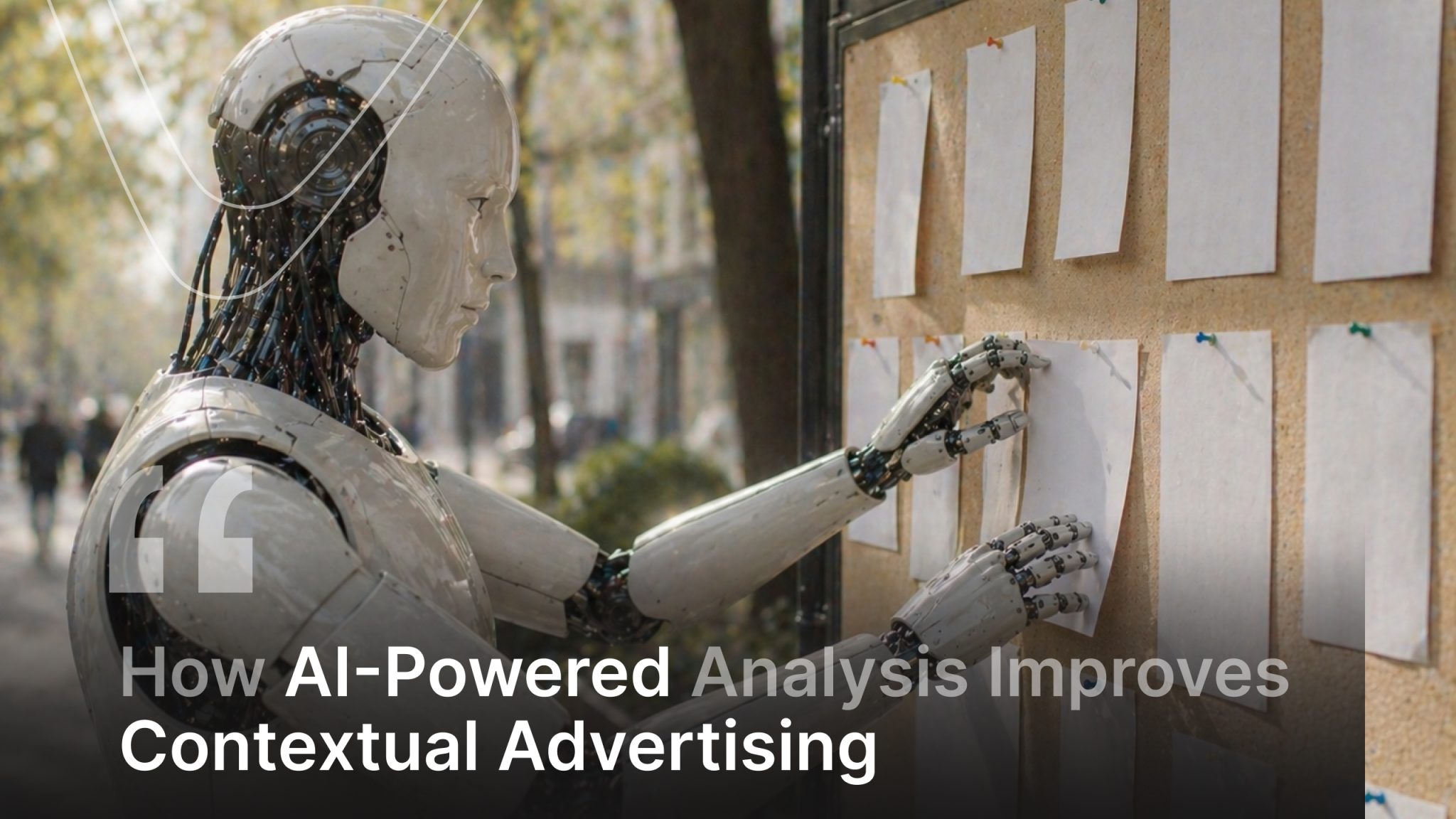
Artificial intelligence has long become an indispensable tool for every PPC specialist. AI contextual advertising today is used to automate bidding strategies, enable conversion prediction, generate creatives, and write ad copy. Beyond that, AI-driven contextual advertising is rapidly evolving as algorithms now independently optimize campaigns by processing vast amounts of data in real time. The latest AI innovations at Google Marketing Live demonstrate how artificial intelligence is becoming a core component of modern PPC decision making.
In this article, we’ll explore how to apply AI analysis in contextual advertising to understand your customer base, how to conduct ad performance analysis using the RFM framework, and how to integrate those findings into a PPC strategy that raises overall advertising efficiency.
In a world without third-party cookies, rising CPMs, and tightening privacy requirements, data-driven marketing makes it critical to understand:
This is precisely where AI-powered analysis in contextual advertising, combined with the RFM model, becomes a strategic asset across the broader contextual advertising market.
For accurate analysis, you’ll need a table with the following fields:
Before you begin, make sure the data is properly prepared: one row per customer, a fixed analysis period, and all duplicates removed.
Pay special attention to the unique customer identifier — this is not a client_id from GA4 or a cookie ID. It should be either a User ID or a CRM ID. If you have a CRM (HubSpot, Salesforce, RetailCRM, or a custom system), that’s your best source for RFM analysis: the data is more precise and immune to ad-blocker interference.
High-quality web analytics services help ensure that customer data is complete enough for meaningful AI-powered segmentation.
If you’re using GA4 analytics, make sure User ID tracking is implemented. The system should capture the identifier at login or purchase, and sales data should flow in through standard purchase events.
We recommend against exporting data through the GA4 interface — use BigQuery instead. This approach gives you access to complete, unsampled raw data and lets you enrich it with acquisition channel information — an essential input for AI contextual targeting.

Before launching AI-powered contextual advertising analysis, verify the data:
Data quality directly determines the reliability of AI-driven user behavior analysis and every insight that follows.
Businesses running Performance Max campaigns can benefit from combining AI-driven automation with deeper customer lifetime value analysis.
Classic RFM simply segments customers by three basic parameters. But AI-powered contextual ads allow you to go much deeper:
For example, you might discover that a channel with a higher CPA consistently brings in loyal customers with strong LTV. This is exactly why generative AI contextual advertising provides a competitive edge — it goes beyond surface-level metrics and powers true contextual intelligence across your customer base. AI targeting enables you to uncover these patterns at a scale no manual analysis could match.
AI doesn’t replace specialists, but it helps find patterns and risks faster. Final decisions always remain with the expert.
Alongside behavioral segmentation, competitor ad creative analysis can reveal creative gaps that support stronger PPC performance.
Most problems in working with AI stem from vague prompts. If you ask it to “run an analysis,” you get a report. If you ask it to “help make a decision,” you get a strategy. Thanks to machine-learning approaches in contextual programmatic advertising, algorithms can discover effective solutions from data on their own, but only when guided well.
To make AI function as a business assistant and support next-gen contextual planning, every prompt should contain four elements:
AI does not think strategically on its own. It begins to act as a strategic instrument, one that can optimize ad placement and support real-time contextual marketing, only when the prompt is clear and detailed.
Sample Prompt
Your task is to help me deeply understand my customer base and make practical decisions to optimize the advertising budget using RFM analysis.


Data context: I’m sharing a table where each row represents one unique customer.


Columns:


- customer_id — unique customer identifier

- recency_days — days since last purchase

- frequency — total number of purchases

- monetary — total revenue from the customer over the entire period

- average_order_value — average order value

- acquisition_channel — customer acquisition channel


The data is real, transactional, and aggregated at the customer level. It is clean, duplicate-free, and all monetary values are in the same currency.


Tasks:


1. Perform RFM segmentation using clustering logic (no hard thresholds).

2. Factor in average_order_value and acquisition_channel when analyzing behavioral patterns.

3. Identify 5–7 behavioral segments, including non-obvious ones.

4. Assess the impact of acquisition_channel on segment quality (LTV, churn risk, revenue share).

5. Identify segments with the highest scaling potential through PPC and segments at churn risk.


For each segment provide:


- A short, clear name

- Behavioral profile

- Share of customers

- Share of revenue

- Average AOV

- Dominant acquisition channels

- Churn risk assessment (low / medium / high)

- 2–3 specific PPC actions


Response format:


1. Executive summary (5–7 sentences): overall state of the customer base.

2. Structured segment list.

3. Analysis of acquisition_channel impact on customer quality.

4. 3 key insights.

5. 3 priority actions for budget optimization over the next 7–14 days.
Combining AI analysis with experienced PPC management services allows companies to make faster and more confident optimization decisions.
If you’re working with large volumes of transactional data and find that classic “within-the-ad-account” optimization no longer moves the needle, it’s time to go deeper. AI-based contextual advertising analytics, including applications in commerce advertising, lets you see the true performance picture and act on it with confidence.
At Livepage, we’re progressively integrating these approaches into client projects — combining RFM, cohort analysis, and artificial intelligence contextual targeting with real advertising decisions. This lets us look beyond CPA and ROAS to build a systematic, scalable growth model.
You can also review our paid media case for Bvblogic tech company to see how data-driven paid media strategies support sustainable business growth.
Artificial intelligence opens a new chapter in PPC. AI-powered contextual advertising doesn’t just automate processes, it deepens audience understanding and enables better-informed decisions.
Sometimes a change in analytical approach delivers the biggest results. And today, that approach is AI-driven contextual advertising analysis — one that transforms PPC from a set of tactical actions into a strategic engine of business growth.
Want to implement AI analysis in your contextual advertising and finally understand which campaigns drive real profit rather than cheap conversions? The Livepage team will help you build an effective, data-backed PPC strategy.


“Livepage has proven to be a reliable source for rapid online growth. We started with 2,000 visitors per month. In 3 years together with Livepage we have reached 70,000 visitors and more than 100 leads from the site per month.”


“As for the results, we’ve been working together since 2015, and our traffic has increased 10x. I cannot say that Livepage was our first SEO company, but they have become the first SEO partner that helped us to achieve the success we were looking for.”


“Livepage delivers SEO efforts that have led to an increase in the site’s users, traffic, and conversions. The team uses a wide range of tools to achieve the client’s goals. They are attentive to the client’s needs, working with them in real-time and bringing in additional specialists when needed.”


“I am pleased with the quick task execution and the instant replies to my messages.”


“I like the complex approach that the Livepage team offers. Absolutely all team members work together; everyone is aware of what is happening on the project. We have one common goal – to increase our service sales, and the team is making every effort to achieve the goal as soon as possible.”


“We’ve been really impressed by how Livepage quickly understood our business and centred our PPC campaign around our objectives. We have achieved good results within a very short time in both revenue and ROI.”


“Everything is clear, timely, and understandable.”


“They have leveraged ideal opportunities to reach our business goals.”