




9 min reading
GA4 BigQuery Export: When You Really Need It


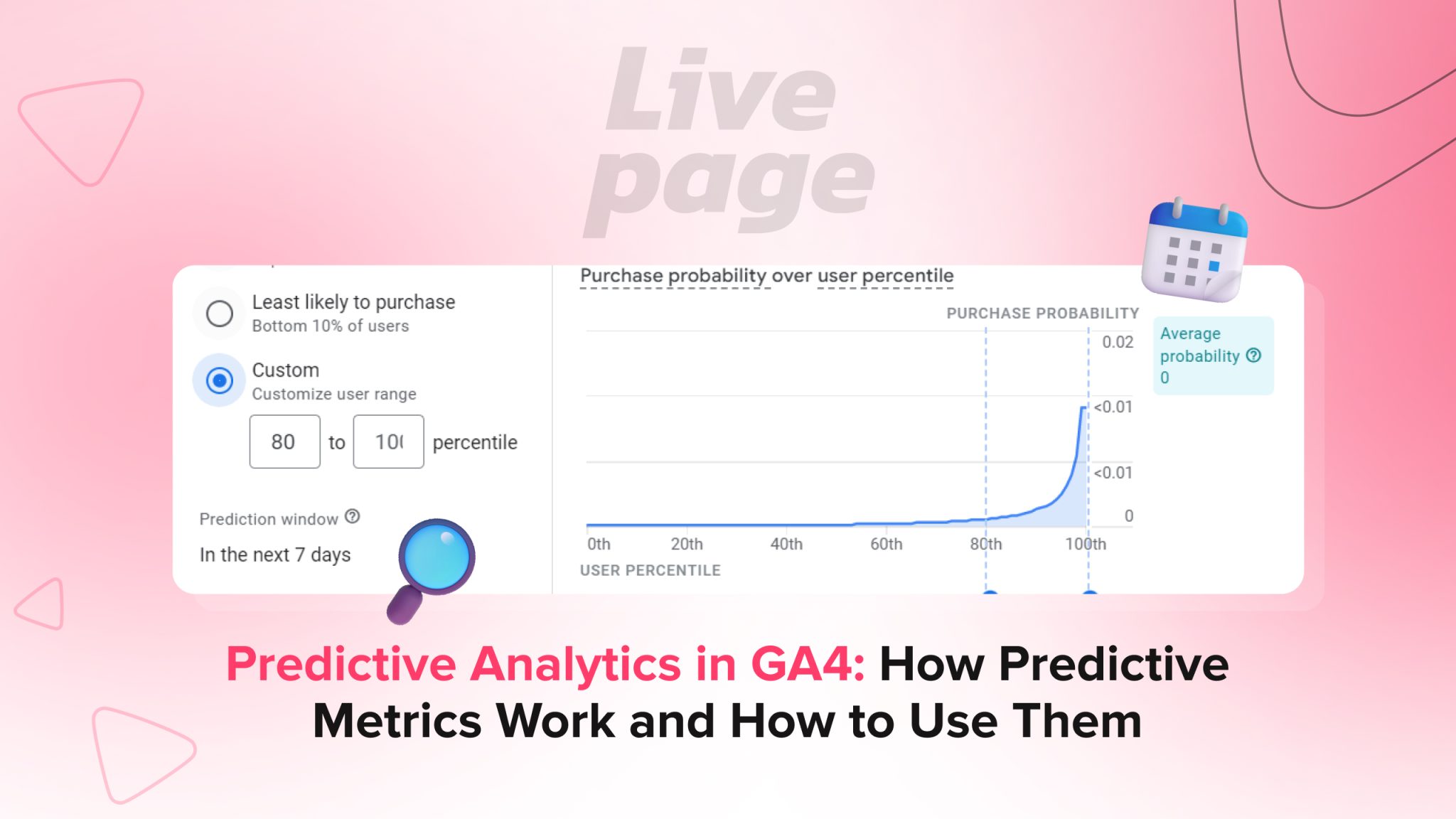
Modern analytics is no longer limited to analyzing past data. Businesses need not only to understand what has already happened, but also to predict what will happen next. That’s exactly why Google Analytics 4 configuration introduced predictive analytics tools that use machine learning to estimate future user behavior.
Predictive metrics help companies identify users who are most likely to make a purchase, detect churn risk, and estimate potential revenue. This opens up new opportunities for more precise targeting, smarter ad budget allocation, and building long-term growth strategies.
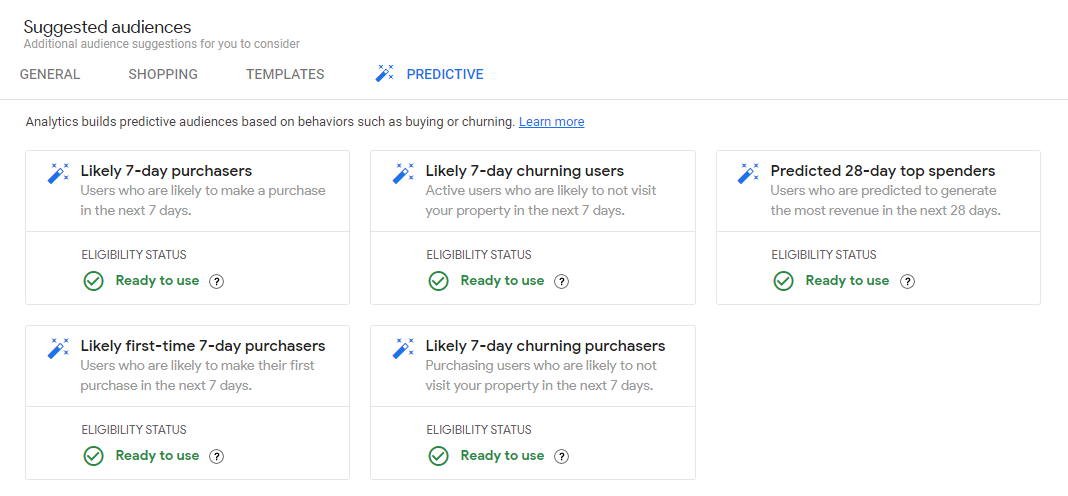
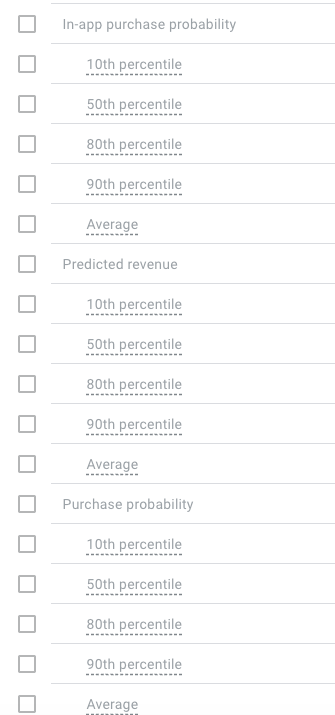
Google Analytics 4 generates predictive metrics at the user level using machine learning models. The main ones include:
These metrics are available when creating audiences and can be used for segmentation and activation in Google Ads.
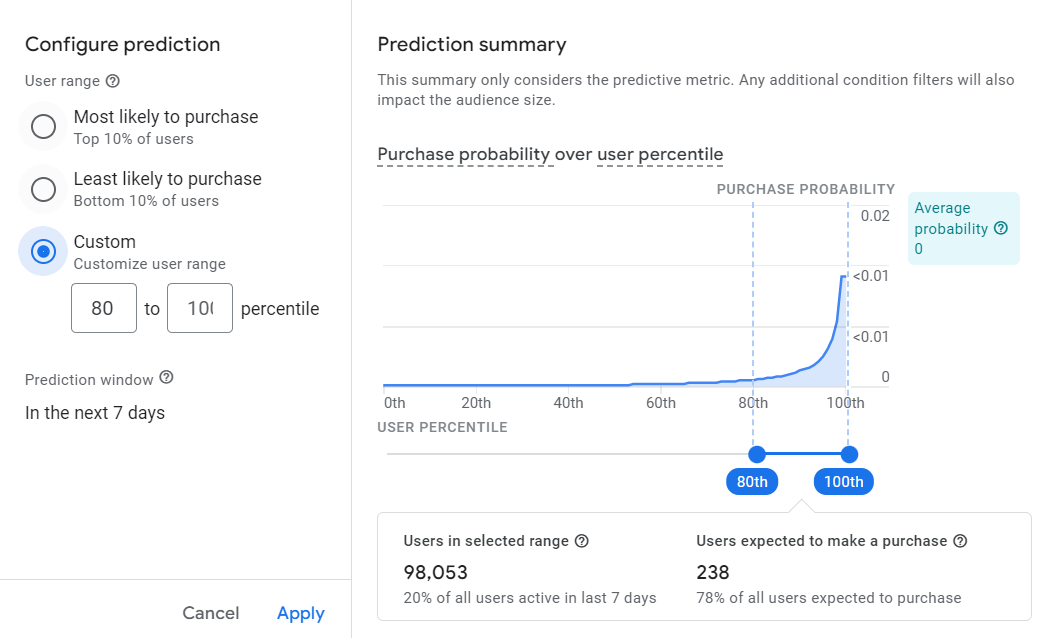
GA4 automatically analyzes historical behavioral data: events, transactions, session frequency, and content interactions. Based on this data, its algorithms:
Note: the system requires sufficient data (a minimum number of conversions and active users). Otherwise, predictive metrics will not be available. According to GA4 requirements, to generate predictions, you typically need:
If there is not enough data or the event structure is set up incorrectly, predictive audiences and metrics may be unavailable or work inconsistently.
Event-based analytics provides the behavioral foundation needed to understand what users actually do before predicting what they might do next.
In e-commerce, predictive metrics let you work not just with traffic, but with the probability of future revenue, especially when combined with cohort analysis in ecommerce projects. For example, you can send audiences with a high purchase probability to Google Ads and use them in automated bidding strategies. In this case, the system optimizes not for all visitors but for those most likely to generate revenue in the near future.
Users with a medium purchase probability create a separate opportunity for remarketing. You can show them personalized offers, abandoned cart reminders, or limited-time discounts to “nudge” them toward making a decision.
At the same time, users with a high churn probability are better either excluded from expensive performance campaigns or moved into lower-cost communication channels. This helps allocate your ad budget more efficiently and reduce spending on unlikely conversions.
In subscription models, predictive analytics is especially valuable because revenue is generated not only at the moment of the first payment, but throughout the entire customer lifecycle.
With churn probability, you can identify users who are likely to stop using the service in advance and launch retention campaigns for them (special offers, additional features, reminders, or personalized bonuses).
Trial user segmentation also plays a key role. If a business already uses value-based bidding in Google Ads, predictive metrics help divide new users into groups with different levels of future revenue potential. This allows you to optimize campaigns not for the number of trial sign-ups, but for audience quality.
You can also adjust creatives and messaging based on the predicted value of each segment: for high-potential users, highlight premium features; for less engaged users, focus on simplicity and core benefits of the service.
Overall, predictive analytics helps businesses move from a mass approach to more precise, personalized management of the customer lifecycle and marketing investments.
Even though predictive analytics in GA4 looks very appealing, it is not a universal solution and comes with its own limitations.
First, everything starts with data. If your traffic is low or events are set up only superficially, the system simply will not be able to build a stable model. The algorithm needs a sufficient volume of high-quality interaction history. Otherwise, predictive metrics either will not appear at all or will be unreliable.
Second, predictions are not generated for all users. Some parts of your audience may not meet the model’s criteria, so segmentation will always be partial. This is important to keep in mind when planning campaigns.
Third, the model works like a “black box”: you see the output as probabilities, but you do not have a full picture of how the algorithms actually work. That means you need to be careful when interpreting the results.
Finally, accuracy directly depends on how well your analytics setup is built. If events are tracked inconsistently or miss key parameters, the model has no full picture of user behavior to work with.
A marketing performance dashboard can turn predictive analytics from a collection of numbers into a practical decision-making tool.
There are several practical steps that can help improve the quality of predictions:
In the end, predictive analytics is only as effective as the quality of your data. It is not magic but a tool that delivers real value only when your analytics setup is done right.
Explore our Gainy case study to see how data-driven analysis can be applied to a real business context.
Predictive analytics in GA4 marks a shift from simple observation to proactive marketing. It allows you not only to analyze the past, but also to anticipate user behavior and act ahead of time. When set up properly, these metrics become a powerful driver for scaling your business.
Want your data to actually drive revenue instead of just piling up? The Livepage team can help you set up analytics, build a solid data infrastructure, and integrate predictive models into your marketing strategy for sustainable growth.


“Livepage has proven to be a reliable source for rapid online growth. We started with 2,000 visitors per month. In 3 years together with Livepage we have reached 70,000 visitors and more than 100 leads from the site per month.”


“As for the results, we’ve been working together since 2015, and our traffic has increased 10x. I cannot say that Livepage was our first SEO company, but they have become the first SEO partner that helped us to achieve the success we were looking for.”


“Livepage delivers SEO efforts that have led to an increase in the site’s users, traffic, and conversions. The team uses a wide range of tools to achieve the client’s goals. They are attentive to the client’s needs, working with them in real-time and bringing in additional specialists when needed.”


“I am pleased with the quick task execution and the instant replies to my messages.”


“I like the complex approach that the Livepage team offers. Absolutely all team members work together; everyone is aware of what is happening on the project. We have one common goal – to increase our service sales, and the team is making every effort to achieve the goal as soon as possible.”


“We’ve been really impressed by how Livepage quickly understood our business and centred our PPC campaign around our objectives. We have achieved good results within a very short time in both revenue and ROI.”


“Everything is clear, timely, and understandable.”


“They have leveraged ideal opportunities to reach our business goals.”