



1 min reading
Review of Cooperation with Livepage from MISSIA Bridal


For small businesses, SEO often feels like this complicated, expensive tool that only works for big companies. But that’s not really true. Once you understand which SEO solutions are most popular among small businesses, SEO stops feeling like a luxury and can actually help you compete with major players without burning huge budgets on ads. The thing is, small businesses have several important advantages: agility, flexibility, and the ability to quickly focus on narrow but profitable demand segments. While big companies move slowly, small businesses can target specific, high-intent queries and consistently attract clients directly from search.
In this article, we will break down how to build an effective SEO strategy for small business website growth, how to avoid common mistakes, what SEO optimization of website pages for small businesses looks like, and how to turn SEO into a long-term growth channel even if your budget is tight.
When you run a small business, choosing a marketing channel always comes down to two things: ROI and stability. Unlike paid ads (Google Ads, for example), which only work as long as you keep paying, SEO has a long-term compounding effect. Pages that are optimized properly and on time can bring in clients for months, sometimes even years, without constantly increasing your SEO budget.
For a small business, even a short pause in ad campaigns can mean leads drop to zero. Organic traffic, on the other hand, isn’t tied to daily budgets and fluctuating costs per click or conversion. SEO promotion for small businesses builds a steady presence in search results, and it doesn’t just “switch off” when you decide to cut ad spend.
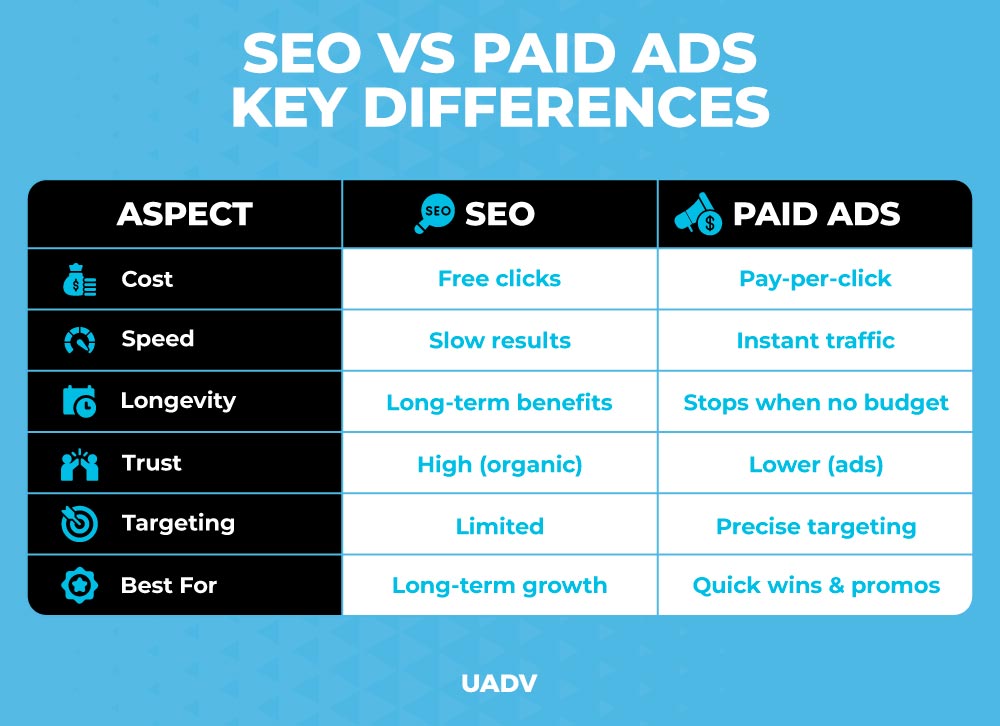
Another huge advantage of SEO is trust. Users, especially in local niches, tend to see organic results as more credible than ads. For small businesses, this isn’t just about traffic; it is about quality traffic. People who come from organic search are often more ready to buy, call, or submit a request.
Unlike SEO for IT companies, many small businesses can achieve faster results by focusing on narrow local search demand instead of highly competitive global keywords. SEO also lets you capture demand at different stages of the sales funnel, from information queries to ready-to-buy leads. That means you can gradually build brand awareness and connect with clients before they make a final decision. For small businesses, this kind of long-term approach is often much more effective than relying only on paid ads.
However, you should take into account the change in search logic due to AI answers and Google AI Overviews. Organic visibility today not only affects clicks but also whether your website gets used as a source in AI-generated responses. We have covered how to prepare your website for AI search and generative results in a separate article.
SEO for small businesses almost always happens under limited resources. First of all, this concerns the budget. Small companies rarely have the capacity for large-scale technical improvements, hundreds of new content pages, or aggressive link building in competitive niches. So strategies that work for big brands can actually be ineffective, or even harmful, for small businesses.
Another limitation is the level of competition. In many industries, small businesses are competing with big marketplaces, aggregators, or strong national brands that have been investing in SEO for years. In those cases, trying to rank for high-volume keywords right away usually doesn’t work, while playing by “big company rules” just leads to unnecessary spending and delays your ROI.
Time and in-house expertise are also limited. Small business owners often expect fast SEO results but aren’t always ready to invest in consistent, systematic work (semantic research, website structure, internal linking, and so on). As a result, SEO gets treated like a one-time task instead of a long-term strategy.
Another common issue is poor focus. Small businesses often try to target too broad a semantic core or, on the contrary, publish content without a clear understanding of their target audience. In both cases, even a technically optimized website won’t grow if the search demand is too competitive or simply not valuable to the business.
And let’s not forget local SEO because small companies often underestimate it. Ignoring local visibility (like Google Business Profile), failing to create pages for specific cities or regions, or having incomplete or inconsistent contact information on the website — all of this leads to lost traffic that was ready to convert. And local search is actually the easiest entry point into SEO for small businesses.
Given all these limitations, an SEO promotion of small business websites online has to be built differently than for a big company, with clear priorities and a strong focus on maximizing the impact of every action you take.
An effective SEO strategy for a small business doesn’t begin with large-scale upgrades or chasing every possible growth hack. It starts with a clear focus. When budgets and resources are tight, you have to be selective and work only on the areas that can generate real business results. A quality SEO service should also help identify which optimization activities will generate the highest return within a limited budget. So, let’s break down which SEO optimization methods are most effective for small businesses.
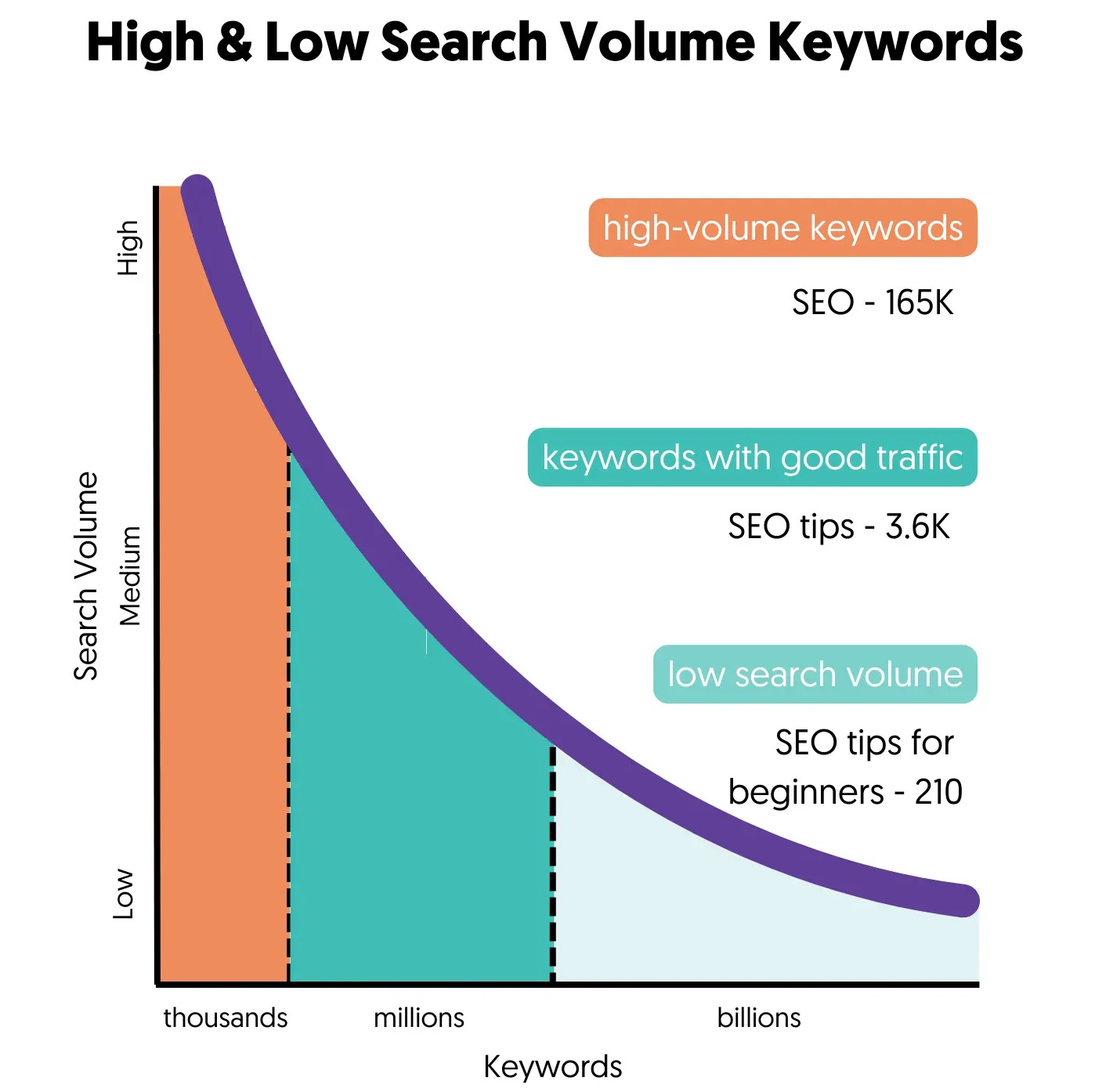
The main goal of local SEO promotion for small businesses is to capture specific demand segments where competition isn’t completely dominated by big brands. That’s why your priority should be low- and mid-volume keywords with clear commercial or mixed intent, as well as local search queries if you operate in a specific region.
In real life, this means stepping away from broad keywords like “apartment renovation” or “legal services” and shifting toward more specific searches like “one-bedroom apartment renovation in Lviv” or “employment lawyer for sole proprietors”. These queries have lower search volume but convert much better, and it is significantly easier to rank for them.
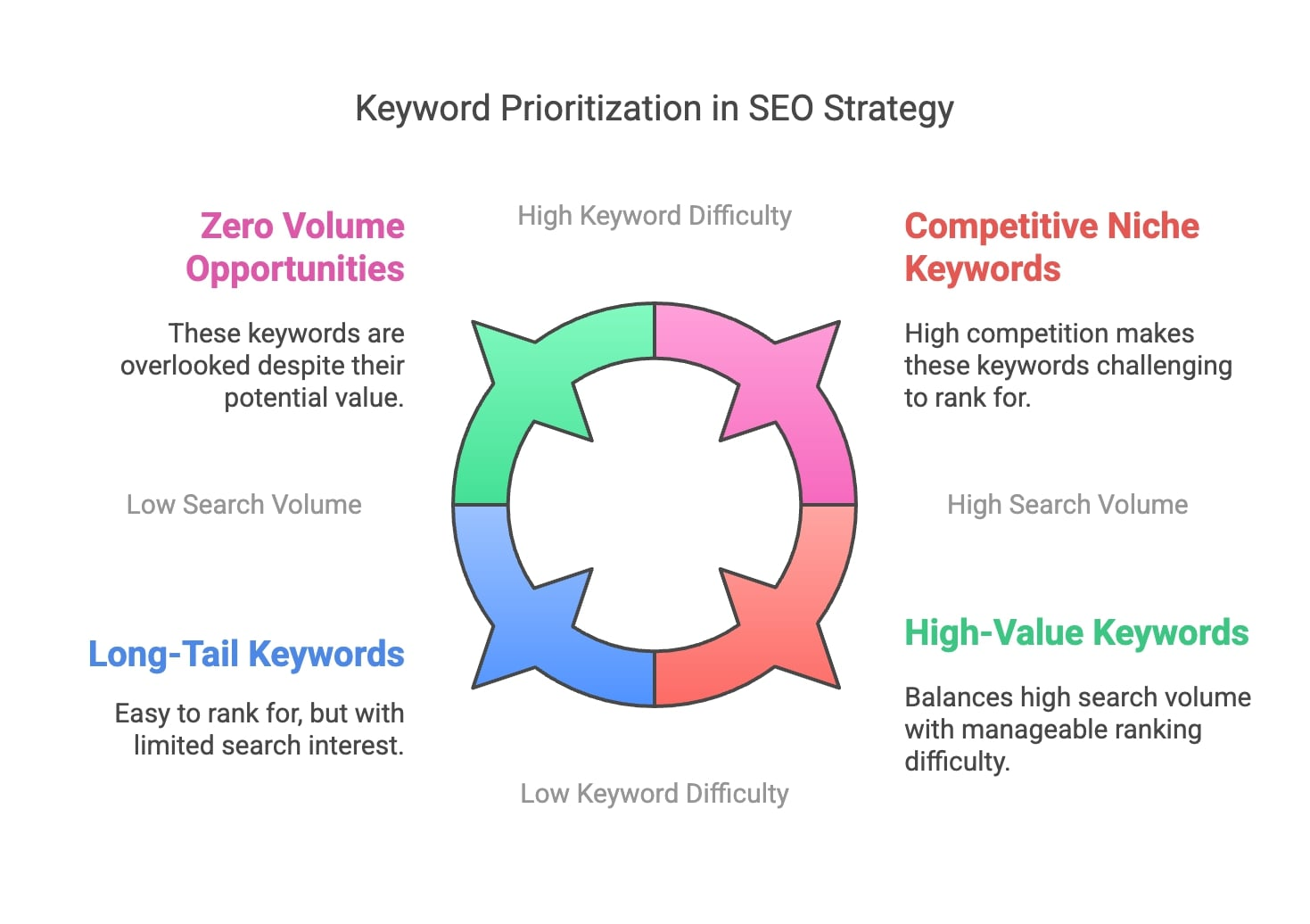
For a small business, choosing the proper semantics isn’t about trying to overpower a big brand. It is about answering a specific user need better than anyone else. That’s where your real competitive advantage comes from, without heavy investments in backlinks or ads.
One of the biggest mistakes when it comes to increasing organic website traffic for small businesses is jumping into scaling instead of getting the most value from the pages they already have. In practice, 70–80% of results usually come not from new pages but from proper optimization of your key landing pages: homepage, service pages, category pages, or local landing pages. Optimizing such pages for maximum ROI requires clear alignment between the page and search intent, properly written Title, Description, and H1 tags (without keyword stuffing), a logical structure and content hierarchy, a clear commercial offer, and strong, visible CTAs.
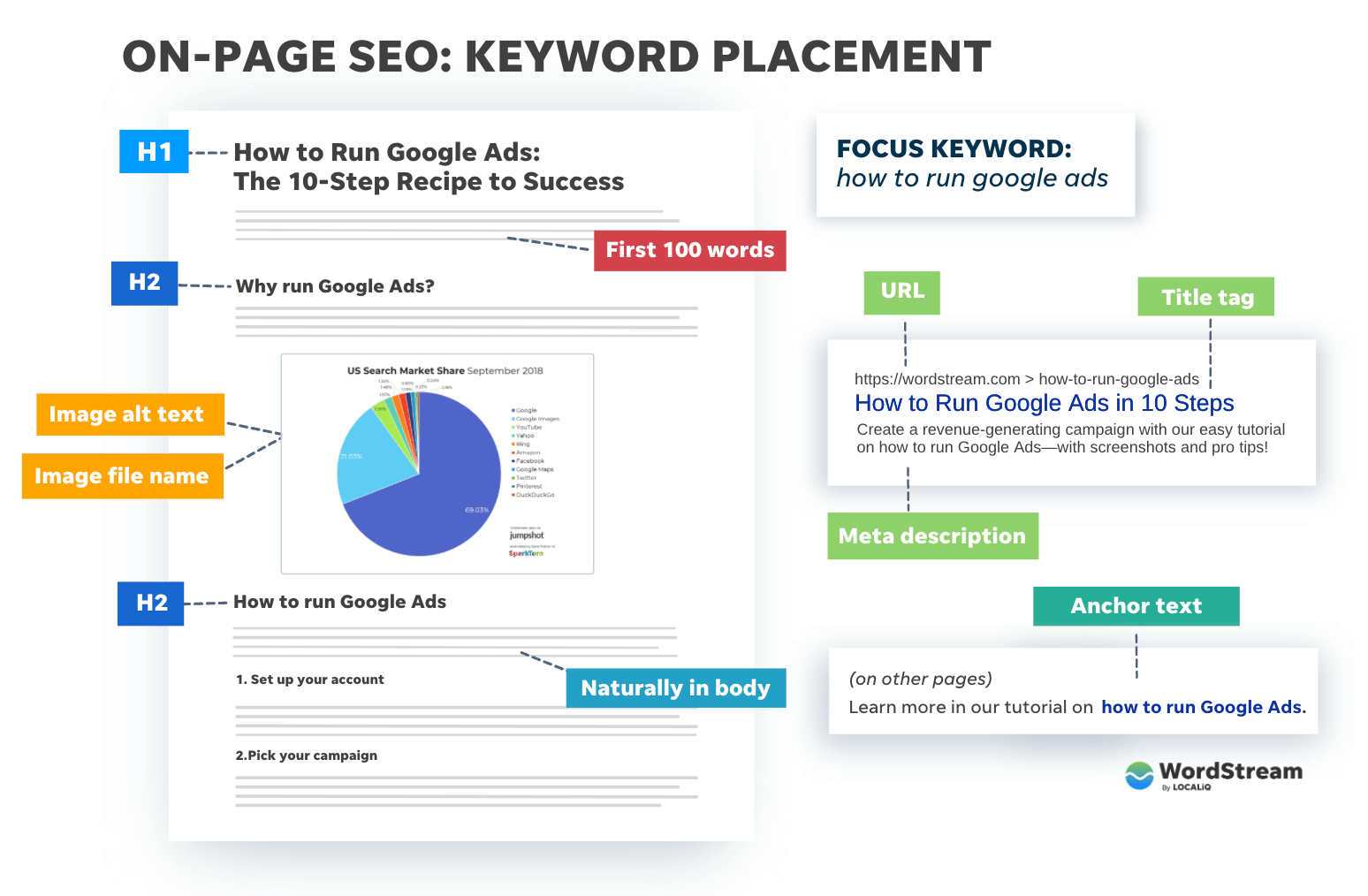
If a page is already ranking in the top 20 or 30, improving it will almost always bring faster results than creating a brand-new page and trying to push it into the top from scratch. For small businesses, every page should either bring in clients directly or strengthen the pages that actually convert them.
Service providers looking to improve search engine visibility for roofing companies often rely on the same local SEO fundamentals described here.
Local search results are one of the few areas where Google usually favors small businesses over big national brands. That’s why local SEO isn’t just an extra tactic for small businesses but the foundation of the entire strategy.
A properly optimized Google Business Profile plays a key role here. Your profile should include relevant information, regular updates with photos, replies to reviews, and local keywords in the description. At the same time, your website shouldn’t rely on a single “Contact Us” page. It should include dedicated landing pages for specific cities, neighborhoods, or service areas.
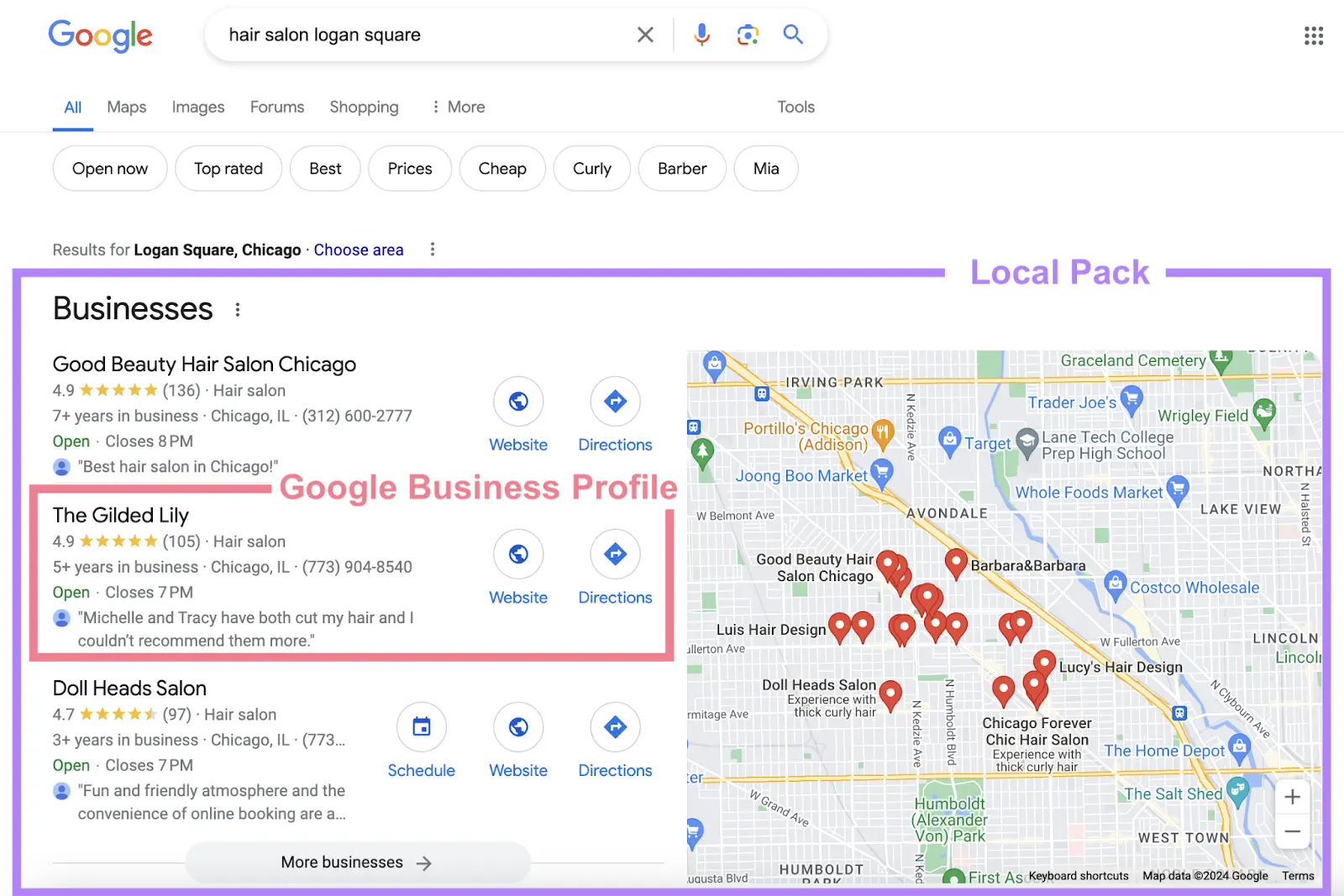
In local SEO, it is not the “bigger” player that wins, but the one that more accurately matches the user’s geo query.
For businesses targeting nearby customers, local SEO services for small business often become the highest-priority investment before scaling broader campaigns.
Content for a small business website should be practical, not “expert-level” just for the sake of sounding smart. The best-performing content answers the client’s key questions before they even contact you: price, delivery time, process, possible risks, and available options.
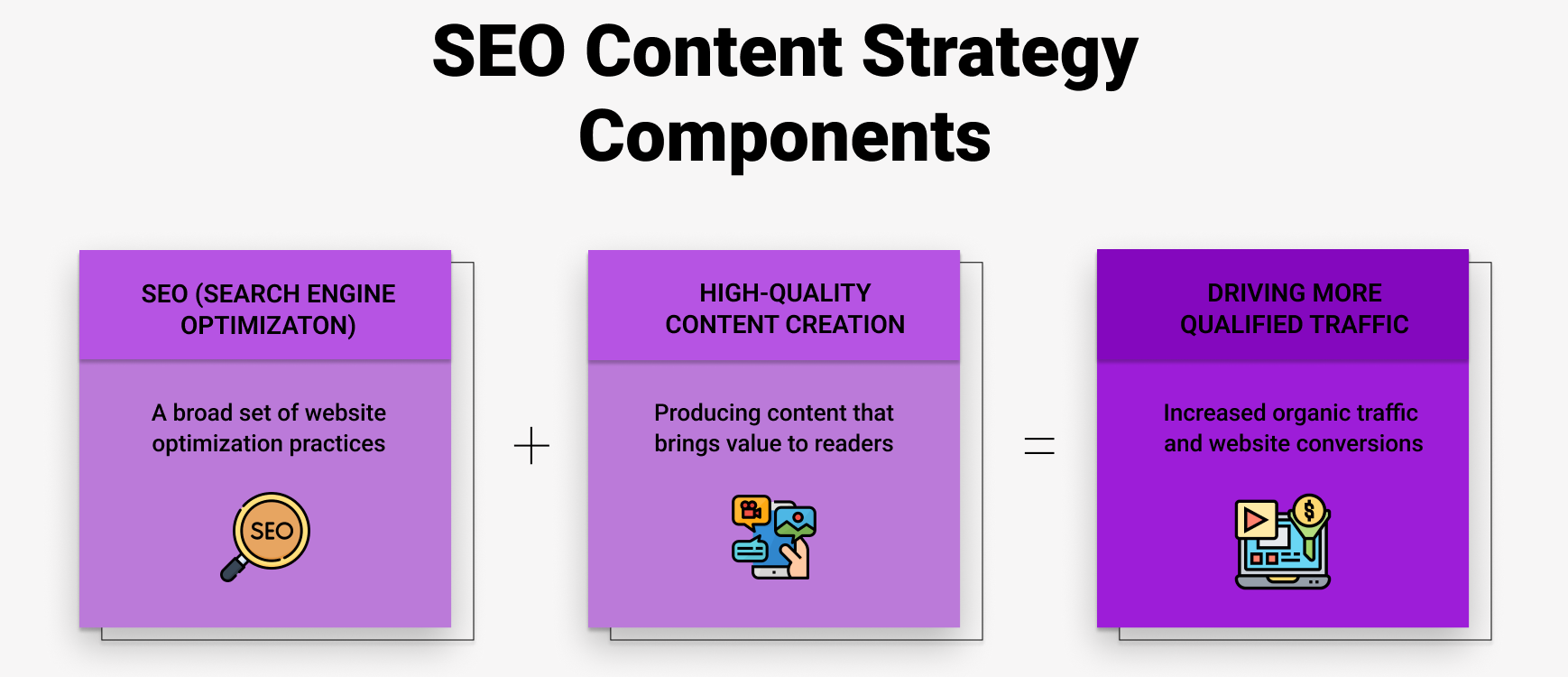
One of the important tips for promoting a small business online with SEO is not to try creating evergreen articles but to focus on real search scenarios people use when making decisions: “how much it costs,” “which option is better,” “when you shouldn’t order this,” and “common mistakes when choosing”. This approach doesn’t just drive organic traffic but significantly improves lead quality. For a small business, every piece of content should help close sales, not just increase the number of pages on the website.
The same structured approach is described in our comprehensive guide for HVAC contractors, where local visibility becomes one of the strongest growth drivers.
Internal linking is one of the easiest ways to redistribute SEO authority across your website without increasing your budget. This often becomes a powerful growth factor for small businesses, especially if you don’t yet have many external backlinks.
The logic is simple. Informational pages should strengthen commercial pages, not exist in isolation. Service pages should be logically connected to each other. Blog content should naturally lead users toward conversion. Navigation should clearly signal to Google which URLs are priorities.
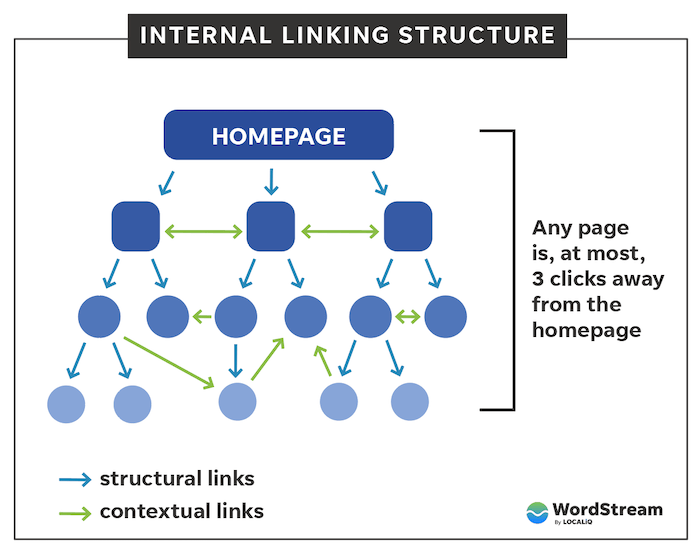
Proper internal linking also helps you push important pages into the top results faster and compensate for a lack of external backlinks, which is a serious competitive advantage for small businesses.
Coming back to link building, it is important to note that for small businesses, this is not about quantity but about relevance. At the beginning, small websites just need a basic level of trust from users and search engines. That can come from mentions in local directories, niche business platforms, local media outlets, etc. The most valuable links are the ones that confirm your business is real: business associations, professional communities, and trusted industry platforms.
It is also worth mentioning content placement platforms like Collaborator. For small businesses, tools like this are often one of the few ways to get relevant, niche backlinks in a controlled and relatively affordable way. You can filter websites by industry, language, geography, and quality and find solid placements even with a small budget. The key isn’t mass publishing but carefully selecting donor websites and naturally integrating links into content that looks useful and organic, both for users and search engines.
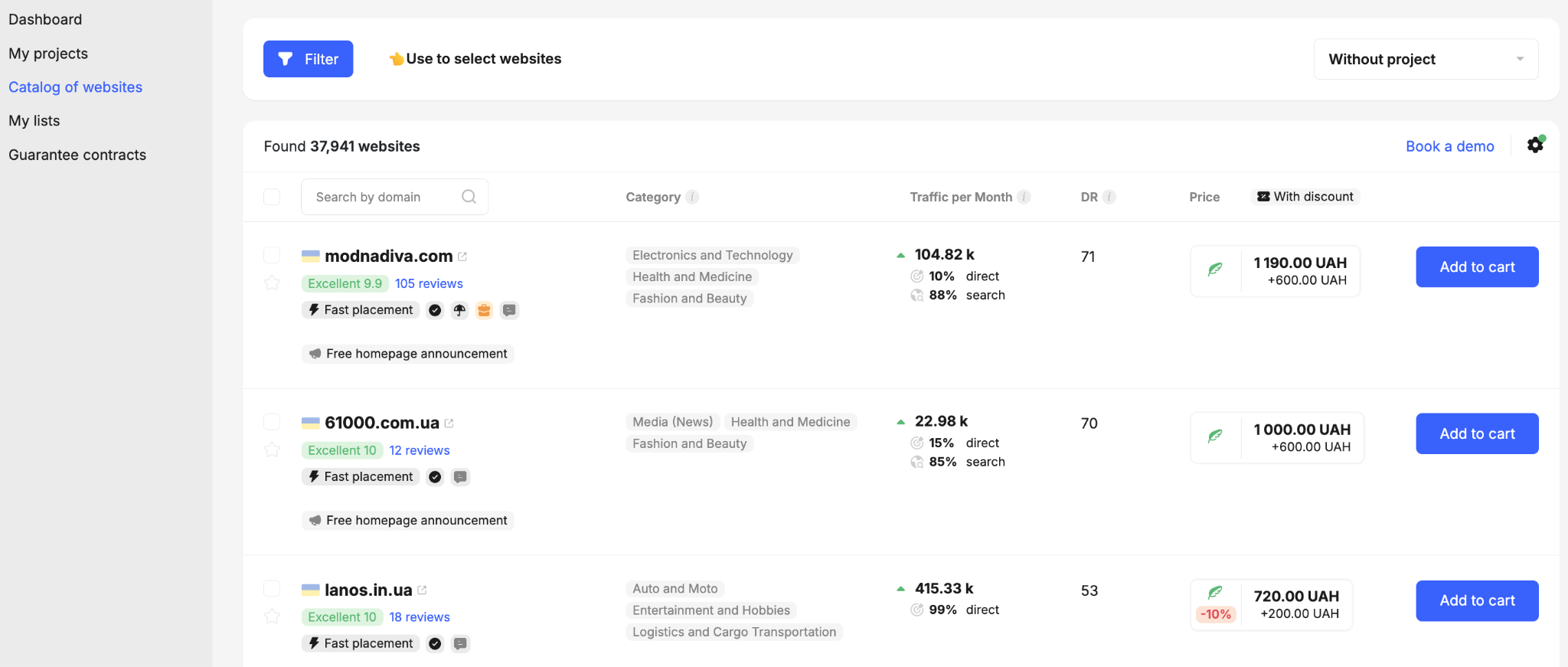
On the other hand, placing links on low-quality aggregators or questionable donor websites often brings more risk than benefit. When you combine a well-structured minimal link-building strategy with proper on-page optimization and strong local SEO, even a small business can grow in competitive niches without massive spending.
In practice, even a limited but strategically built backlink profile can show noticeable results early on. Here you can see how early-stage link building for small businesses with just a handful of relevant links significantly improves search visibility.
SEO performance for a small business isn’t measured by how many tasks were completed; it is measured by real business impact. That’s why analytics here should be much more practical than for big brands.
The first indicator is organic search traffic. However, you should analyze it not in general, but in the context of optimized landing pages and queries that users click through. If traffic to service pages, local landing pages, or product categories is growing, SEO works correctly. If only blog traffic is growing without clear conversion signals, your strategy probably needs adjustment.
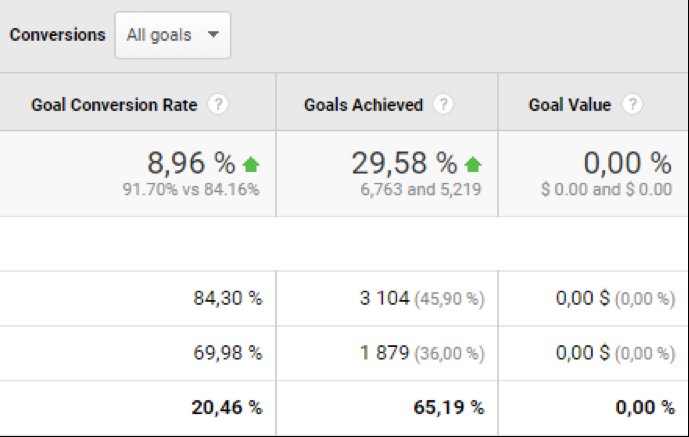
The second critical indicator is leads and targeted actions (conversions) from organic traffic. For small businesses, these can be contact form submissions, phone call clicks, “get directions” button clicks, new orders or bookings, etc. These actions prove that SEO is bringing real clients, not just visitors.
The third indicator is the visibility of key pages in the search. This isn’t about random ranking spikes but consistent presence in the top 10 for relevant commercial and local keywords defined in your semantic core. A small business needs to see steady, gradual growth in rankings, not dramatic jumps after every Google update.
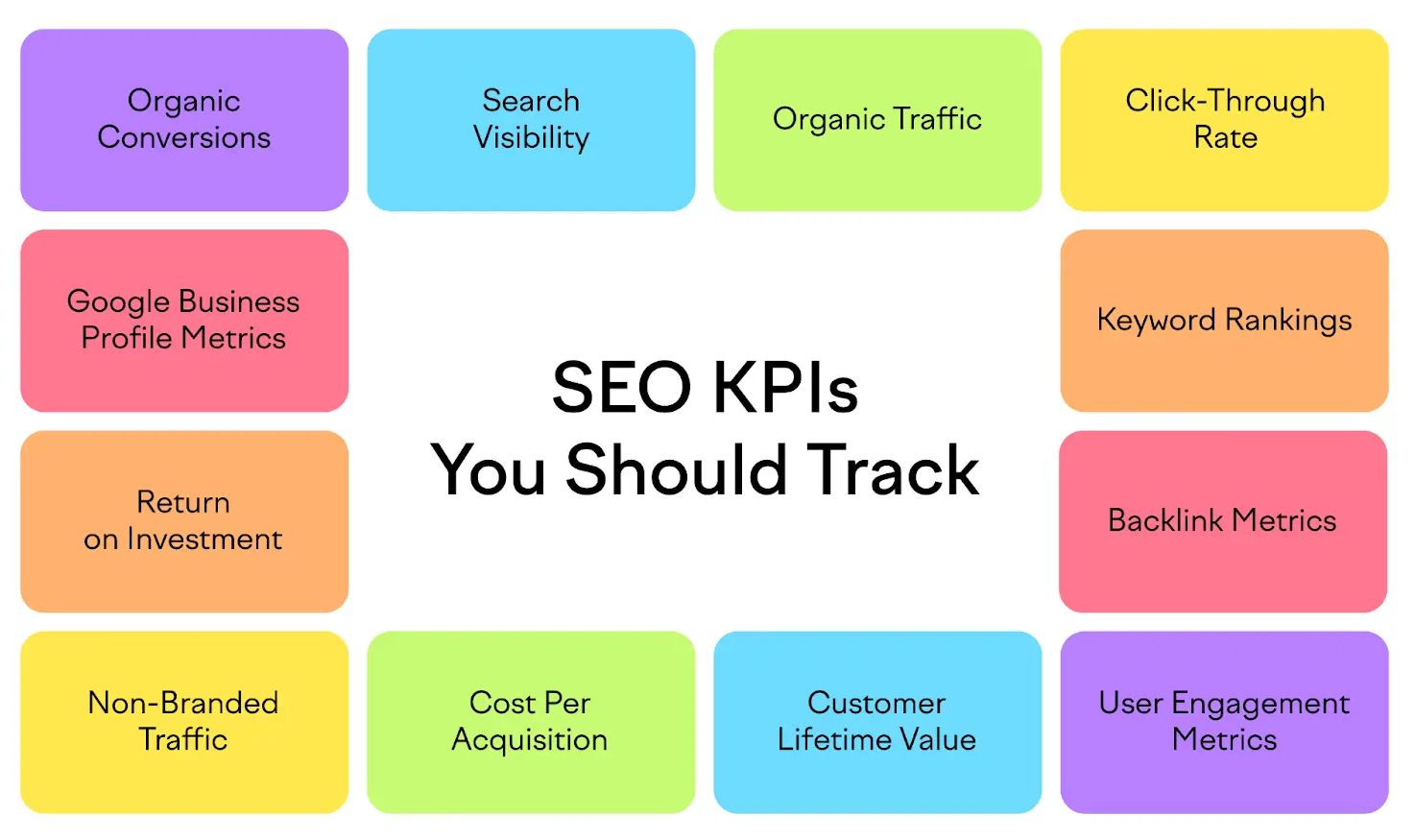
If your business depends on a specific city or region, local metrics deserve special attention. Profile views in Google Business, phone calls, direction requests, and website clicks from local search often give a much clearer picture of local SEO performance than traditional traffic metrics alone.
It is also important to evaluate SEO dynamically, not statically. Steady growth in organic leads over four to six months is a far stronger indicator of success than short-term traffic spikes caused by branded campaigns. Sustainable momentum allows you to scale SEO gradually, stay within budget, and maintain control over results.
At one point, Livepage was approached by a wedding photographer based in Punta Cana. Like many small local businesses, he struggled with a painful issue: no consistent leads coming from his website. At the start, the website attracted only around 100 visitors per month. It was essentially focused on promoting the homepage and reflected no real search demand from the target audience in the United States, namely, couples searching for wedding photography services in the Dominican Republic.
The Livepage team built an SEO strategy centered on local, low-volume but highly targeted search demand, instead of chasing highly competitive queries. Thus, we conducted in-depth competitor analysis in the U.S. search results, optimized the homepage around commercial intent, improved the mobile version of the website, and made contact points clearer and easier to use. A key part of the strategy was creating additional content tailored to specific wedding locations — hotels and restaurants in Punta Cana — where ceremonies are most often held.
The team also strengthened the brand’s local presence by setting up and optimizing its Google Business Profile, expanding the backlink profile with relevant mentions within the wedding niche, and building trust through niche-specific content, responsive review management, and showcasing the photographer’s real experience. This helped the website quickly get ahead of the competition, not with budgets, but with the accuracy of SEO solutions that were decided on together by our team and the client.
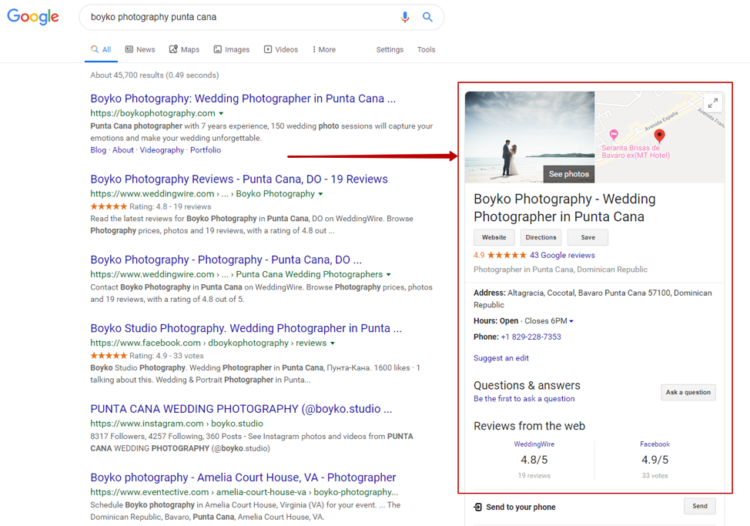
As a result, the website now ranks in leading positions for its target queries not only in the Dominican Republic but across the United States. Organic traffic and inbound inquiries have grown significantly over the past year. This case clearly shows that even a small local business can outperform big competitors not with larger budgets, but with smarter SEO decisions.
A similar long-term strategy was successfully applied in the construction company organic growth for TVOE case, where steady optimization outperformed short-term marketing tactics.
SEO for small businesses isn’t about trying to outrun big competitors. It is about setting the right priorities, making precise decisions, and working systematically. The most effective SEO strategies are those that recognize the limitations of small businesses while leveraging their strengths: flexibility, local expertise, and the ability to adapt quickly to demand. That’s what drives steady growth in leads and clients, not short-term traffic spikes.
The Livepage team helps small businesses build efficient, budget-conscious SEO strategies, from niche and competitor analysis to implementing solutions that actually work in your region and market segment. If you want SEO to bring in clients, not just traffic, Livepage can develop a growth strategy tailored to your business and budget.


“Livepage has proven to be a reliable source for rapid online growth. We started with 2,000 visitors per month. In 3 years together with Livepage we have reached 70,000 visitors and more than 100 leads from the site per month.”


“As for the results, we’ve been working together since 2015, and our traffic has increased 10x. I cannot say that Livepage was our first SEO company, but they have become the first SEO partner that helped us to achieve the success we were looking for.”


“Livepage delivers SEO efforts that have led to an increase in the site’s users, traffic, and conversions. The team uses a wide range of tools to achieve the client’s goals. They are attentive to the client’s needs, working with them in real-time and bringing in additional specialists when needed.”


“I am pleased with the quick task execution and the instant replies to my messages.”


“I like the complex approach that the Livepage team offers. Absolutely all team members work together; everyone is aware of what is happening on the project. We have one common goal – to increase our service sales, and the team is making every effort to achieve the goal as soon as possible.”


“We’ve been really impressed by how Livepage quickly understood our business and centred our PPC campaign around our objectives. We have achieved good results within a very short time in both revenue and ROI.”


“Everything is clear, timely, and understandable.”


“They have leveraged ideal opportunities to reach our business goals.”