




9 min reading
GA4 BigQuery Export: When You Really Need It


How long does it take to see SEO results? That’s a prime question businesses ask when dipping their toes in online promotions, which is no wonder. SEO is a substantial investment of effort and resources, and everyone wants to see the progress as soon as possible. However, SEO results don’t happen overnight. It takes the right approach and time for SEO to work and for your website to flourish with traffic inflow and better visibility.
In this in-depth guide, we’ll break down what impacts the SEO time frame, what milestones you can expect along the way, and how to strategically expedite SEO-driven improvements.
Recent studies indicate that over 70% of pages that rank in the top 10 results on Google are over 3 years old. So, why does SEO take so long? The answer lies in how search engines work. Simply put, SEO success hinges on proving to search engines that your site is worth a recommendation. It’s like building a reputation in real life. No one would consider you an expert by default. You earn trust and authority as you regularly demonstrate your knowledge, expertise, and helpfulness.
When it comes to SEO performance, search engines won’t instantly discover, crawl, and index your website. They compare it to competitors, monitor user behavior, and assess the value it offers. Any changes you make to optimize your website send a signal to search engines. Yet, those signals need time to accumulate before you see tangible growth in your SEO result report.
The core principle of Google’s search philosophy is delivering the most relevant, useful, and reliable answers to queries. The automated system uses over 200 ranking factors to carefully examine and analyze website quality. The most important ranking factors relate to:
How long does it take to rank on Google? Normally, Google estimates and weighs all ranking factors in combination, and it has thousands of web pages on the to-check list. Plus, the system is constantly refining its algorithm, which is complex and intricate, per se. So, gaining measurable SEO search results is a time-consuming task that takes a few months to celebrate the first benefits.
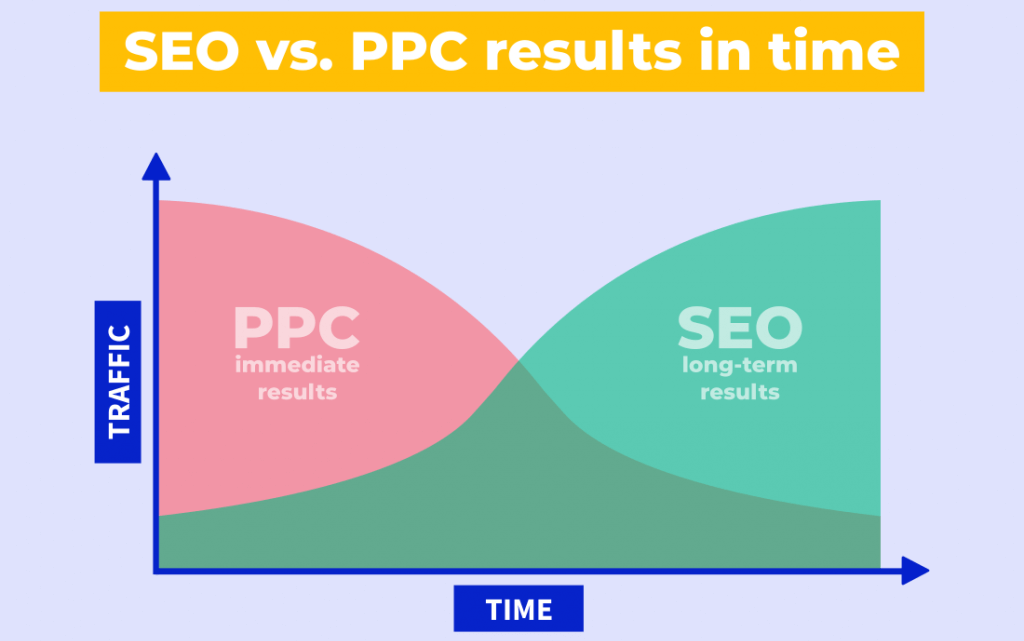
When measuring SEO vs PPC results, you can see that paid ads bring immediate progress while SEO outcomes are gradual. The SEO ranking timeline is different due to initially different promotion principles and goals.
With paid aids, you can get to the top of search results nearly instantly and stay there for as long as you are ready to pay for every click. In contrast, SEO is a long-term investment. It takes months to establish rankings, but once you earn credibility, you’ll capitalize on a lasting value. And you don’t have to pay for each visitor.
SEO results timeline is naturally longer, while ensuring sustainability in the long run. At the same time, paid ads generate quick visibility for an effective website boost.
How long does it take for SEO to take effect? While we say SEO is a long game to play, there is still no specific SEO progress timeline that is universally applicable to all business situations and scenarios. Some sites may see traction in about three months, while others will have to wait a year or more to reach their goals. There are multiple factors that affect the SEO timeline.
Many would primarily look into website-related factors when estimating their SEO campaign timeline and virtually ignore business-specific factors. It’s an oversight since the time to see results doing SEO largely depends on business circumstances as well.
Businesses that invest time in choosing the right niche often achieve measurable SEO growth faster because they compete for more realistic search opportunities.
To know exactly how long it takes before SEO works, solid business-level decisions should be considered along with website factors.
When evaluating SEO agency vs in-house options, companies should consider available expertise, internal resources, and the speed at which each approach can deliver measurable improvements.
When does SEO start working? Taking into account the number of factors impacting SEO speed, there is no one-size-fits-all answer to this question. The average time to see SEO results is 3 to 6 months. But again, each website is different. While this timing is true for established sites, new projects are slower to gain SEO weight. A typical SEO ROI timeline splits into three distinct periods, defined by the actions you take and the progress you notice when tracking SEO performance.
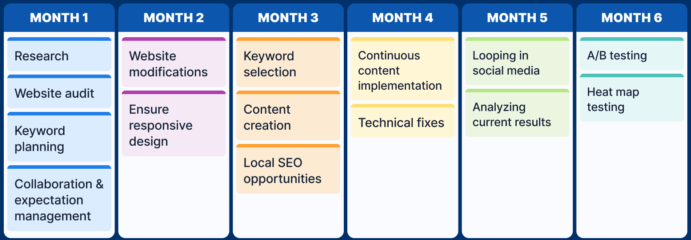
Within the first months, you lay the foundation for a future big leap by:
You might notice faster indexing of your pages, slight ranking boosts for less competitive keywords, or a modest uptick in traffic. These are small yet meaningful wins, proving that the groundwork pays off.
It’s the time when consistent optimization through quality content creation, link outreach, digital PR, sitemap updates, and further keyword integration and expansion will earn more visibility for your website. As you monitor SEO results, you’ll notice:
This is when you start reaping the fruits of your efforts, and the SEO effect becomes measurable.
By this point, your efforts accumulate, and you can make much of it by enjoying real benefits like:
In about a year, SEO shifts from minor wins to significant ROI. It sets up as your strong marketing asset, driving results and cost-effective growth that scales along with your business.
Understanding these timelines is one of the strongest reasons to invest in SEO, since sustainable rankings continue generating traffic long after the initial work is completed.
How to get the best SEO results quickly? As SEO shines in the long run, you can’t expect too fast SEO results. However, you still can buck things up and shorten the waiting time with the right strategies.
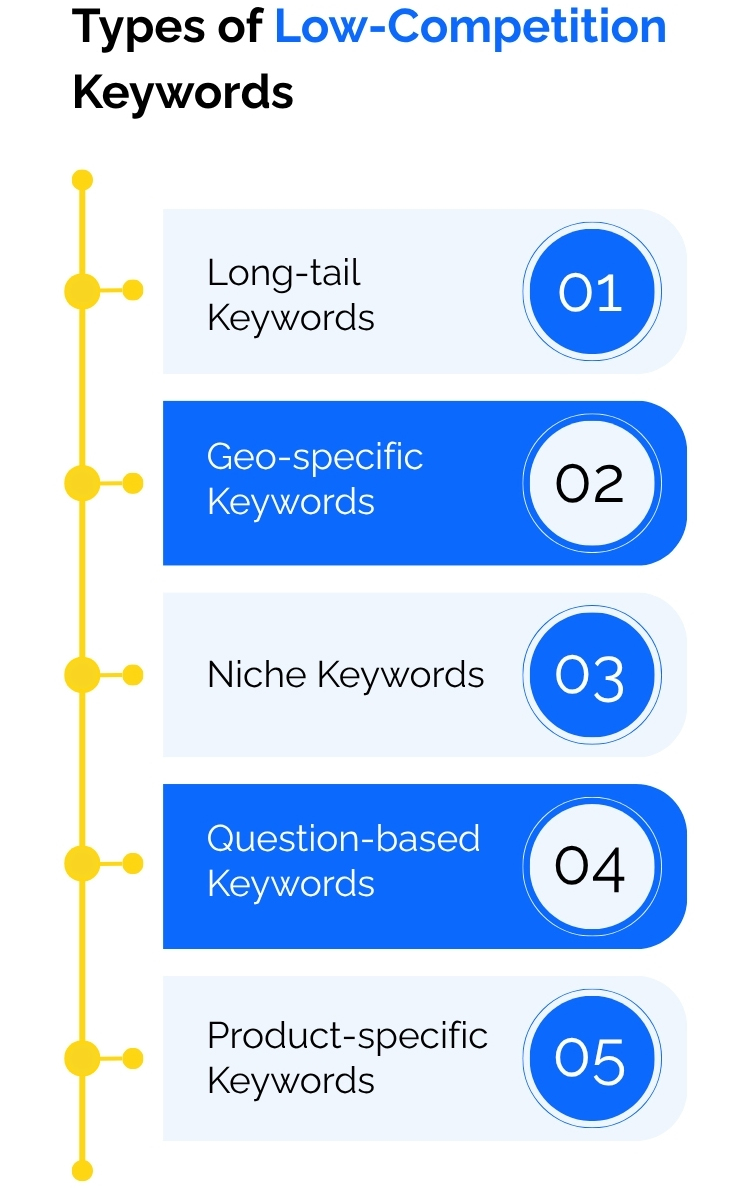
If you target highly competitive keywords from the start and try to squeeze into the league of authoritative websites, you risk wasting time and resources. Instead, you can make quicker progress by focusing on keywords that have a lower search volume but a stronger search intent. For example, “best hiking boots for beginners” is less competitive than “hiking boots”, yet it hits the searchers more determined to buy. Thus, you attract more qualified traffic and gradually make your way to high-volume keywords.
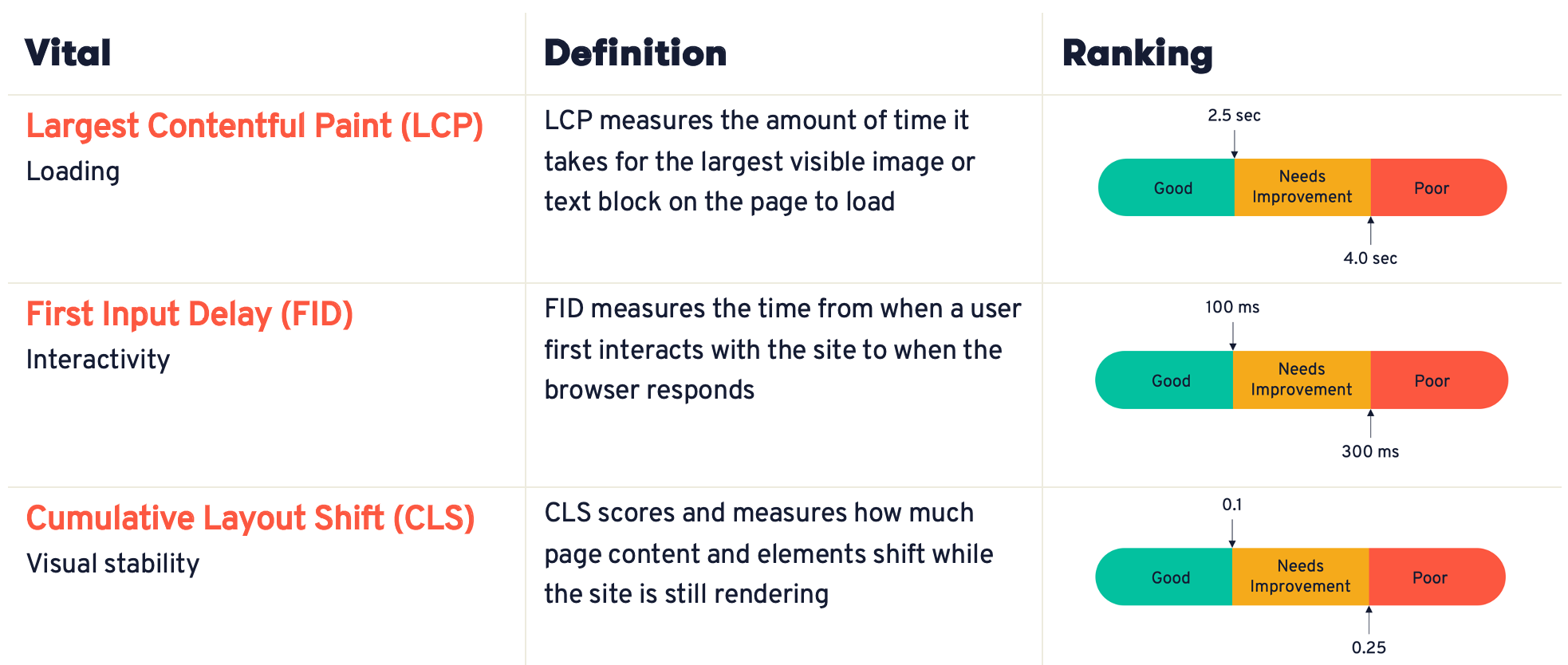
A slow, clunky website can push people away before they even read your content. Poor UX drives search engines away as well. So, website speed and usability optimization from the start is one of the fastest ways to speed up your SEO. Compressing images, minimizing unnecessary plugins and scripts, improving mobile friendliness, and creating intuitive navigation improve rankings and conversions in the short run.
Google expects you to consistently cover a specific subject in a detailed and professional manner, demonstrating your expertise and offering genuine value to readers. Hence, juggling random posts won’t move the needle much. To build authority and win trust, you need to create content clusters. A cluster is a set of interlinked web pages built around a pillar page or topic supported by related articles or subtopics. This way, you can establish a strong content ecosystem and show Google that you know your onions.
Backlinks are still one of the strongest SEO ranking signals. Yet, link quality makes a huge difference for SEO speed. Ten links for suspicious and shady sites are not even close in impact to one link from a relevant high-DR website. To really reinforce your link profile and earn valuable references:
Quality links help you build your own authority and rank faster for target keywords.
Investing in comprehensive SEO strategy services helps businesses avoid fragmented optimization efforts and maintain consistent progress across all ranking factors.
When considering “How long does SEO take?”, you think about how to get proven SEO results faster and often disregard certain mistakes that can drag out the process.
Projects such as long-term digital growth for UK community Hoxton Mix highlight the importance of combining technical optimization with strategic content planning for sustainable results.
SEO growth is a lengthy process shaped by strategy and patience. It takes months to unfold meaningful growth, with multiple external and on-site SEO elements that influence search results and define the efficiency of your promotion campaigns. In a word, SEO is a marathon that rewards those who follow the right approach and consistently stick to the course.
One of the proven ways to achieve SEO results faster is getting an expert partner on board. At Livepage, we offer full-stack SEO services that embrace everything from in-depth SEO audits and keyword research to comprehensive off-page and on-page SEO and custom SEO strategies.
Success stories of our clients prove that we know how to tackle challenges and churn out SEO solutions that work and bring desired results within a shorter timeline. We can lead your website to success, whatever your industry or niche.
While the promotion of a well-established website can bring the first results in 1–2 months, giving a boost to a new site will take longer. Small improvements will show up in about 4–6 months, while building authority can take up to a year or even longer.
Half a year is actually the time for SEO to work and start bringing noticeable results. The lack of meaningful improvements doesn’t mean you should quit. It means you should review your strategy and adjust your approach.
Local businesses really tend to yield SEO results faster (within 3–4 months) because they usually target smaller geographic areas and low-competition keywords aimed at users with a stronger commercial intent who are looking for specific products or services.


“Livepage has proven to be a reliable source for rapid online growth. We started with 2,000 visitors per month. In 3 years together with Livepage we have reached 70,000 visitors and more than 100 leads from the site per month.”


“As for the results, we’ve been working together since 2015, and our traffic has increased 10x. I cannot say that Livepage was our first SEO company, but they have become the first SEO partner that helped us to achieve the success we were looking for.”


“Livepage delivers SEO efforts that have led to an increase in the site’s users, traffic, and conversions. The team uses a wide range of tools to achieve the client’s goals. They are attentive to the client’s needs, working with them in real-time and bringing in additional specialists when needed.”


“I am pleased with the quick task execution and the instant replies to my messages.”


“I like the complex approach that the Livepage team offers. Absolutely all team members work together; everyone is aware of what is happening on the project. We have one common goal – to increase our service sales, and the team is making every effort to achieve the goal as soon as possible.”


“We’ve been really impressed by how Livepage quickly understood our business and centred our PPC campaign around our objectives. We have achieved good results within a very short time in both revenue and ROI.”


“Everything is clear, timely, and understandable.”


“They have leveraged ideal opportunities to reach our business goals.”