



1 min reading
Review of Cooperation with Livepage from MISSIA Bridal


Today, using artificial intelligence is no longer just an “experiment” but has become part of the daily workflow for both SEO specialists and business owners. AI solutions are actively used for content generation, semantic analysis, technical website audits, and even building SEO strategies. This allows companies to significantly speed up workflows and scale processes without proportionally increasing costs for additional external resources. At the same time, the number of risks is growing along with the benefits. Instead of optimizing workflows, businesses can end up scaling problems that become much harder to fix later on.
In this article, we will look at why AI solutions have become such a major trend in SEO. We will answer many questions, such as is AI effective for SEO, how are they used today, what are the advantages and risks they pose, and how to properly use AI in SEO to achieve real results without losing traffic, conversions, or search rankings.
The rapid rise of AI in SEO is primarily driven by changes in the search landscape and how companies approach website promotion. Competition in search results keeps increasing: more content, websites, and pages are competing for user attention around the same keywords. In this environment, businesses need to react faster to changes, test new hypotheses, and expand their search presence more efficiently, and this is exactly where AI in SEO provides a noticeable advantage.
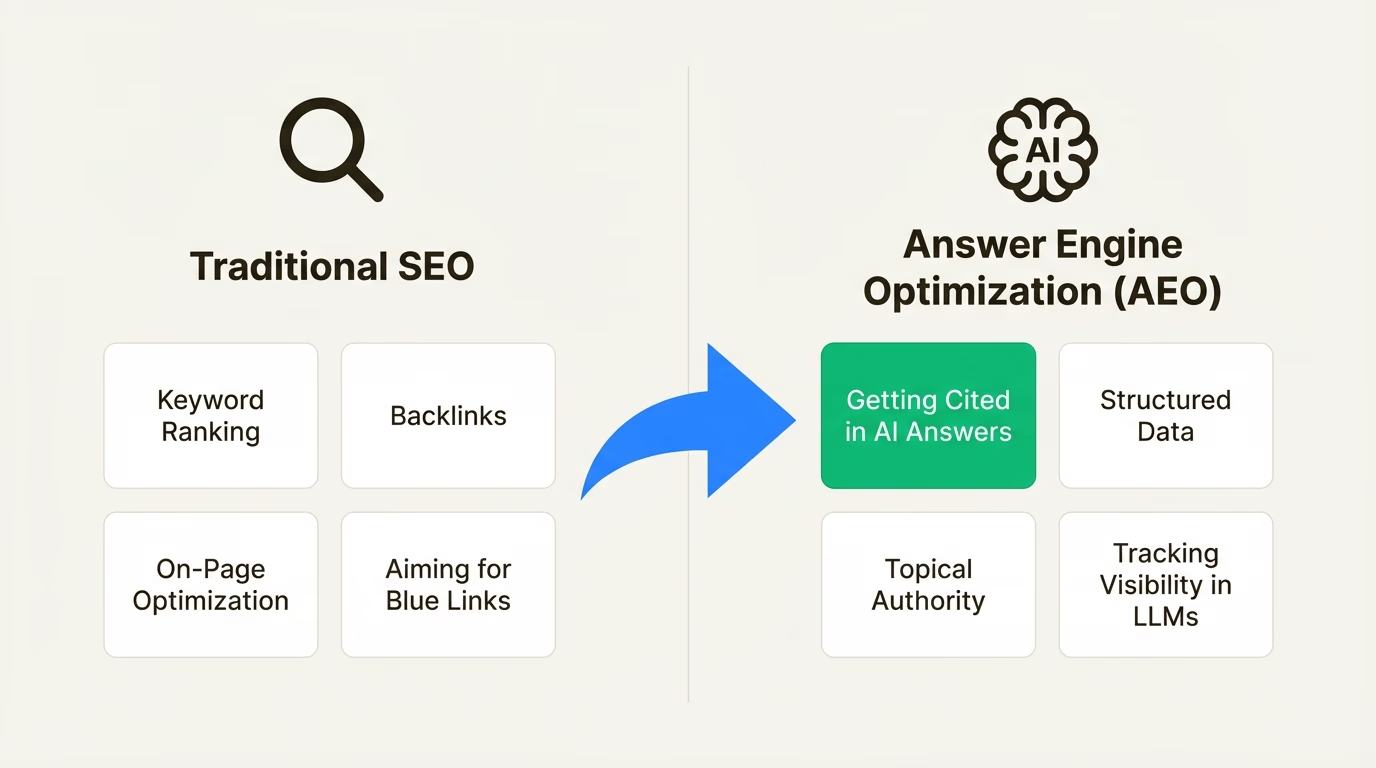
Businesses should prepare for the new AI-powered Google search by combining technical SEO with AI-focused optimization strategies.
Another key factor is limited resources. Not every company can afford a dedicated full-time SEO team for content creation, analytics, technical optimization, strategy development, and testing. Also, SEO specialists can’t spend all of their working hours analyzing a single complex task while still handling dozens of other optimization activities.
AI tools help partially close this “gap” in capabilities by automating routine tasks, speeding up data processing, and reducing the time required for basic SEO operations without serious involvement of specialists. This is how SEO automation using AI works, allowing even small SEO teams to handle a larger workload without significantly sacrificing speed.
The evolution of the tools themselves also plays a major role. Modern AI solutions have become more accessible, easier to use, and far more functional. In the past, complex analysis or large-scale content generation required dedicated specialists or substantial budgets. Today, many of these processes can be completed much faster with AI tools like ChatGPT, Perplexity, and Claude. That’s why AI tools for SEO are now actively used by both specialized agencies and online business owners.
At the same time, you should understand that AI is not just a short-term trend but represents a new stage in the evolution of SEO. Its popularity is driven by real market demands: speed, scalability, and efficiency. However, this also creates the biggest risk of treating AI as a complete replacement for human expertise, when in reality it should enhance specialists’ work, not define its quality.
Today, AI is used across almost every major stage of SEO, from content creation to analytics and technical optimization. While most of these tasks were previously done manually and required significant time investments, a large portion of them can now be automated or dramatically accelerated with artificial intelligence.
You should also remember that AI does not replace SEO as a process but only optimizes certain parts of the workflow. Can you use AI for website promotion? Definitely. However, AI effectiveness for SEO depends directly on how well it is integrated into a specialist’s workflow: whether goals are clearly defined, whether results are reviewed, and whether AI is used as a tool rather than the sole source for final decisions.
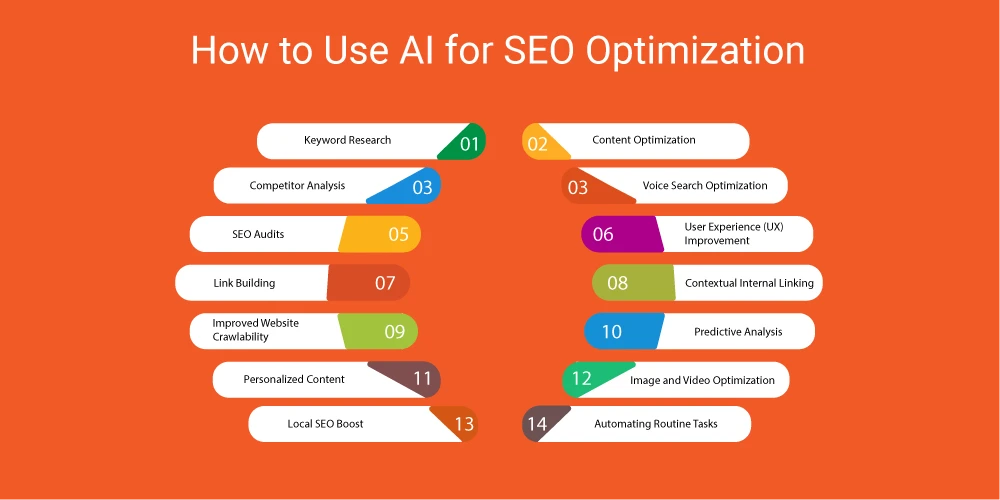
The most common use of AI in website SEO promotion is working with content and semantics. AI has long been used to generate both simple and complex content, write meta tags, build page structures, create FAQ sections, and even perform initial keyword collection and clustering. This allows teams to significantly speed up content production and scale websites for a large number of search queries.
This is especially valuable for projects with large-scale structures, such as eCommerce websites, aggregators, or services with pages targeting multiple locations. In these cases, AI helps quickly build the basic page structure and fill it with generative content, dramatically reducing the time needed to launch new sections of a website.
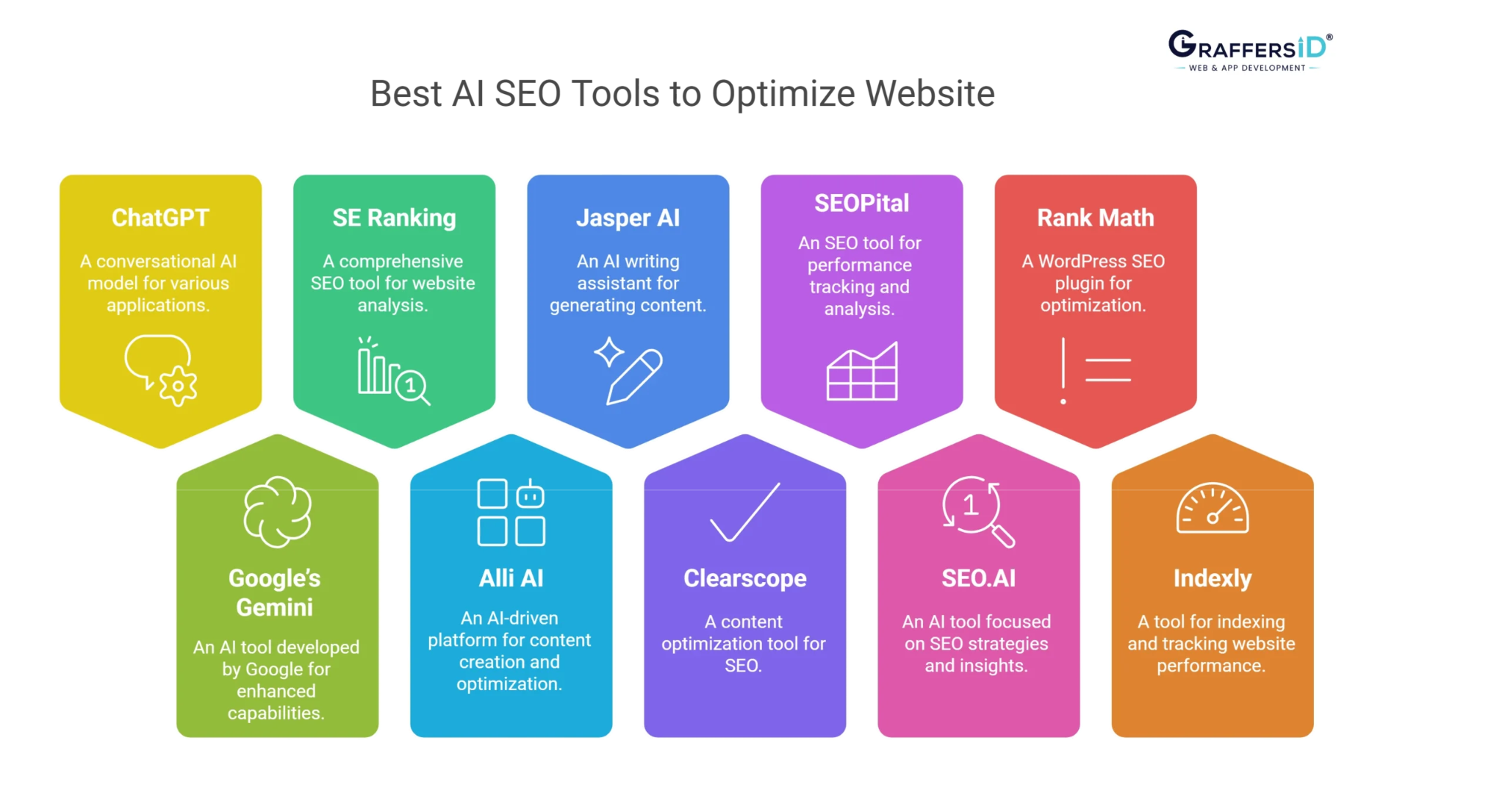
The most popular AI solutions used in SEO today are:
This is also where the biggest risks appear. For example, AI often generates template-like content that does not consider business specifics, target audience nuances, or real competition within the niche. This is exactly how one of the main risks of using AI in SEO appears when automation tools are used separately from actual business needs.
Without proper semantic research through SEO tools and without quality control over generative content, such material may not only fail to rank but can also negatively impact the overall effectiveness of website promotion. That’s why how AI affects SEO performance largely depends on whether you use it as a tool for creating an initial draft of structure and content or as a full replacement for professional SEO copywriting.
Beyond content generation, AI is also widely used in analytics and the technical side of SEO. Its biggest advantage here is the ability to quickly process large volumes of data and identify common patterns or trends that are much harder to spot manually when reviewing massive datasets. This can include competitor analysis, evaluating website structure, detecting technical issues, checking page indexation, or generating new growth hypotheses.
When used correctly with properly structured prompts, AI tools can automate parts of SEO audits, identifying duplicate pages, meta tag issues, incorrect redirects, internal linking problems, or content structure errors by relying on SEO best practices and publicly available expert recommendations.
These tools can also quickly summarize data from websites and analytics platforms (for example, Google Search Console, Google Analytics 4, or third-party analytics services) and generate initial insights. With this in mind, many modern companies are exploring whether AI can be used for website promotion, not only in content creation but also in technical optimization and analytics workflows.
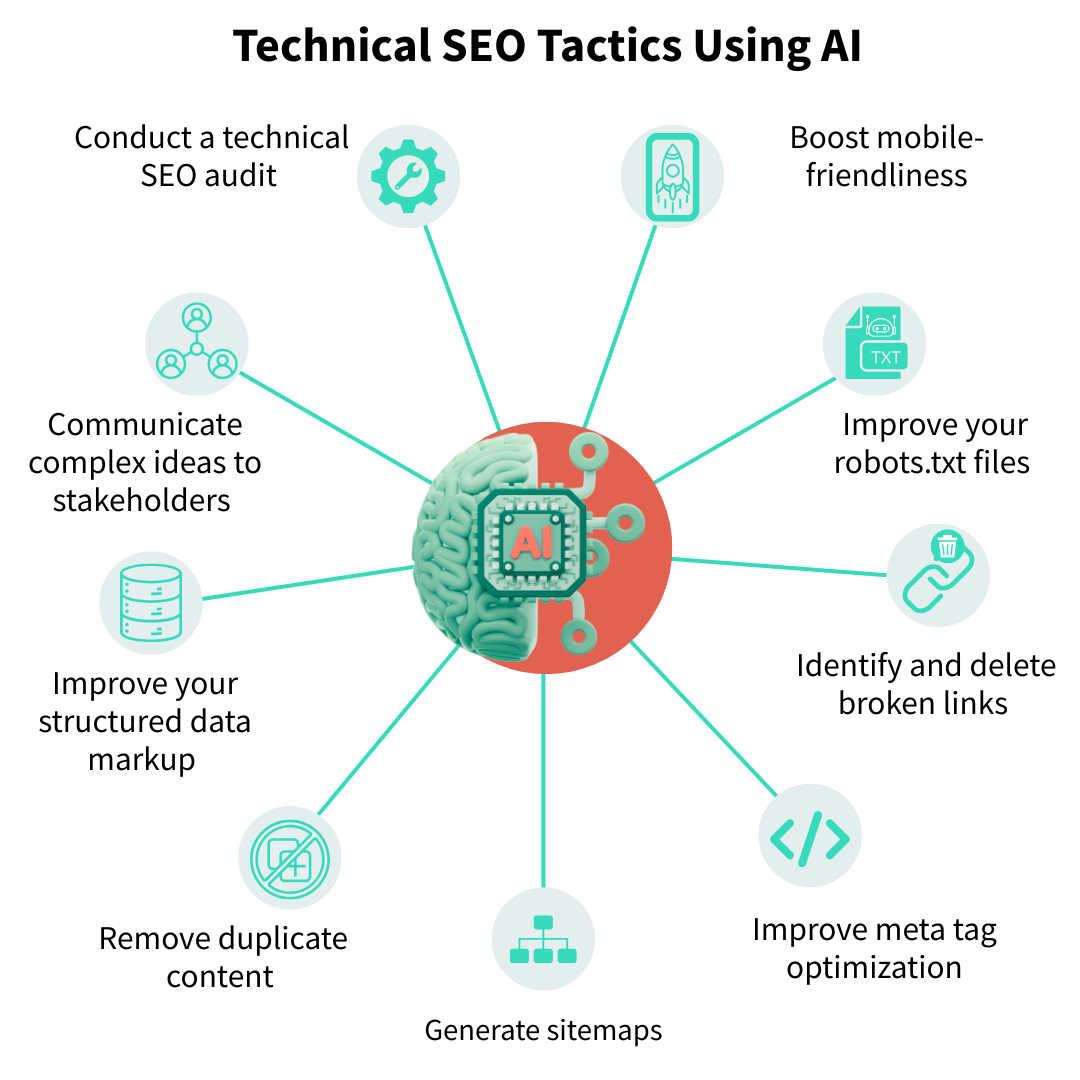
The most notable AI-powered tools in this area are:
However, the key limitation is that AI cannot always fully understand context the way an SEO specialist can. For example, it may detect an issue, but it will not always correctly assess its priority or impact on final results unless it “knows” the background of how a page was created or what role it plays within the overall website structure. That’s why AI should primarily be used as a tool for accelerating data analysis. At the same time, final decisions should still rely on the expertise and strategic understanding of SEO professionals working on a specific project.
To build an effective automation strategy, you should carefully weigh the pros and cons of using AI in SEO from the perspective of real business goals.
The biggest advantage of AI in SEO is the significant increase in task performance speed. Processes that previously took hours or even days, such as keyword research, building page structures, or competitor analysis, can now be completed much faster. This allows teams to launch new pages more quickly, test hypotheses faster, and respond to search engine changes without pulling focus away from other important SEO tasks.
Another major advantage is scalability. With AI, businesses can work with a much larger volume of content, pages, and search queries without proportionally expanding their teams. This is especially important for projects with large numbers of categories and filters, where the speed of creating new pages directly impacts how much search demand the website can capture.
AI also significantly simplifies working with data. SEO, as a channel for website promotion in search engines, involves analyzing huge volumes of information: keywords, ranking dynamics, competitor activity, and technical performance metrics. AI tools help structure this data, identify patterns, and generate initial insights faster, allowing specialists to focus more on strategic decisions instead of spending hours processing information manually.
Another significant benefit is the reduction of operational workload. Automating routine processes, such as report generation, audits, or creating technical tasks, gives SEO specialists more time to focus on strategy development, project growth, and finding new opportunities for expansion.
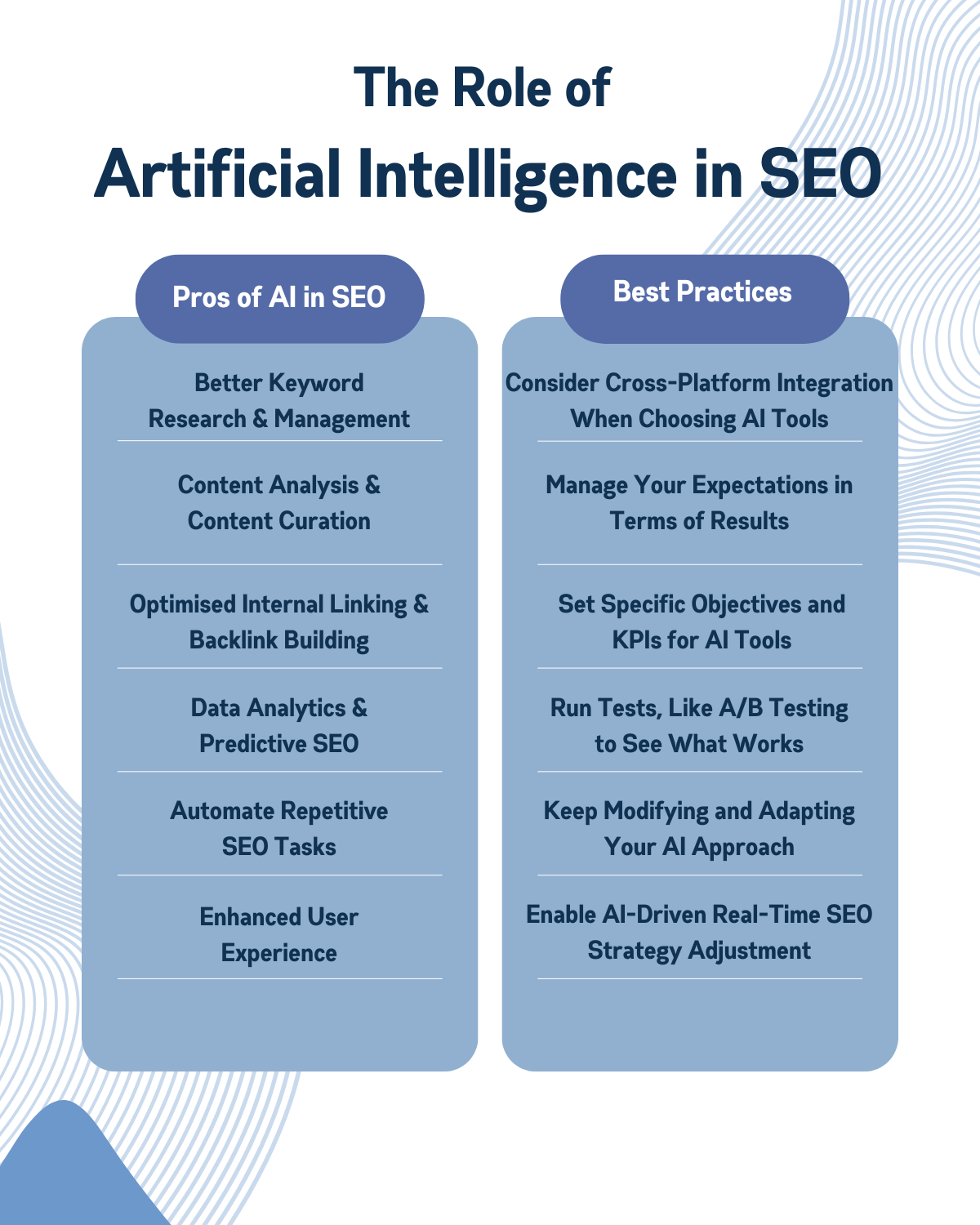
You should also understand that all of these advantages work only when AI is used correctly. If the core SEO strategy built by specialists is flawed, automation powered by generative systems will simply accelerate the scaling of existing and future mistakes. That’s why the question of how to use AI for SEO properly has become a strategic challenge for companies that want to stay competitive.
Companies investing in AI SEO promotion gain the best results when AI supports, rather than replaces, strategic SEO decision-making.
Despite the obvious benefits, there are significant risks of using AI in website promotion that can negatively impact its performance. One of the biggest drawbacks is the template-like nature of many AI-generated responses and solutions. AI works based on existing data and often produces generalized approaches that fail to account for the specifics of a particular case unless specialists provide enough context. As a result, a website can end up looking “just like everyone else,” without a clear, unique value proposition for search engines like Google.
Businesses should evaluate the possible AI-generated content harm when integrating AI into long-term SEO workflows.
Another major issue is declining content quality. Without proper oversight from SEO specialists, AI can generate content that looks technically correct on the surface but does not actually match real user intent. It may fail to provide deep analysis, lack the feeling of human writing and expertise, or even contain inaccurate citations and distorted facts.
This becomes especially critical for businesses operating in industries with high E-E-A-T requirements, such as healthcare, finance, or IT. In YMYL niches, website pages can lose rankings due to insufficient expertise, authority, and trustworthiness.
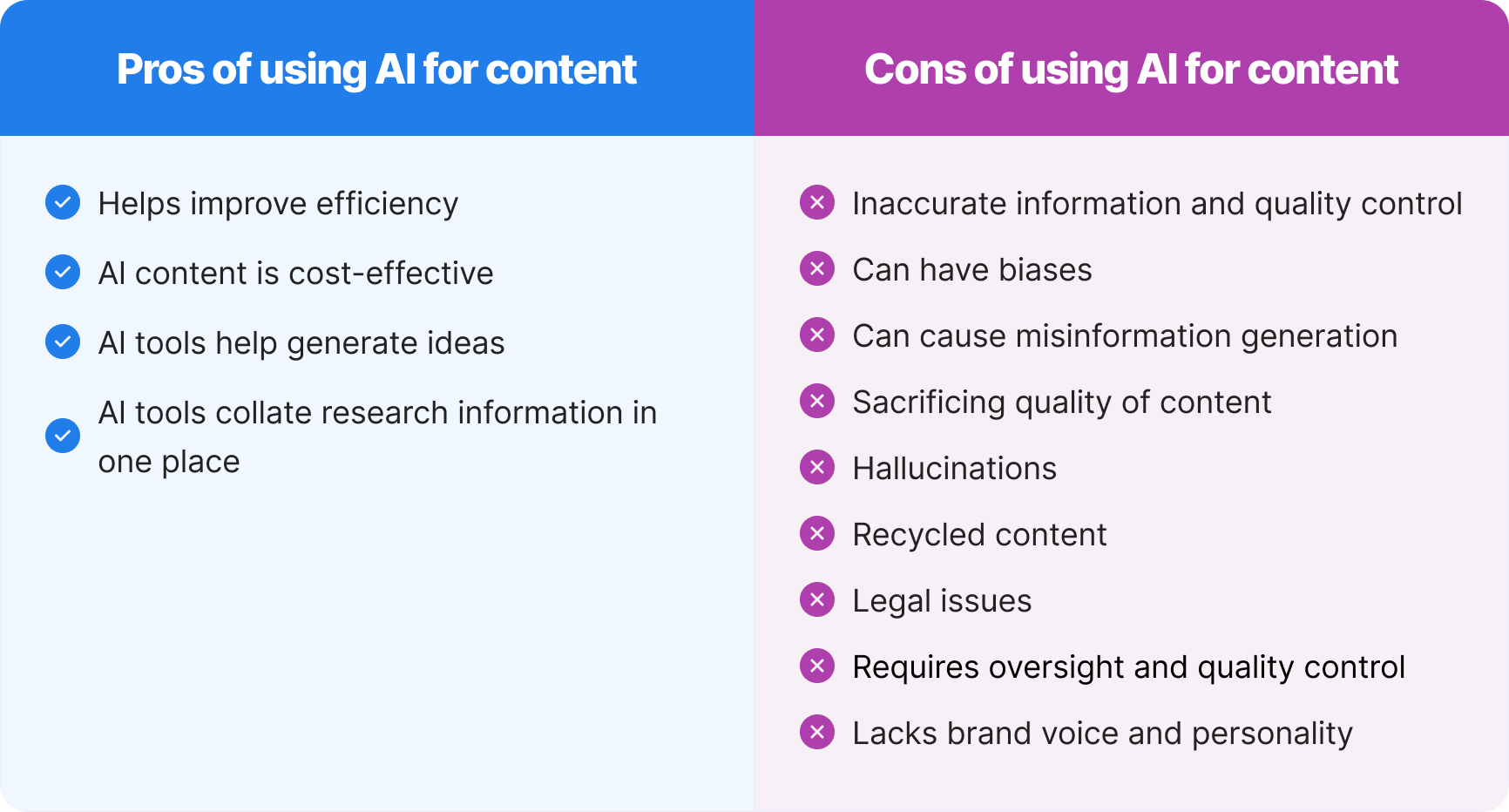
You should carefully analyze the impact of AI on website rankings and consider the risks tied to automated semantic optimization. AI can incorrectly interpret keywords, generate non-existent or unnatural search queries, combine incompatible search intents, or suggest structures that do not align with the actual logic of search results. In these cases, even technically correct optimization based on such recommendations will not produce results, because the page still will not satisfy the user’s real needs.
Finally, one of the most common problems is overreliance on AI. When AI becomes the only source of information for decision-making, specialists or business owners gradually lose control over the actual state of their processes. This often leads to shallow analysis, a lack of deep niche understanding, and decisions that ignore the company’s real business goals. That’s why AI should remain a tool in the hands of specialists, not a replacement for them.
When working with content, the right approach is to use AI for creating initial drafts and generating ideas, not for finalizing content before publication. For example, in eCommerce projects, AI can quickly generate basic descriptions for products or categories, but these texts still need to be refined based on real search semantics and audience needs. In SaaS or IT niches, AI can help build the structure of service pages, but the actual content should still be finalized by experts to meet the expectations of a more specialized and knowledgeable audience.
When working with semantics, you should not rely entirely on automated keyword suggestions. AI can quickly collect a basic keyword core or group queries, but checking search intent, assigning queries to pages, and prioritizing keywords should still be done manually. This stage forms the foundation of the SEO strategy, and mistakes here affect the future performance of the website.
As for analytics, AI should mainly be used to speed up data processing: detecting technical issues, conducting initial competitor analysis, and identifying traffic or ranking patterns related to seasonality or search engine algorithm updates. However, interpreting this data should always remain the responsibility of SEO specialists, since the same metric can mean very different things depending on timeframes, events, website type, and the specifics of the business model.
In this context, it becomes especially important to understand how AI impacts SEO and why automation without proper oversight can sometimes produce the opposite of the expected result.
Let’s look at a practical example of how to use AI for SEO promotion and how it changes SEO approaches, opening up new traffic sources for businesses. As part of a project for a local business in the U.S. (the Florida market), the Livepage team tested an approach focused not only on traditional search rankings but also on visibility in AI-generated responses.
The main goal was not simply to grow the backlink profile, but to build brand presence in AI responses through semantic link building, an approach that takes into account how ChatGPT, Perplexity, and Claude generate responses based on user queries.
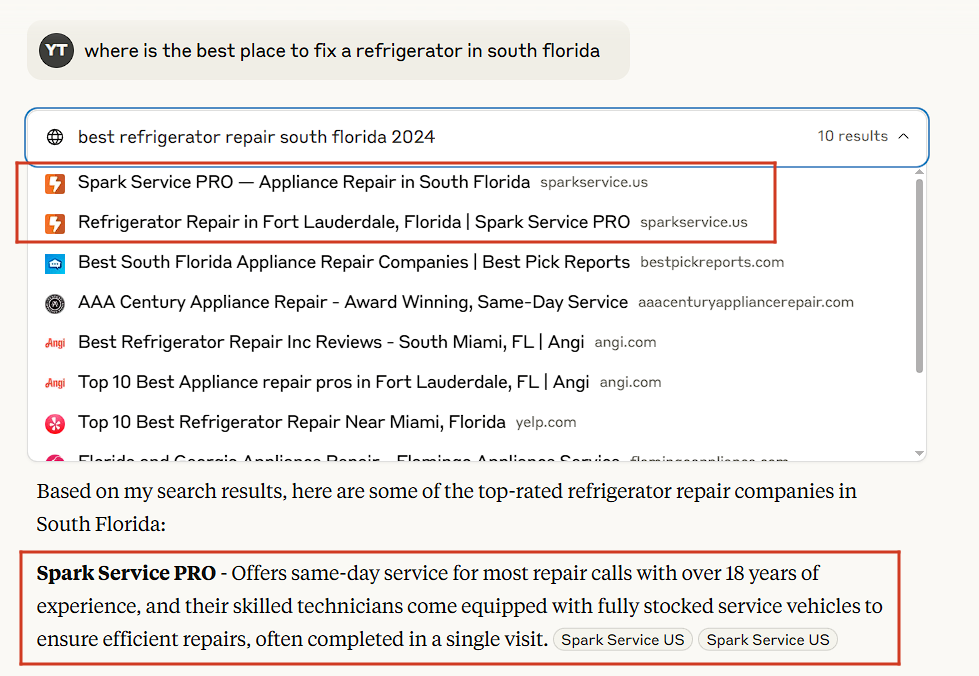
As a result, the first visits from ChatGPT were recorded in Google Analytics 4 within a relatively short period of time. The brand started appearing in AI-generated responses with active links, while several published articles became new entry points for users.
A practical example like the global market organic scaling for Stripo SaaS shows why combining automation with expert SEO execution delivers stronger long-term results.
Using AI in SEO is no longer an experiment. It has become part of the modern approach to website promotion. Artificial intelligence truly helps accelerate workflows, scale data processing, and improve operational efficiency. That’s exactly why it is now actively used by both SEO specialists and businesses that want to grow faster in search and get cited in generative LLM responses.
However, you should understand that AI is not a standalone solution. Its greatest value comes when combined with human expertise: using AI to automate routine tasks and prepare foundational solutions, while final decisions and strategy remain in the hands of specialists. This is the approach that allows businesses to achieve stable SEO results without unnecessary risks or uncertainty.
Combining AI automation with experienced SEO strategy development services helps create scalable and sustainable organic growth. If you want to use AI in SEO not blindly, but as a tool for real traffic growth and business performance, you should build your processes around strategy, not around tools. And today, that has become a major competitive advantage. The Livepage team can help you integrate AI solutions into your SEO strategy in a way that actually drives results, from strategic planning to implementation and quality control at every stage of promotion.


“Livepage has proven to be a reliable source for rapid online growth. We started with 2,000 visitors per month. In 3 years together with Livepage we have reached 70,000 visitors and more than 100 leads from the site per month.”


“As for the results, we’ve been working together since 2015, and our traffic has increased 10x. I cannot say that Livepage was our first SEO company, but they have become the first SEO partner that helped us to achieve the success we were looking for.”


“Livepage delivers SEO efforts that have led to an increase in the site’s users, traffic, and conversions. The team uses a wide range of tools to achieve the client’s goals. They are attentive to the client’s needs, working with them in real-time and bringing in additional specialists when needed.”


“I am pleased with the quick task execution and the instant replies to my messages.”


“I like the complex approach that the Livepage team offers. Absolutely all team members work together; everyone is aware of what is happening on the project. We have one common goal – to increase our service sales, and the team is making every effort to achieve the goal as soon as possible.”


“We’ve been really impressed by how Livepage quickly understood our business and centred our PPC campaign around our objectives. We have achieved good results within a very short time in both revenue and ROI.”

“Everything is clear, timely, and understandable.”


“They have leveraged ideal opportunities to reach our business goals.”