




12 min reading
What Is Lead Generation and How to Make It Effective for Business



Over the past few years, the digital advertising world has changed dramatically. Uncertainty around cookies (which have been alternately deprecated and partially reinstated), browser-level tracking restrictions, and growing user privacy awareness have all led businesses to lose a portion of their data. As a result, ad algorithms are increasingly operating in the dark.
In this context, it’s worth paying close attention to a solution that’s already available: enhanced conversions.
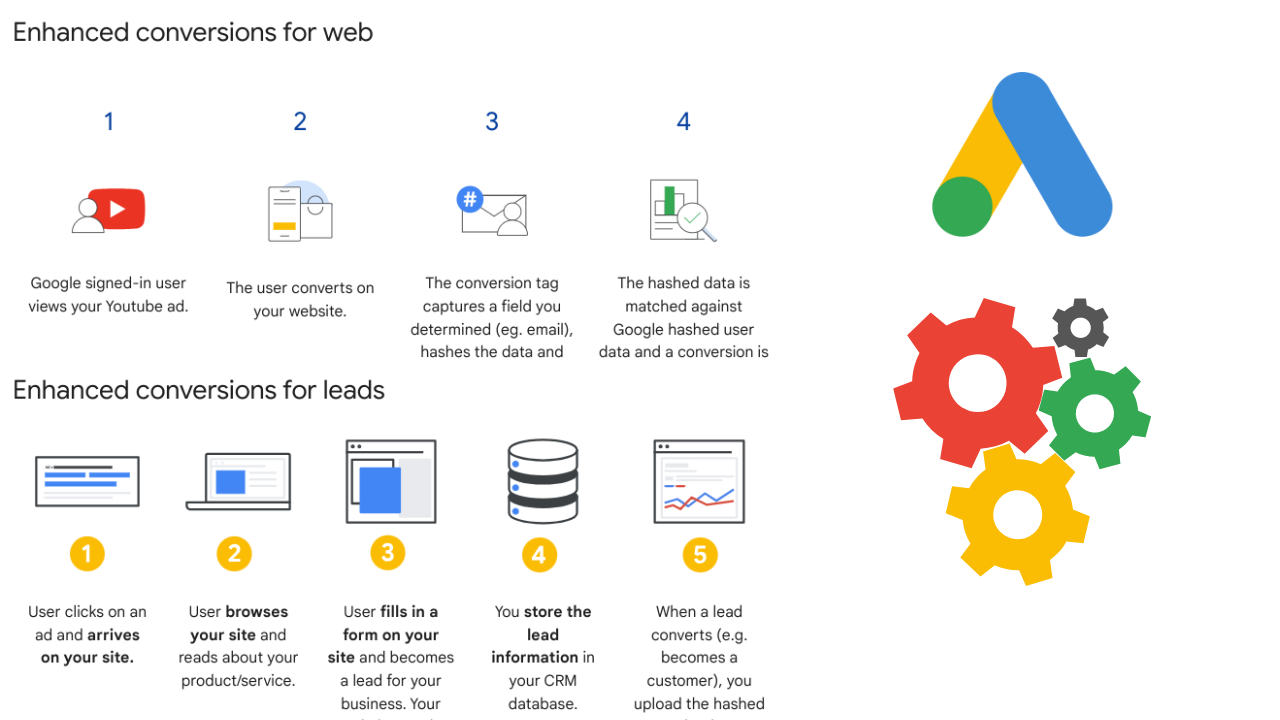
Enhanced Conversions are not a new event type or a standalone analytics system. They are an extension of your existing conversions that allows you to pass additional user identifiers (email address, phone number, name) in hashed form (SHA-256).
In simple terms, this approach gives ad platforms a better chance of accurately identifying who completed a conversion. This is especially important in an environment where traditional user identification methods (cookies, client-side tracking) are becoming increasingly unreliable.
Proper analytics setup is essential before enabling enhanced conversions because the additional signals rely on accurate event tracking.
The mechanism is straightforward:
This process is known as improved matching or advanced matching.
Without enhanced conversions, even a well-structured Performance Max setup may lose valuable optimization data because of privacy restrictions.
According to Google Ads (Enhanced Conversions):
Cleaner conversion data makes Google Ads reports for stores significantly more useful for budget planning and campaign evaluation.
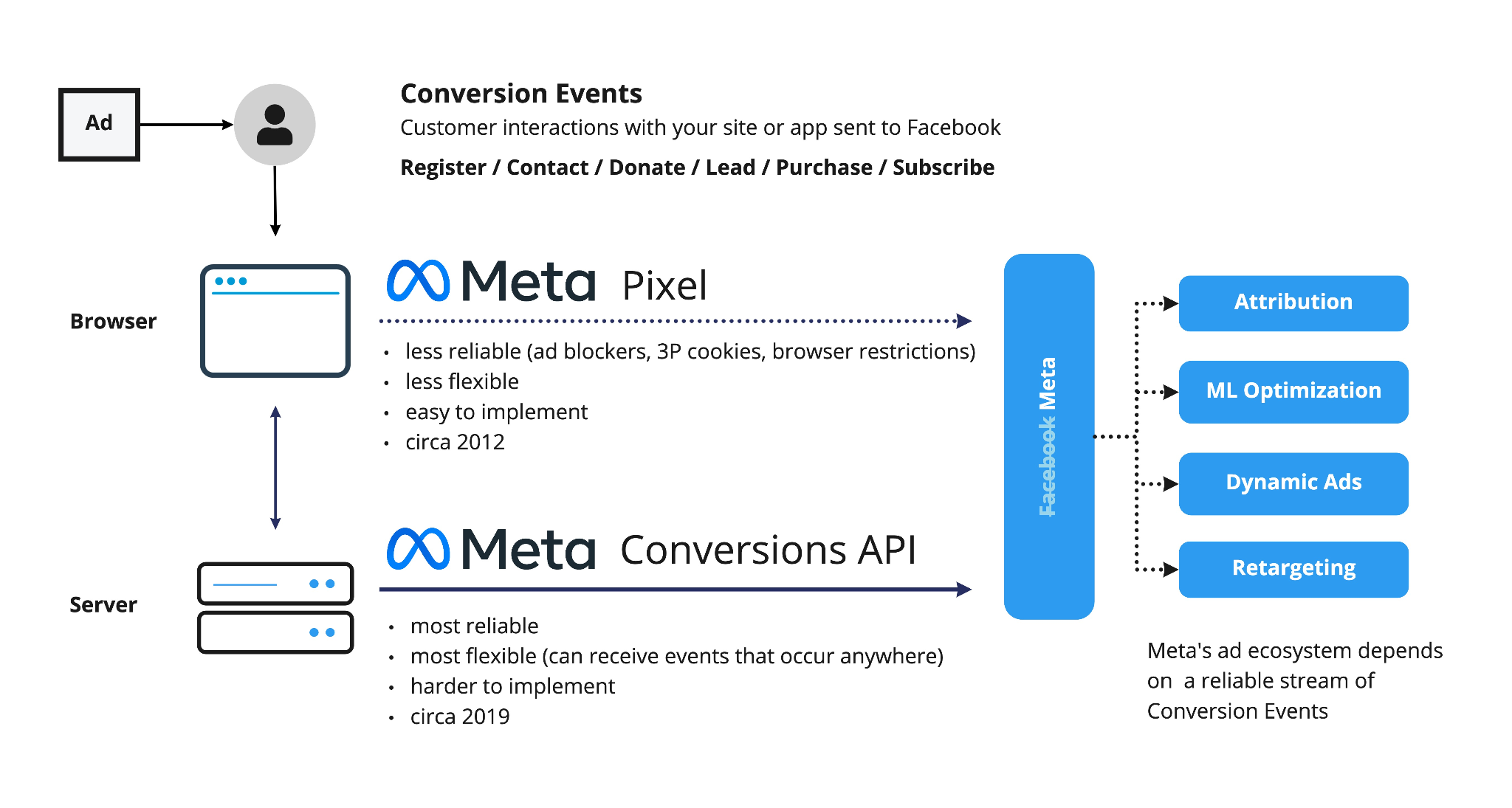
According to Meta (Advanced Matching + CAPI):
These aren’t just marketing promises. In practice, these gains typically come from recovering conversions that were previously going untracked and unaccounted for.
An increase in ROAS after implementing Enhanced Conversions doesn’t mean your ads have suddenly become more effective. What actually changes is this: you start seeing a clearer, more accurate picture of what’s already happening.
Previously, a portion of conversions was simply getting lost — due to cookie blocking, browser restrictions, or lack of user consent. In your reports, this made campaigns appear to be underperforming relative to reality.
Businesses that improve data quality usually notice more stable PPC performance metrics across their advertising accounts.
When an additional layer of user identification is introduced — Enhanced Conversions — the following occurs:
This also affects audience quality: remarketing and lookalike models are no longer built on limited data but on a more complete pool of real users.
The result is a tangible improvement in performance metrics — not through a strategy change, but through greater data accuracy. In essence, it’s a restoration of lost precision. And that difference in data quality is often what delivers meaningful gains in results.
Companies running PPC for ecommerce often benefit the most from enhanced conversions because online purchases generate rich first-party data.
Google Ads:
Meta:
The most effective approach is a combination of client-side and server-side tracking.
To see these principles applied in a real project, explore our conversion tracking case for UCtel, where advanced attribution produced measurable improvements.
Enhanced Conversions are no longer just an “optional extra” in your settings that you can put off until later. They are a direct response to how the entire digital advertising ecosystem is evolving.
Cookies are gradually losing their effectiveness, browsers are tightening tracking restrictions, and users are increasingly withholding data consent. In this environment, standard tracking becomes less accurate — and businesses risk making decisions based on incomplete information.
Enhanced Conversions help address this problem. They allow you to recover a portion of the conversions that were previously slipping through the cracks, making your data more stable and reliable. The result: you’re working with numbers that more closely reflect reality, not assumptions.
This is precisely why it directly impacts ad performance. When platforms receive more high-quality signals, they optimize delivery more effectively, find the right users more precisely, and allocate budget more efficiently. That’s the core value: you don’t necessarily spend more — you simply get more out of the budget you already have.
The logic is straightforward: less data loss → algorithms receive more signals → ads perform more accurately → business sees better results.
Want to get the most out of your ad campaigns and work with accurate data? Reach out to the Livepage team — we’ll help you implement advanced tracking to better understand your customer journey and improve ad performance today.


“Livepage has proven to be a reliable source for rapid online growth. We started with 2,000 visitors per month. In 3 years together with Livepage we have reached 70,000 visitors and more than 100 leads from the site per month.”


“As for the results, we’ve been working together since 2015, and our traffic has increased 10x. I cannot say that Livepage was our first SEO company, but they have become the first SEO partner that helped us to achieve the success we were looking for.”


“Livepage delivers SEO efforts that have led to an increase in the site’s users, traffic, and conversions. The team uses a wide range of tools to achieve the client’s goals. They are attentive to the client’s needs, working with them in real-time and bringing in additional specialists when needed.”


“I am pleased with the quick task execution and the instant replies to my messages.”


“I like the complex approach that the Livepage team offers. Absolutely all team members work together; everyone is aware of what is happening on the project. We have one common goal – to increase our service sales, and the team is making every effort to achieve the goal as soon as possible.”


“We’ve been really impressed by how Livepage quickly understood our business and centred our PPC campaign around our objectives. We have achieved good results within a very short time in both revenue and ROI.”


“Everything is clear, timely, and understandable.”


“They have leveraged ideal opportunities to reach our business goals.”