




9 min reading
GA4 BigQuery Export: When You Really Need It


Key Takeaways:
In a world with a digital-first approach to everything, no matter if you run an offline or online business, you do need digital promotion. It’s even more important if you own a locally bound business with a customer pool limited to a certain geographic area. While most customers will search for your product or service online, the question is, “Will they find you?”
If your business isn’t optimized for local search, you are missing out on the market where your competitors will eagerly grab your share. This is where a strong local search marketing strategy can help you improve local search rankings, stand out from competitors, and attract the right customers to your doorstep. Our local SEO guide will walk you through practical local SEO tips to dominate the local search results and grow your business.
Local search engine optimization is a digital marketing approach aimed at placing your business higher in location-based searches when people in your area are looking for products or services you offer. Local searches implicitly offer a higher conversion potential since customers already have a high intent, knowing what exactly they need. So, you definitely want these qualified leads to turn their eyes to your offerings.
Focused on a specific geographic area, local SEO optimization ensures search engines perceive your business as the most relevant and trustworthy for online searches related to that area. As such, it helps your local customers find your business in search results, maps, and local business listings. It hits them at the right moment when they are ready to take action, naturally pushing them to visit your location, call your business, or book your service.
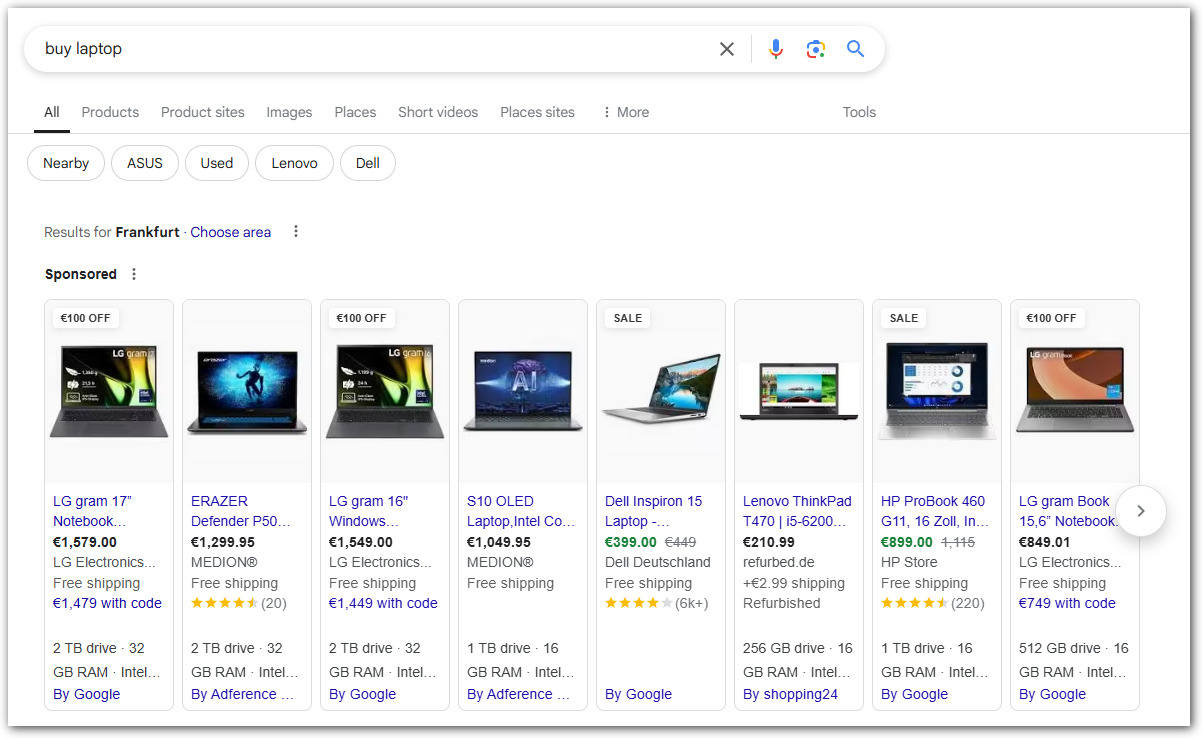
Local SEO is a part of a broader local search marketing strategy, yet these two terms are not the same thing. While local SEO is about earning organic visibility through optimized websites, business profiles, reviews, citations, and localized content, local search marketing embraces both organic and paid tactics, such as LSAs, Google Maps Ads, and location-based Google Search Ads, that offer immediate visibility.
With well-set local SEO for business, you’ll make your company visible in local SERPs, not only winning more traffic (76% of local mobile searches end up in store visits on the same day) but also capturing more qualified leads and gaining more conversions thanks to primarily higher customer intent. Besides, with over 97% of customers checking a business’s online presence before interacting, improving it builds brand trust, making your business a go-to choice in your area.
To reap those benefits, though, you’ll need a rock-solid strategy. So, how does local SEO work? An effective local SEO plan that will bring tangible results should cover the following components:
Our local SEO growth strategy for an appliance repair brand shows how localized optimization can consistently increase qualified leads across multiple service areas.
At a glance, it might seem that local search results hinge entirely on proximity to the targeted location. However, search engines approach this differently, evaluating multiple factors and signals when considering the best results. While no one has revealed the secret formula behind the local search algorithms, those ranking factors broadly come down to three foundational criteria.
How well does your business match the local search query? A bakery specialized in wedding cakes with no mention of that fact in its business description will stay invisible to customers searching for “wedding cake bakeries nearby” since search engines won’t be able to spot the offer match. The key to success here is selecting the most specific primary and secondary business categories in your GBP profile and keeping your service or product list up to date.
How close is your business to the searcher? Your business proximity to the location in the search query does matter since Google estimates the distance between your business location and the searcher’s current location (for “near me” searches) or the one mentioned in the query itself (like “best pet groomers in Brooklyn” from someone not even in New York). To persuade Google you are an appropriate choice for a specific area or location, clearly define your service areas, create unique location-based landing pages, and keep your business info consistent across directories.
How trusted and established is your business online and offline? Search engines will scrutinize your business reviews, ratings, mentions, links, and citations to evaluate your brand recognition, business reputation, and operational activity in the targeted area. Prominence is something you can instantly improve by keeping your business top of mind locally through customer feedback, backlinks, social proof, partnerships, and PR.
Knowing these major drivers behind local ranking factors and how to manage them, you’ll better understand the local SEO tips outlined below.
How to improve local SEO rankings? To see your business at the top of local search results, a well-rounded local SEO strategy is a must. It can work wonders for your business growth potential, yet only if you know the right tactics. So, let’s explore the local SEO best practices to put you ahead of the competition in your area.
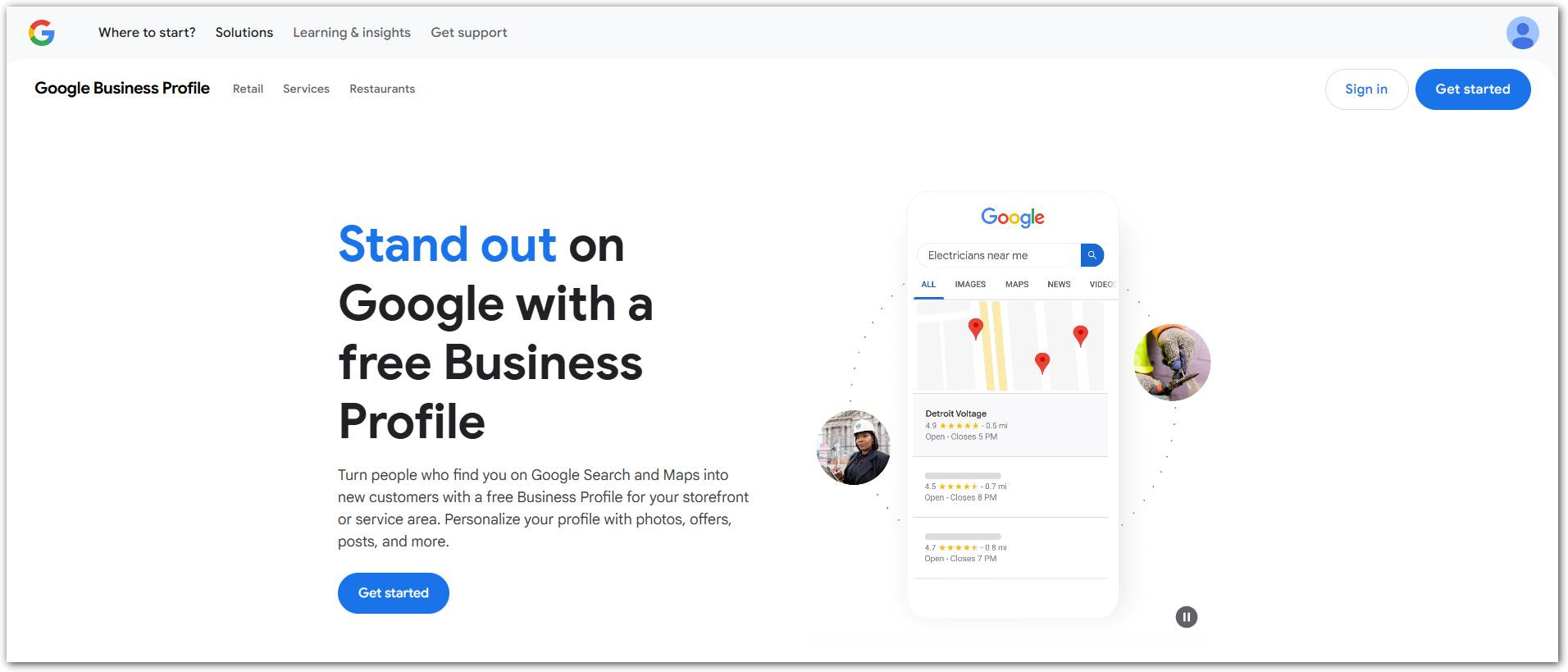
Your GBP is one of the most powerful tools in local search marketing. A well-optimized profile increases your chances of appearing in Google’s Local Pack, popping up in front of potential customers, and driving sales through your website. To get the most out of this free tool:
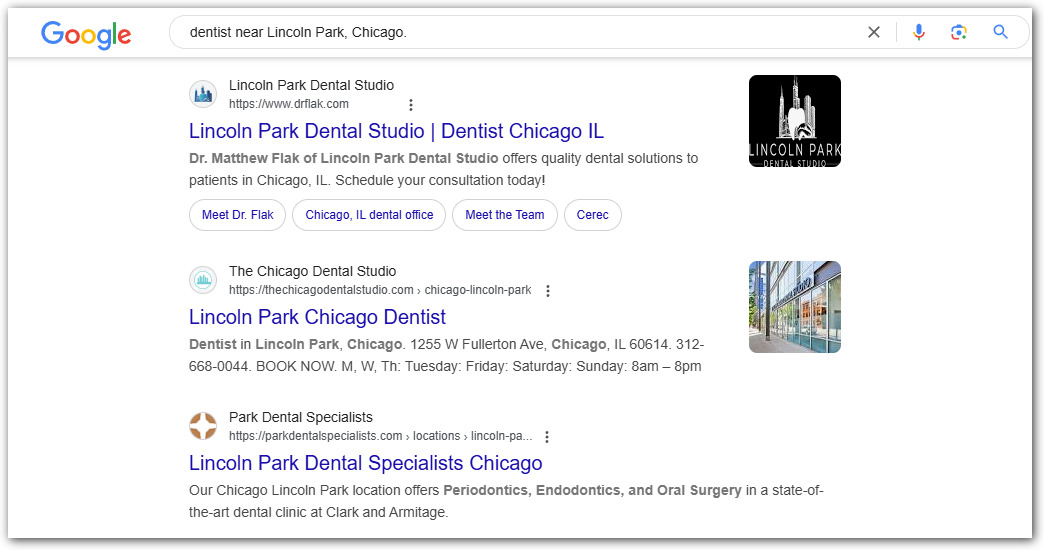
Instead of just targeting broad city-level keywords, dive deeper into hyperlocal SEO to narrow down competition and connect you with highly interested local customers. Replace “dentist in Chicago” with an option with neighborhood and landmark keywords, like “dentist near Lincoln Park, Chicago.”
Conduct thorough SEO keyword research to identify location-based terms your prospects most often use. Check Google’s “People Also Ask” and Related Searches to reveal local queries. Tools like Google Keyword Planner and Ahrefs help find long-tail, hyperlocal terms to match search engine trends and hit the right local audience.
When it comes to “near me” search optimization, it’s not about simply adding the “near me” phrase. Search engines trace “near me” queries back to the current customer location. So, you should maintain an accurate GBP profile with up-to-date business info. “Near me” searches often reflect immediate intent, like “coffee shop open now,” and are closely tied to the voice searches many people do on the go. Make sure your GBP info is full and optimize your website sections for voice search-friendly conversational queries, like “Where to fix a flat tire right now?”
It is also important to optimize local landing pages with proper keywords for every service area to strengthen local relevance and improve organic visibility.
Localized content, showing your expertise, explaining your services, offering solutions to local customer pain points, and matching their interests and needs, helps establish stronger connections to the communities you serve, building trust, enhancing your local reputation, and helping search engines assess your relevance for local searches. Combining written copy with visuals will help customers get a real feel for your business and location, improving engagement and even enhancing your local SEO rankings.
When selecting a product or service, people check other people’s opinions, including those of regular users and professionals. So, don’t miss an opportunity to be mentioned in every positive way:
While thinking about how to attract prospects and convert them to customers, you should also consider how to make search engines favor your business and display it among the prime choices. This is where local schema markup is a helpful tool for local companies vying for regional visibility. It can:
To easily implement local business schema, you can use Google’s Structured Data Markup Helper. And Google’s Rich Results Test will let you analyze and validate your structured data while revealing errors and suggestions for improvement.
With 84% of local searches, often with immediate intent, happening on mobile devices, you cannot overlook mobile responsiveness in your local search optimization for “near me” searches.
Mobile searches result in calls and visits 5x more often than desktop searches, not to mention that search engines interpret positive user experience as a strong engagement signal. So, mobile experience greatly contributes to your overall local search performance.
Earn references to your website and mentions from other businesses in your location. Links from high-authority sites will not only contribute to your rankings but also help you build a solid reputation in your industry and stand out as a trusted service or product provider in the eyes of potential customers.
As your local authority grows, your business feels more credible and relevant to search engines.
Now that you know “What is local SEO?” and what moves the needle in a local search marketing strategy, you might be interested in how to further strengthen your efforts for even better results. This is where local search advertising will come to help.
Google’s Local Services Ads (LSAs) offer faster conversions, attracting high-intent customers. Charging per lead, not per click, they rank above organic search and map results, also adding an extra trust factor and contributing to your overall reputation. To make the most of this opportunity, consider using Google Ads campaign management services to optimize performance and maximize your ROI.
Everything is gaining pace today, including online search. With AI traffic experiencing an impressive 527% year-over-year surge, AI-enabled assistants and large language models, such as ChatGPT, Copilot, Gemini, and Perplexity, keep winning their fair share of local searches.
AI models tend to give direct yet reliable answers to conversational queries like “What’s the best family dentist nearby?” pulling information from well-structured and genuine localized content and prioritizing GBP, reviews, FAQ sections, business listings, and structured website data for this. Obviously enough, AI search relies on pretty much the same fundamentals as traditional search. Hence, investing in strong local SEO today, you also set a foundation for efficient GEO promotion in LLM, making it easier for AI platforms to recommend your business to nearby customers.
Local search optimization for a small business is only as efficient as the results it brings. You should consistently monitor key local SEO metrics to stay on top of your strategies by identifying what’s working and what needs improvement.
With effective tools for analytics for local businesses, you’ll track your local SEO performance and spot opportunities for growth without guessing.
The data you collect will provide insights for making smarter optimization decisions to attract more local customers and grow your business faster.
Well-set local SEO is not just about being found; it’s about being chosen. A successful local search marketing strategy requires a well-balanced mix of components, including:
Comprehensive SEO services for business combine local optimization with long-term organic growth strategies. With Livepage services, you get a tailored approach that ticks all the boxes in this checklist, helping your business achieve long-term success in search rankings.
Traditional SEO aims at improving your visibility in broader national and global searches, while local SEO targets specific geographic areas.
It largely depends on your niche competitiveness, website authority, and your current online presence. On average, you can expect measurable improvements in about 3 to 6 months. Yet, for highly competitive markets, this timeline may extend up to 12 months.
While distance is the prime factor, it’s not decisive. Google evaluates not only distance but also relevance and prominence when ranking businesses for the Local Pack.
If you have a business with a physical storefront or run a company serving a specific area, region, city, or neighborhood, you need local SEO to gain more customers in your locality.


“Livepage has proven to be a reliable source for rapid online growth. We started with 2,000 visitors per month. In 3 years together with Livepage we have reached 70,000 visitors and more than 100 leads from the site per month.”


“As for the results, we’ve been working together since 2015, and our traffic has increased 10x. I cannot say that Livepage was our first SEO company, but they have become the first SEO partner that helped us to achieve the success we were looking for.”


“Livepage delivers SEO efforts that have led to an increase in the site’s users, traffic, and conversions. The team uses a wide range of tools to achieve the client’s goals. They are attentive to the client’s needs, working with them in real-time and bringing in additional specialists when needed.”


“I am pleased with the quick task execution and the instant replies to my messages.”


“I like the complex approach that the Livepage team offers. Absolutely all team members work together; everyone is aware of what is happening on the project. We have one common goal – to increase our service sales, and the team is making every effort to achieve the goal as soon as possible.”


“We’ve been really impressed by how Livepage quickly understood our business and centred our PPC campaign around our objectives. We have achieved good results within a very short time in both revenue and ROI.”


“Everything is clear, timely, and understandable.”


“They have leveraged ideal opportunities to reach our business goals.”