



1 min reading
Review of Cooperation with Livepage from MISSIA Bridal



In SEO, SEO keywords are the foundation on which the entire organic traffic strategy is built. They help search engines understand which pages to show users in response to their queries, and they give businesses the opportunity to reach their target audience at the exact moment those people are actively searching for information.
In practice, many companies run into a common problem: the website has an attractive design and a quality product or service, yet it fails to generate enough organic traffic. In most cases, the root cause is not technical shortcomings or a lack of quality content, but rather the wrong selection of keywords for the site to rank for, or the absence of a systematic approach to managing the existing keyword set.
Choosing the right SEO keywords does not simply increase the number of visitors; it attracts precisely the audience that is already interested in your product or service. In this article, drawing on our own experience and observations, we cover what keywords are, the different types that exist, how to find keywords for SEO, and the most common mistakes when working with search queries.
Keywords are the queries users type into search engines when looking for information, products, or services. In simple terms, they are the words and phrases people use to express their needs in a search.
These queries represent the very first point of contact between a user and a website. A person describes their need in the search bar, and the search engine analyzes it and selects the most relevant pages.
Put even more simply, SEO keywords act as a bridge between your website and a potential customer. Without that bridge, even a high-quality product can go unnoticed because the search engine lacks sufficient signals to surface your resource.
In practice, our SEO specialists regularly encounter situations where businesses focus exclusively on their own perception of a product rather than on how users actually search for it. For example, a company might try to rank for highly technical industry terms, while potential customers use much simpler or more detailed phrasing. Sometimes businesses also overlook market-specific nuances, such as language differences or cultural slang.
As a result, the site receives far less traffic than expected, even though there is real demand for the product. This is precisely why keywords serve several important functions:
It is also worth noting that modern SEO has moved well beyond simply placing phrases in text. Search engines today analyze not just the query itself, but also the user’s intent, the context of the search, and the stage of the decision-making process. That is why, when working with keywords, it is critical to understand what role they play at each stage of the user journey on the site.
Next, let us look at the main types of keywords and how they affect SEO performance.
At first glance, it might seem that all keywords for search are alike, since each one reflects a particular user query. In practice, however, they differ significantly in terms of the level of competition and the search intent behind the query. These differences determine how difficult it is to rank a page and how valuable the resulting traffic is for the business.
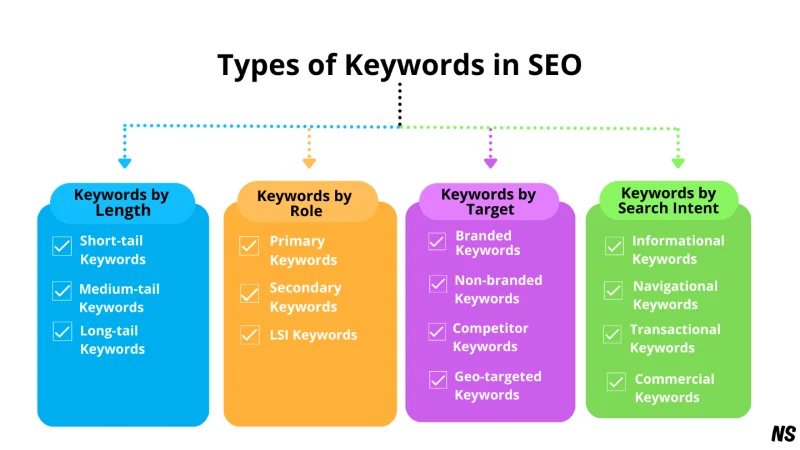
In our project work, our SEO specialists frequently encounter situations in which different keyword types are used without a clear understanding of their roles within the site structure and content. Pages built on such an approach often fail to meet user expectations and show no steady growth in organic traffic. That is why, when working with keywords, it is so important to understand how to identify keywords and classify them by their main characteristics: search frequency and intent, both of which form the foundation of any SEO strategy.
One of the most common ways to classify keywords is by frequency and competition level.
Search frequency is a quantitative measure of how often users type a particular search phrase within a given period, usually one month. SEO practitioners traditionally divide queries into three groups: high-frequency (HF), mid-frequency (MF), and low-frequency (LF).
High-frequency queries tend to generate the most monthly searches but also carry the highest competition. Achieving visible results for such keywords typically requires substantial resources, a strong brand, and a long-term commitment to SEO. For a deeper look at this, see our article “SEO for Small Businesses: How to Outperform Big Competitors on a Small Budget.”
Low-frequency queries, by contrast, generate fewer searches (depending on the niche), but they more precisely reflect user intent. These tend to be longer and more specific phrases that attract a more targeted audience. In some niches, low-frequency queries form the backbone of the keyword set, especially when demand for a product has not yet fully developed or the market is still maturing.
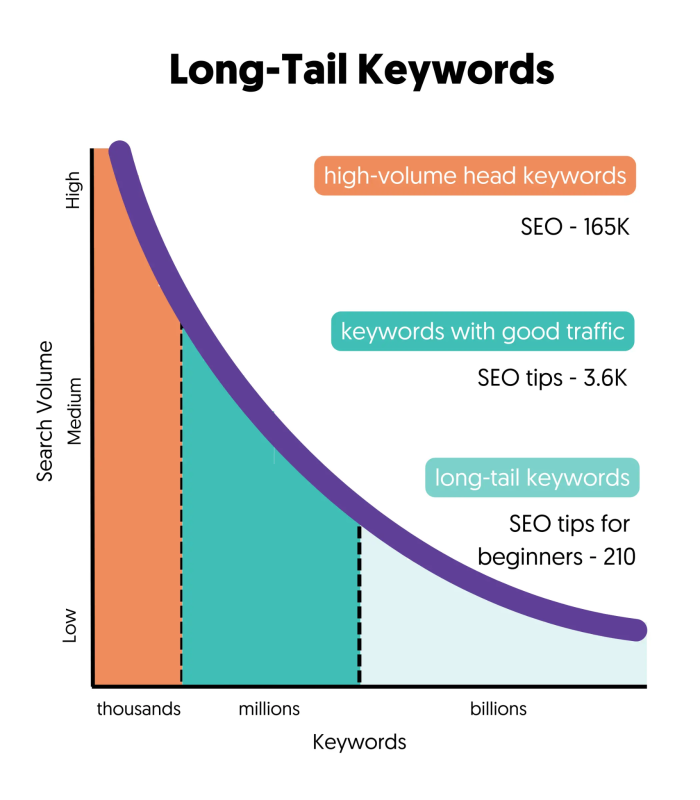
We often see companies concentrate entirely on high-frequency terms, hoping for rapid traffic growth. For new or relatively unknown websites, however, this approach rarely works. Competition for broad queries is so intense that achieving meaningful results without significant investment is very difficult.
Working with mid- and low-frequency queries, on the other hand, tends to deliver early results and steadily build the site’s visibility in search. For example, in the SEO services niche, the query “SEO” or “SEO promotion” would be high-frequency and fiercely competitive. More specific phrases, such as “SEO for small businesses” or “SEO for law firms,” have lower search volumes but much more closely match what a potential client is actually looking for. Such phrases often deliver higher-quality traffic because the user has already formed a clear intent and is closer to making a decision.
Beyond frequency, keywords also differ by search intent.
Intent is the goal, reason, or need behind a user’s query to a search engine.
Intent is one of the most critical ranking factors. Search engines assess not only whether a page contains the relevant keywords, but also whether its content matches the user’s expectations. In our practice, we frequently see technically well-optimized pages fail to reach the top of results simply because they do not match the search intent.
Broadly speaking, all keywords can be divided into four main categories:
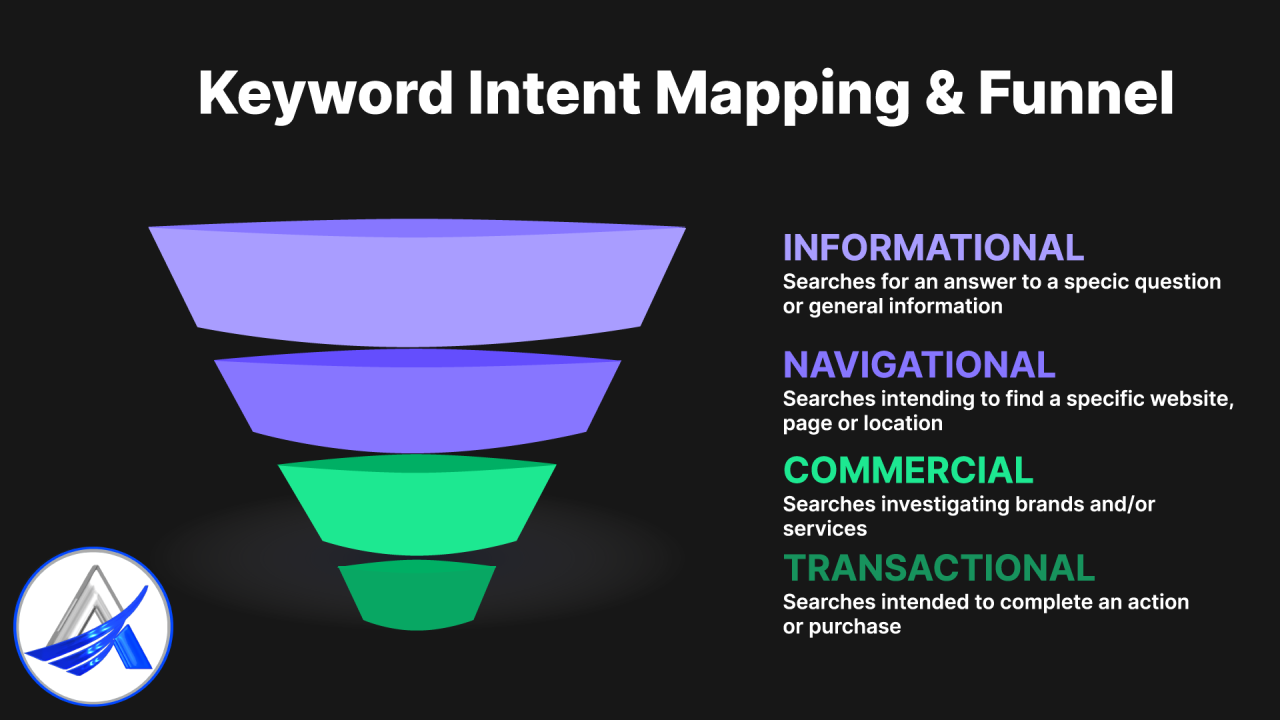
Understanding that each intent type requires a dedicated type of page is critically important. Informational queries are best served by blog articles, guides, and educational materials. Commercial queries are best addressed through comparison pages, roundups, and reviews. Transactional queries call for product category pages, service pages, or landing pages with a clear commercial offer.
In our client work, we have repeatedly seen situations where a single page tries to rank for multiple intent types at once, for instance, combining informational content with a service pitch. The result is a page that satisfies neither intent and loses ground to competitors who created separate, focused pages for each type.
It is also worth considering the split between branded and non-branded keywords. Branded queries occur when users already know the company or product and are specifically searching for it. These queries typically have high click-through rates and strong conversion, but they have limited scaling potential unless the company itself is growing.
Non-branded keywords allow you to reach new audiences who are not yet familiar with the brand. These often form the foundation of long-term SEO growth, since they help expand reach and attract new potential customers.
To work effectively with keywords, it is important to understand not only Google keywords but also the logic of how they are used at each stage of the sales funnel. It is precisely the combination of frequency analysis, competition assessment, and intent that makes it possible to build a strong SEO strategy, one that delivers not just traffic, but real customers.
Keyword selection is the strategic foundation of the entire site promotion process. This is the stage at which it is determined which queries the resource will rank for, which audience it will attract, and how relevant that traffic will be for the business.
Without thorough keyword research, even strong technical optimization, a well-planned structure, and compelling content cannot guarantee consistent results. If pages do not address users’ real search needs, they will struggle to compete effectively in search results.
When promoting websites, our SEO specialists frequently encounter situations where companies focus primarily on their own perception of their product rather than on actual demand. As a result, they either target queries that are far too broad or use phrasing that does not reflect how users actually search for the information, products, or services they need. This is especially noticeable in highly specialized niches or new business areas where demand is still forming, and there are no clearly established search patterns.
One illustrative case from our practice involved promoting AI-powered business process automation services for the UK and UAE markets. On the surface, there seemed to be demand; the client clearly understood that businesses were beginning to explore such solutions. But a detailed analysis of the keyword set revealed that meaningful search demand had not yet formed, or was very fragmented.
During the project, we analyzed thousands of potential search queries and filtered out many of them during the strategy discussion stage with the client. Some of the keywords were too broad and fell into highly competitive clusters dominated by large IT companies and software developers. Others were formally relevant to the UAE market but did not reflect user behavior in the UK, despite the shared search language.
This case reinforced the insight that keyword research is not just about language. It is also about local context, cultural differences, and audience thinking.
In the end, we narrowed a large set of keywords down to around 200 that genuinely matched the needs of potential customers. It was at that point that it became clear: the existing site structure did not reflect the actual business model at all, failed to cover a significant portion of key thematic clusters, and required substantial rework. Without a thorough keyword analysis, this would have been impossible to identify, and further promotion would have moved entirely in the wrong direction.
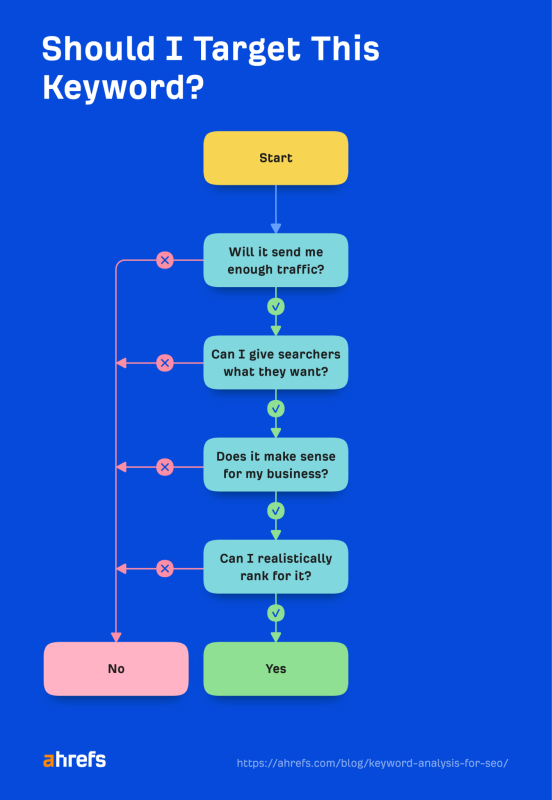
This example illustrates clearly that selecting keywords is not simply a matter of gathering popular queries. It is a deep analysis of the market, user behavior, and the specifics of the business. This is the stage where a real SEO strategy is shaped, one that either delivers results or creates nothing more than the illusion of productive work.
Keyword research is a comprehensive process that combines market analysis, user behavior research, and an honest assessment of the business’s own opportunities.
At first glance, it might seem sufficient to compile a list of popular queries through any SEO tool and embed them in the content. In reality, that is not enough, because keywords for a website without context provide no understanding of how they should be used in text or what role they should play in the site structure.
In our project work, we consistently find that SEO effectiveness depends not on the number of keywords collected, but on the quality of their analysis and subsequent clustering. The goal is not simply to find relevant queries, but to understand which ones genuinely align with the company’s business objectives, how they relate to each other, and which pages they belong on.
The first step in how to find keywords does not begin with tools; it begins with understanding the niche the business operates in and the characteristics of its target audience.
Market analysis is what helps clarify how users phrase their queries, what problems they are trying to solve, and what solutions are already appearing in search results. Without this step, keyword collection often becomes a mechanical exercise in gathering popular queries that may have little practical value for the business.
Before starting to collect keywords, it is worth building an ICP (Ideal Customer Profile): a portrait of the ideal customer. This helps clarify the needs of the target audience, their pain points, their level of expertise, and the context in which they use the product or service (“Target Audience: Who’s Your Ideal Customer and Why It Matters for SEO”).
When working with websites, our SEO specialists often encounter situations where, in new or complex niches, users do not know the precise names of the products they need. This is especially common in IT and SaaS segments. In those cases, people search not for a solution by name, but for ways to solve their problem. They might type queries like “how to reduce business process costs” or “how to automate routine tasks for a law firm,” without even knowing the name of the specific tool that could help them.
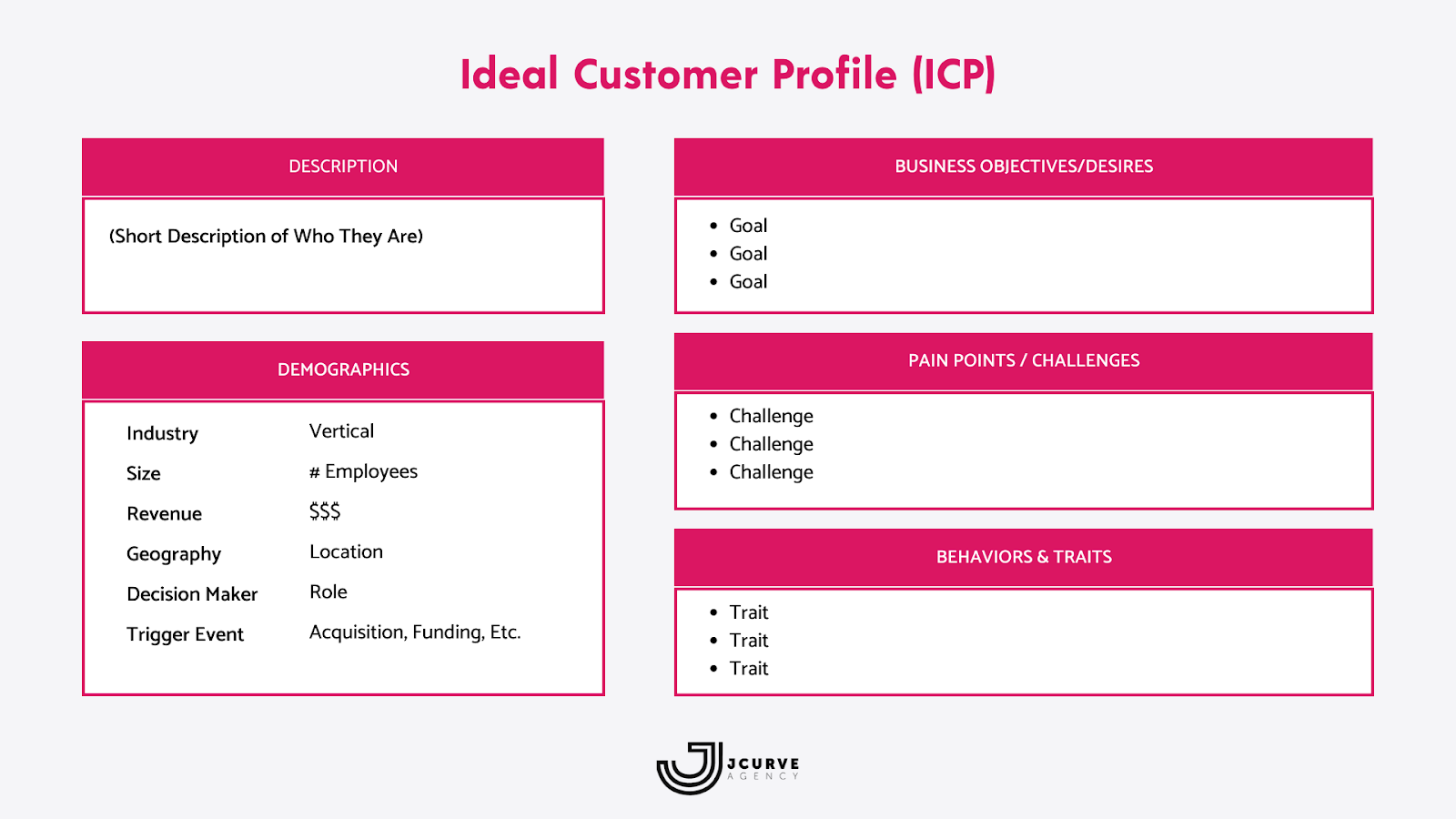
That is why, during niche analysis, it is important to pay attention not only to search queries but also to the search results themselves. It is essential to analyze:
In practice, analyzing top search results often reveals the most promising points of engagement with the user: the ones that genuinely address their search need, even if they are not immediately obvious to the business itself.
This stage also produces an initial keyword list. It may include both core commercial queries and informational topics for the blog. For example, if a company provides SEO services, its base keywords might include “SEO website promotion,” “SEO audit,” or “website optimization,” while the informational segment might feature keyword examples such as “how long does SEO take,” “how SEO works,” or “how to measure SEO effectiveness.”
In fact, even at the niche analysis stage, it is possible to get a first example of keywords that will later serve as the foundation for building the site structure, creating new pages, and developing a content plan.
After the initial niche analysis, the next step is to collect keywords directly using specialized SEO tools. This is where the main keyword pool takes shape and is later used to build the site structure and create content. SEO tools make it possible not only to find relevant queries but also to analyze their frequency, competition level, seasonality, potential traffic, and ranking difficulty.
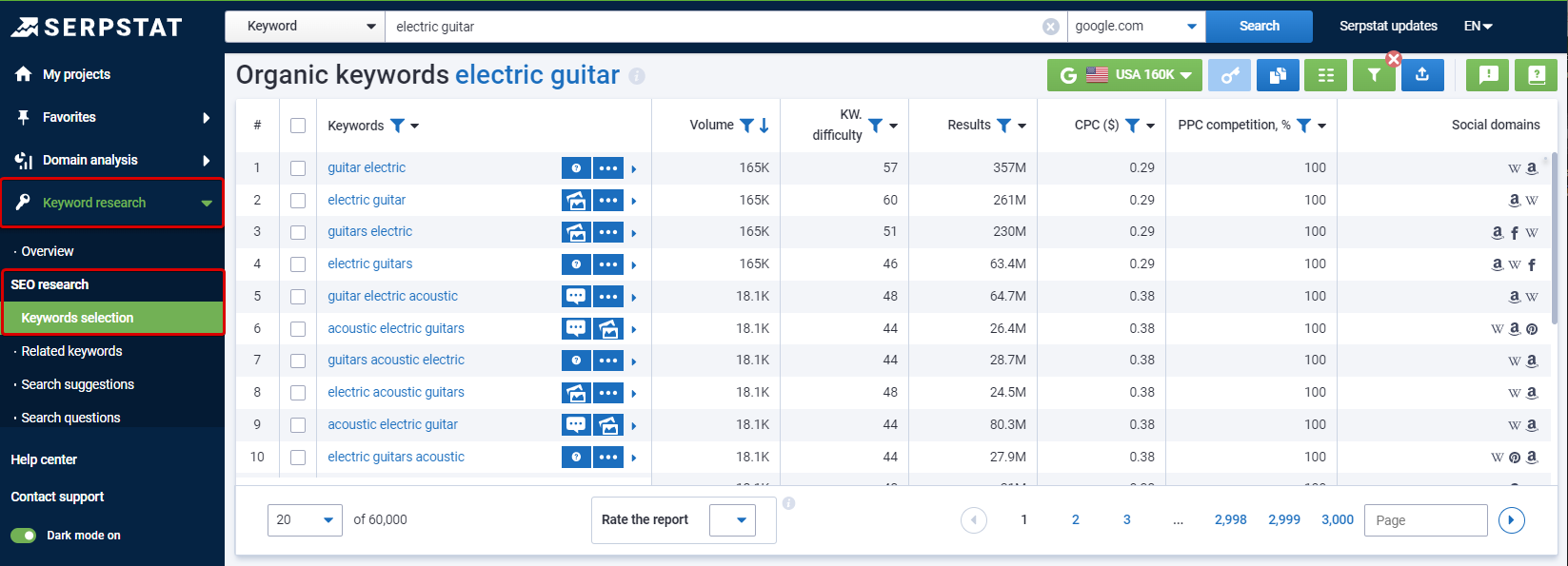
In our practice, we use different services depending on the market and language of the queries. For the Ukrainian market, for instance, Serpstat has proven to be highly effective, supporting both broad and local keyword research. It enables demand trend analysis, tracking seasonal fluctuations, and discovery of thematically related queries.
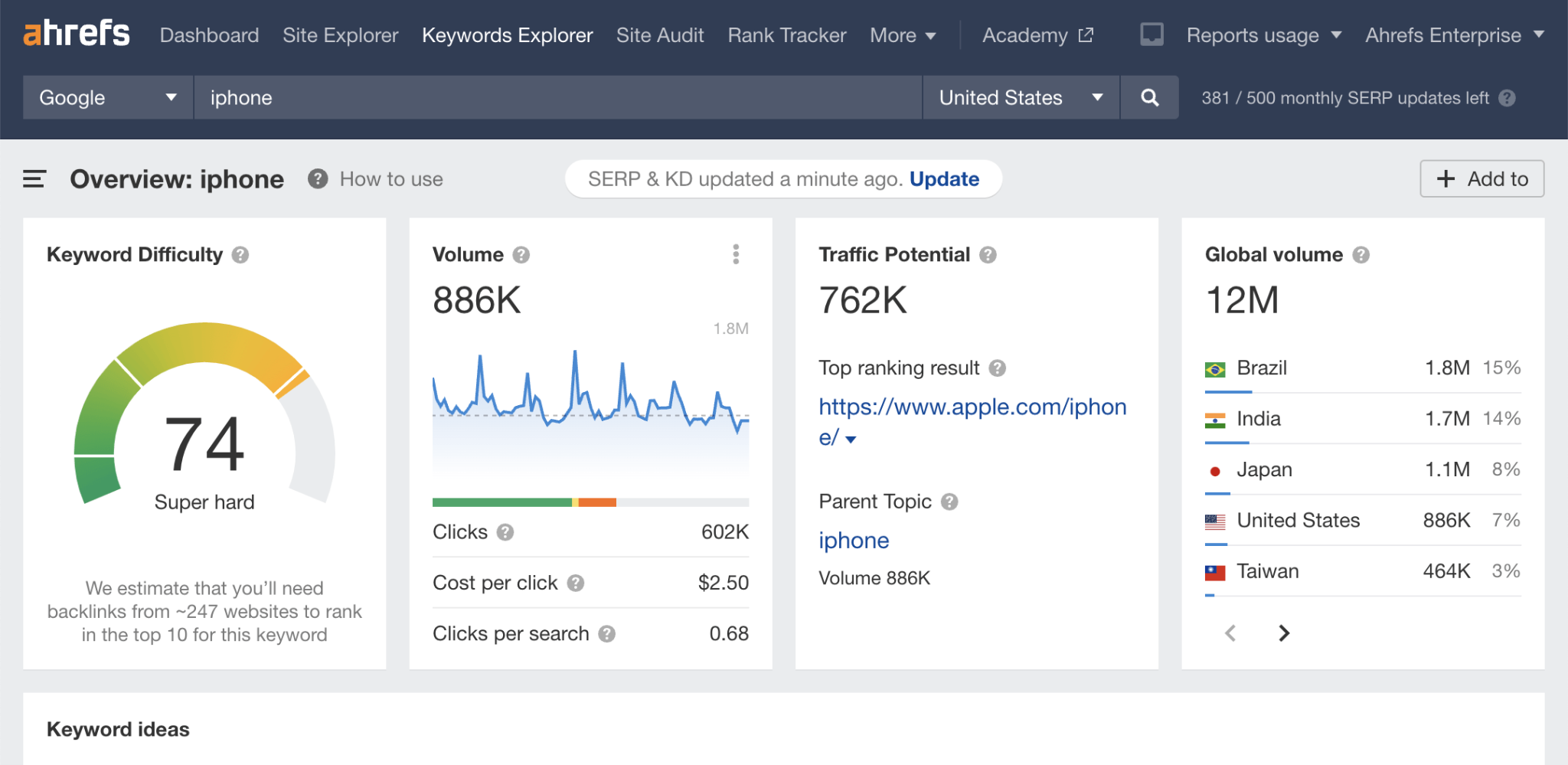
For English-language markets, including the US, UK, and Canada, one of the most powerful tools is Ahrefs. It provides deep analysis of competitors, keywords, and search results, and helps uncover promising queries by examining pages that already attract stable organic traffic.
In practice, we frequently combine several tools at once, since no single tool can provide a complete picture. One service might offer a wider range of keyword variations, while another more accurately assesses competition or traffic potential. It is precisely this combination of data from multiple sources that enables a more objective understanding of which keywords for a website are truly worth pursuing.
For a deeper look at approaches to building and analyzing your keyword set, read our article “Semantic Core: How to avoid losing traffic to your website.”
It is also worth noting a new trend: AI-powered search. More and more users are formulating their queries not only in Google but also in ChatGPT, Perplexity, and other AI platforms. This shift is also changing how search demand is analyzed. Specialists are already actively researching which keywords for online search appear in queries directed at AI systems, and which sources most frequently show up in those systems’ responses. Some of this data can be obtained through traditional SEO tools by analyzing pages that consistently rank for related topics.
At the same time, it is important to understand that there is currently no universal tool capable of accurately capturing all user queries in AI environments. That is why we often supplement our analysis by testing hypotheses manually: formulating queries in AI systems, analyzing the responses, and tracking patterns in the phrasing of answers. This approach helps us better understand shifts in user behavior and adapt SEO strategies to new search channels in a timely way.
Beyond basic keyword research using tools, another important stage is finding supplementary queries by analyzing competitor content. This is where additions to the core keyword set take shape: additions that help not only to cover the main search query but to address the topic as fully as possible for the user. In our practice, we have repeatedly seen pages reach the top not only because of their main keyword, but because of a well-developed set of supporting thematic queries.
LSI (Latent Semantic Indexing) queries are semantically related keywords that help search engines better understand the context of a given page.
For example, in an eCommerce niche selling tech products, these might be words related to screens, batteries, or operating systems, depending on the main keyword topic. Long-tail LSI keywords are more specific extensions of queries. They typically have lower search frequency, but most precisely reflect user intent and deliver targeted traffic.
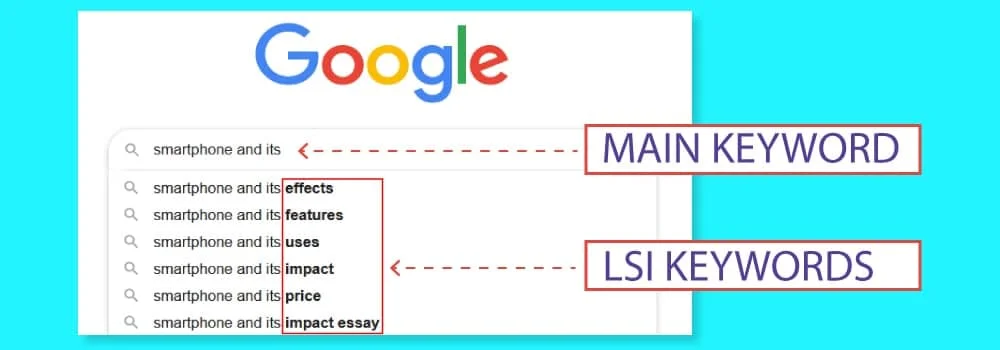
One of the simplest and most effective ways to find such queries remains the manual analysis of search results. It is worth paying attention not only to keywords but also to the structure of competitors’ pages, subheadings, FAQ sections, and the overall logic of content presentation. Quite often, those elements contain additional keywords for search that do not always appear in tools but are actively used by real users.
Our specialists’ experience shows that ignoring supplementary queries is one of the main reasons why pages fail to hold steady positions in the top results. Many optimizers focus exclusively on core keywords, overlooking the fact that modern search algorithms evaluate content comprehensively, based on the depth of topic coverage.
That is why supplementary keywords should not duplicate core queries. Their job is to logically complement the content, expand the context, and help users get the most complete possible answer to their question. This approach produces content that feels more natural, expert, and genuinely useful. As a result, a page ranks not only for its main keywords but also attracts traffic from a large number of related queries, delivering significantly better SEO results over the long term.
After collecting the keyword set, one of the most critical stages begins: keyword clustering.
Clustering is the process of grouping queries by shared meaning, search intent, and similarity of search results. It determines which keywords should be promoted within a single page and which require separate landing pages.
Without proper clustering, even a well-assembled keyword set can lose its effectiveness. Keywords end up distributed at random, and different pages begin competing against each other for the same queries.
Our SEO specialists have repeatedly encountered situations where multiple pages on the same site compete for the same queries simply because of poor clustering. As a result, the search engine cannot determine which page to rank, and none of them hold a stable position in the results.
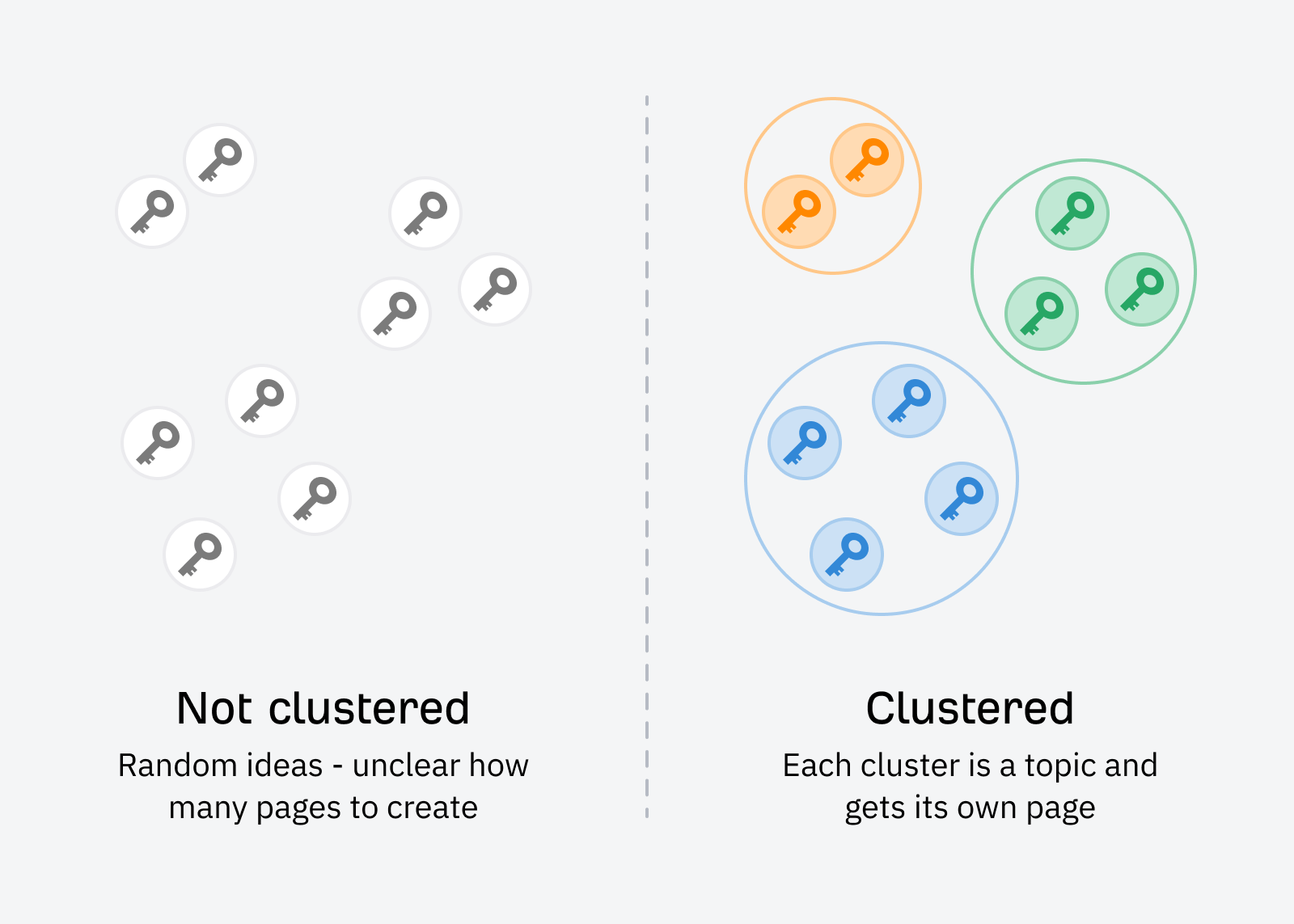
Clustering prevents this problem because it is based not only on formal keyword similarity, but also on an analysis of actual search results. If Google shows the same or very similar pages at the top for different queries, that is a signal to consolidate those keywords into one cluster and promote them on a single page. Conversely, if the results differ significantly, those queries call for separate pages.
It is also worth noting that clustering can take different forms depending on how strictly it is applied. SEO practice generally distinguishes two main approaches:
Site structure is built directly on the foundation of this clustering. Categories, subcategories, individual service pages, and blog articles must all correspond to specific keyword clusters. Our specialists’ experience consistently shows that this stage most often determines whether a site can scale in search over time. When the structure is built correctly, each new page fits naturally into the overall system and strengthens the other sections rather than competing with them.
In our case study on cooperation with the SOVA jewelry brand, we described how the key challenge for the team was not simply increasing traffic, but attracting a relevant audience with strong purchase intent. At the start of the project, a significant share of organic sessions came from branded queries, which severely limited the potential for scaling.
The first step was therefore a deep analysis of the target audience and ICP. We thoroughly examined user behavioral patterns, purchase motivations, the geographic context of their queries, and their intended use of the product.
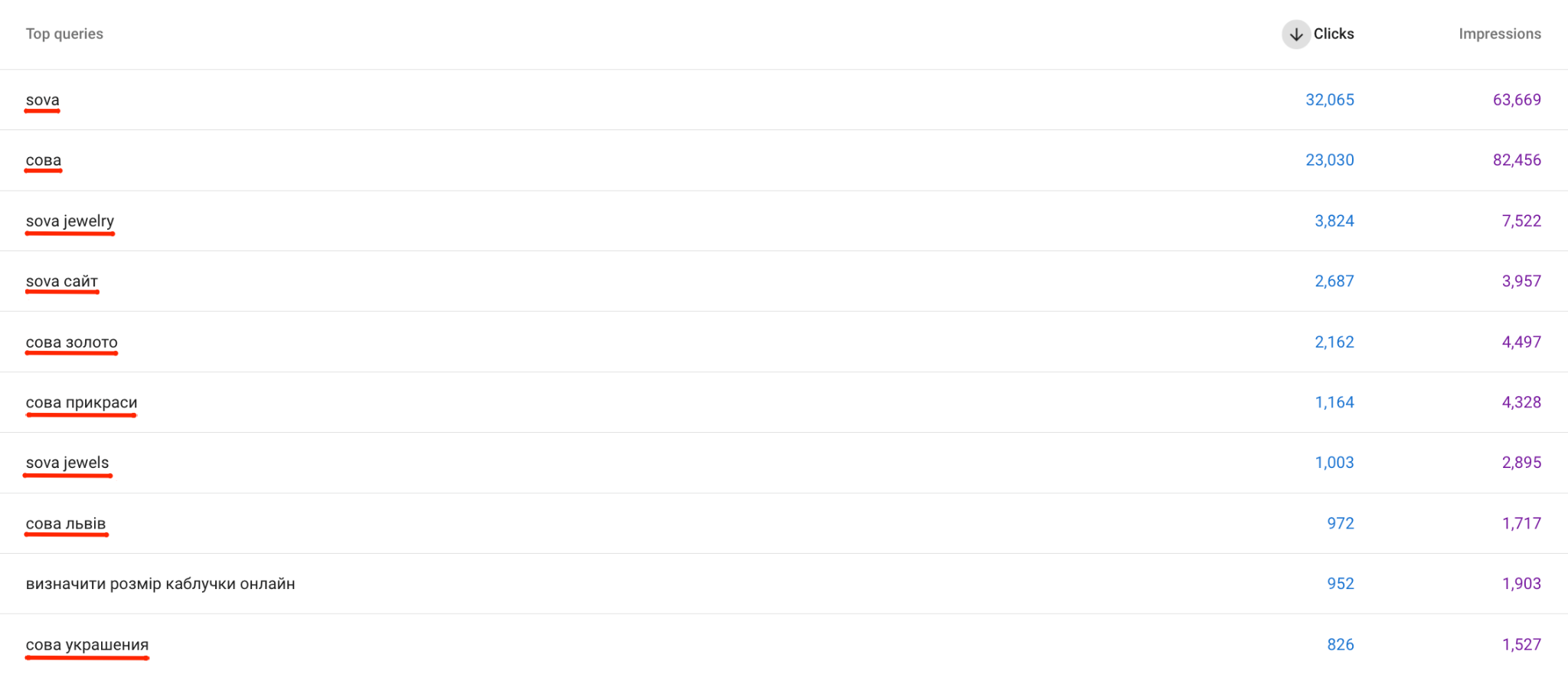
This analysis revealed that the SOVA audience was not searching for “jewelry” in general, but for specific purposes: gifts, meaningful purchases, and celebratory occasions such as weddings and engagements. Accordingly, the approach shifted: instead of concentrating on broad queries, we built precise thematic clusters that matched real user intent. This became the foundation for the entire subsequent SEO strategy.
The team then conducted a large-scale keyword collection and clustering effort. New keyword groups were created for categories and subcategories, and the site structure was expanded to match the defined clusters. After the changes were implemented, each page corresponded to a separate keyword cluster, eliminating internal competition and increasing the relevance of each page in search results. This work is a clear illustration of how to find keywords that truly serve the business, rather than simply filling a spreadsheet.
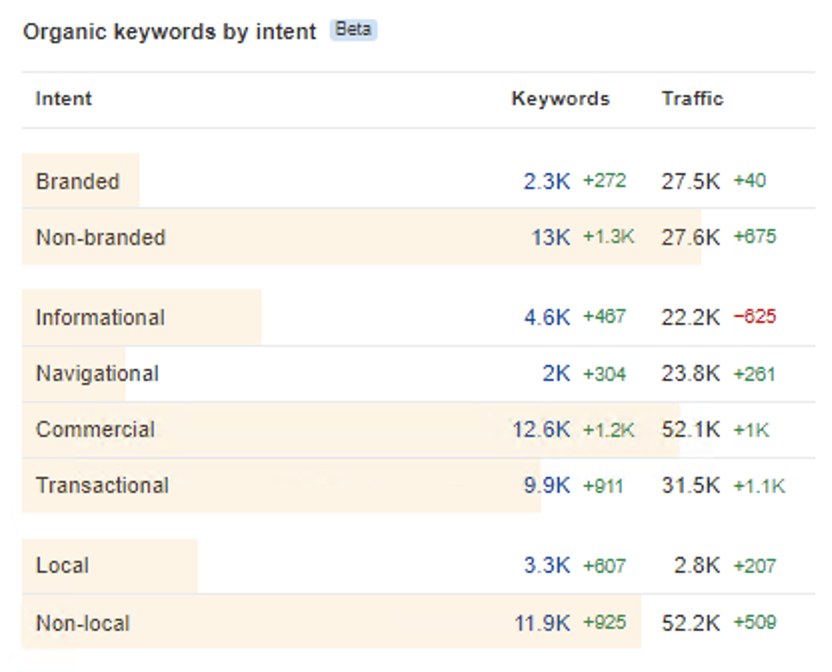
As a result of this approach, the site moved beyond branded recognition and began growing actively in non-branded commercial queries. The strongest growth came from category pages that had been optimized with the new keyword set. This not only increased organic traffic but also brought in a new audience that had not previously known the brand but already had clear purchase intent.
SEO keywords are not simply a list of search queries. They are a foundational coordinate system that determines how a website interacts with users and search engines. The quality of keyword selection, analysis, and clustering shapes both the resource’s structure and the long-term effectiveness of organic traffic acquisition.
It is important to understand that keyword research is not a one-time exercise but a continuous process that evolves alongside the market, user behavior, and search engine development. Effective work with keywords, therefore, combines analytics, expertise, and ongoing hypothesis testing.
If you want to identify the right keywords for your niche and ensure your search queries actually drive results, the key is to approach this process systematically. That is precisely how the Livepage team works: we turn SEO into a fully functioning growth engine for your business.


“Livepage has proven to be a reliable source for rapid online growth. We started with 2,000 visitors per month. In 3 years together with Livepage we have reached 70,000 visitors and more than 100 leads from the site per month.”


“As for the results, we’ve been working together since 2015, and our traffic has increased 10x. I cannot say that Livepage was our first SEO company, but they have become the first SEO partner that helped us to achieve the success we were looking for.”


“Livepage delivers SEO efforts that have led to an increase in the site’s users, traffic, and conversions. The team uses a wide range of tools to achieve the client’s goals. They are attentive to the client’s needs, working with them in real-time and bringing in additional specialists when needed.”


“I am pleased with the quick task execution and the instant replies to my messages.”


“I like the complex approach that the Livepage team offers. Absolutely all team members work together; everyone is aware of what is happening on the project. We have one common goal – to increase our service sales, and the team is making every effort to achieve the goal as soon as possible.”


“We’ve been really impressed by how Livepage quickly understood our business and centred our PPC campaign around our objectives. We have achieved good results within a very short time in both revenue and ROI.”


“Everything is clear, timely, and understandable.”


“They have leveraged ideal opportunities to reach our business goals.”