




9 min reading
GA4 BigQuery Export: When You Really Need It


Even if you run an offline business bound to a particular locality, online visibility in a digital landscape can make or break your success. With most people using online searches to find businesses “near me,” having a strong local SEO strategy ensures that potential customers find your business before they find your competitors.
But how do you know if your efforts are working? It is where monitoring local SEO metrics and KPIs comes in. Without keeping an eye on key performance indicators (KPIs), you’re essentially navigating in the dark, unsure of what’s driving results and what needs improvement.
Below, we’ll break down the most important metrics for local SEO you should track to ensure your business stays ahead of the competition, attracts customers, and continues to grow. We will explain why local metrics matter, show what information each type can provide, and give hints on how to turn it into action.
What metrics indicate that my local SEO strategy is working? Each one plays an important role in evaluating success and means a lot for further adjustments and overall improvements within the company. Local SEO tracking goes beyond simple position control in global ratings. It helps understand how local visibility is turned into calls, requests, bookings, visits, and sales. Understanding the local SEO benefits of each metric helps businesses focus on improvements that directly influence visibility and customer acquisition.
Tracking local SEO results requires looking at different signals that reflect how users discover and interact with a business.
This metric indicates how many people can find and discover your brand or content. Basically, you get insights into potential customer impressions, follower growth, and search rankings. Knowing your traffic, you can better adjust local search visibility. LLM visibility metrics in local SEO can also show how accurately your business appears in AI-generated responses.
Engagement metrics for local SEO show how website visitors interact with your content or brand. They analyze feedback and click-through rate in depth. Generally, they measure how much time users spend on the page and what they are doing.
The reputation metrics measure how much people trust your brand. To get them, you analyze reviews and brand mentions and perform detailed sentiment analysis. They often include rating supervision and Net Promoter Score.
These local SEO reporting metrics measure how effectively users complete the desired tasks. They help analyze the effectiveness of lead generation and review conversion rates. For some websites, it focuses more on sign-ups and downloads.
Business metrics analysis shows the overall impact on business and financial outcomes. The main focus is on the SEO ROI, customer lifetime value, and customer acquisition cost. Equally important are revenue and retention rates.
While enhancing the online visibility of businesses, local SEO also boosts foot traffic to your company and helps convert potential customers into paying clients. So, it’s vital to know whether your digital promotion strategy is effective by regularly checking key local SEO metrics.
The main goal of these metrics is to find out how visible a business is in local Google search results. The observation range includes Local Pack (map results), Google Maps, and the Local Finder.
Local rankings vary across several factors, including location, device type, search keywords, and user proximity to the business.
With grid or map rank tracking, companies can understand how their visibility varies by area. It enables a deeper understanding of strong and weak local positions and helps adjust the strategies to improve the situation in specific regions.
This metric refers to the number of times users visit your website from various sources, including Google Business Profile (GBP), organic search results, local directories, social media, and paid ads. Website visits are often the first step in a customer’s journey. Once they land on your site, they may explore your services, book an appointment, make a purchase, or contact you directly.
Depending on the traffic source, you can check for clicks using GBP insights, Google Analytics, and Google Console. More clicks mean more potential leads. A higher click number indicates customer interest. Low website clicks may suggest that your search snippets or GBP details need improvement to attract more attention.
But you need to keep in mind that clicks themselves don’t mean success: it’s important to analyze where they came from and if they can lead to local conversions.
While website click metrics show the number of visits, these local SEO performance metrics analyze how attractive the business profile looks in search engines. Usually, high impressions and low CTR mean that you need to improve your title and meta description. Based on our experience, we would also recommend checking local triggers and improving reviews, USP, and business information. Photos and high-quality descriptions are also important for Google Business Profile performance.
When a user searches for a business on Google, they often see its GBP listing with a “Call” button, especially on mobile devices. Unlike website visits, where users may just be browsing, phone calls typically indicate a higher level of interest and a readiness to take action.
Analyzing call volume can provide insights into customer behavior, such as the most popular call times, helping businesses adjust staffing and availability to better serve customers. If your listing is optimized correctly, you should receive a steady stream of calls from potential customers. You can use call-tracking software to analyze which keywords or campaigns drive the most calls.
Call tracking also helps understand which requests, sources, and companies call. For instance, for service businesses, calls from local search are the key local conversions.
Direction requests show real interest in the physical location. These metrics usually indicate that users are actively considering a personal visit.
Bookings reflect a strong intent to purchase anything or plan a service. Users with completed bookings are usually a step closer to conversion.
Messages, clicks, and calls signal a high likelihood of purchase. These interactions usually occur when potential customers are ready to ask a question or confirm details, thereby making the decision.
These metrics are essential for businesses that rely on local customer interactions and in-person visits, such as clinics, restaurants, retail stores, and service companies.
It’s one of the local SEO tracking metrics that allows for assessing brand awareness and organic search performance. Branded traffic comes from searches using your business name (e.g., “Smith’s Auto Repair”), while non-branded traffic comes from general searches (e.g., “best car repair near me”).
Branded traffic shows brand awareness and trust, while non-branded traffic demonstrates the ability to attract new customers from local commerce requests. When branded traffic grows while non-branded traffic does not, it may mean your business is well-known but not reaching new audiences.
Geo-targeted keywords mean mentioning the location during a web search. For example, a user can look for the best bakery in Chicago. By monitoring clicks on location keywords, you can analyze current demand and your target audience’s interests in a specific area.
For example, businesses can analyze searches like “best bakery in Chicago,” “best bakery in Wicker Park,” and “croissants in 60622” and see where the most clicks come from to conclude which area shows the highest demand and customer interest. Local keyword rankings help prioritize SEO efforts more efficiently and optimize GBP content for high-performing areas.
You can improve the company’s search visibility by mentioning a specific service area or city in the website content. In our expert opinion, the easier way to create a list of geo-specific keywords is to apply tools like BrightLocal and Semrush.
These key metrics for local SEO measure how much traffic comes from local organic searches and enable a better understanding of which geographic areas, pages, and search intents drive the most significant visits.
Mobile traffic is also one of the key metrics for local SEO success measurement, because it shows how people on smartphones can find and interact with your business in local search results. Mobile users often search “here and now,” so it is vital to track the following aspects as well:
Conversion rate is one of the most essential local SEO metrics for eCommerce, as it shows how effectively local search visitors turn into real customers.
Based on our experience, we recommend tracking the following:
This way, you can see the real business impact provided by local SEO efforts. High traffic without conversions doesn’t mean true effectiveness. A strong and effective local SEO strategy should improve both visibility and conversion performance. If you are asking yourself, “Which local SEO metrics should I track for ROI?”, our experts believe that conversion is a good choice to control the situation.
CPC, also known as “cost per conversion” metrics, helps measure how efficiently your marketing budget is being spent by showing how much you pay to acquire a new customer or lead through a specific campaign. It is used to evaluate the actual efficiency of a marketing strategy and to show how expensive lead or customer generation is.
CPC = Total marketing and ad spend / Total conversions
A lower CPC means your marketing efforts are cost-effective, while a high CPC means your ads aren’t reaching the right audience or your landing pages need improvement. Using CPC data, businesses can determine which campaigns, keywords, and platforms deliver the best ROI. Through CPC analysis, they can also balance organic (SEO) and paid (PPC) efforts to get the best results for their budget.
Your business should have accurate and up-to-date information across all local directories because search engines like Google use this data to determine a business’s legitimacy and relevance in local search results. Thus, inconsistent NAP details (name, address, phone) can undermine trustworthiness and lower local search rankings. At the same time, accurate listings increase the chance that your business appears in Google’s Local Pack (top three map results) to attract more customers.
Implementing effective strategies for local listings helps businesses maintain accurate profiles across directories and strengthen their presence in local search results. Thus, regularly update your company info across platforms and use Schema Markup (structured data) to optimize for local SEO and help Google verify correct business details and match them with directory listings.
For better effectiveness and timely improvements, we recommend monitoring the following platforms:
This metric shows how strongly external mentions and links from locally relevant sources support your business.
Local backlinks are clickable links from other websites. They usually come from high-quality regional sources such as local news websites or community blogs. They may also include industry associations and partnerships with local businesses. Backlinks help search engines understand where your business is located and the authority you have in a specific market.
Unstructured citations are mentions of your business without links. They usually appear when your business name, address, or brand is mentioned by someone without a direct link. You can see such citations in online articles, local social media posts, or community discussions.
Backlinks and citations show that your business is real and actively works in a specific geographic area. They are often included in broader local SEO success metrics that analyze not only rankings but also trust and engagement. LLM citations can also improve AI search visibility.
Local SEO success metrics often include the following aspects, as they help you understand how customers see your business and how satisfied they are. You can get this info from reviews and ratings, which influence search visibility and user decision-making.
Local SEO metrics for companies influence trust and conversion behavior, as users rely heavily on ratings and feedback when making decisions. At the same time, search engines apply review triggers to create a ranking factor in local results.
It’s a crucial metric for both SEO and UX. Google favors fast-loading websites, and so do users. Faster sites rank higher in search results, while a slow website can drive potential customers away before they even see what you have to offer. Google recommends that the page load time be up to 2.5 seconds. A 1-second delay can reduce conversions by 7%.
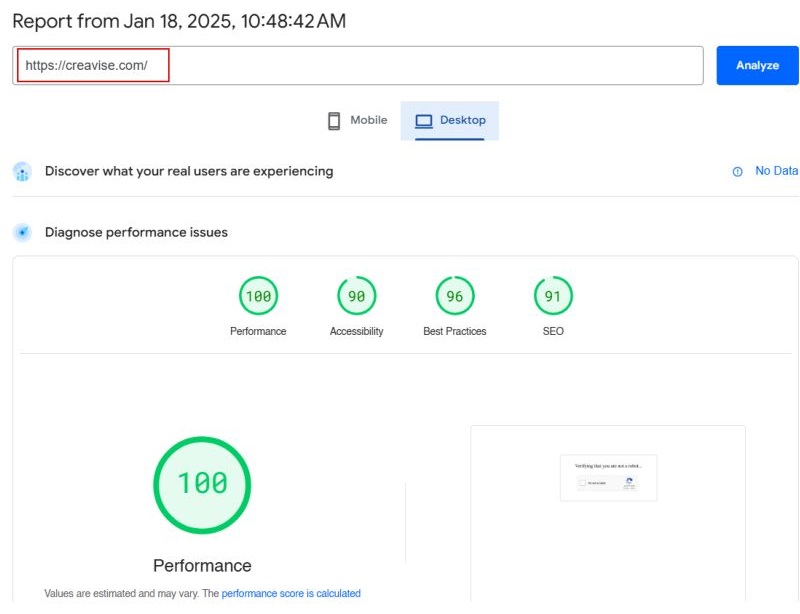
Use tools like Google PageSpeed Insights to test your site speed. To improve load time, optimize images, use caching, and minimize unnecessary scripts.
Bounce rate and engagement are local SEO effectiveness metrics that measure how users interact with a website after arriving from local search results. It consists of bounce rate and engagement signals, such as time on site, clicks, calls, and other interaction types.
The bounce rate means the percentage of website visitors who leave after checking only one page. A high bounce rate can indicate a problem, but it is not always a negative sign in local SEO. For instance, in many cases, local users want specific information, such as working hours or phone numbers, and leave the site after finding it. According to our experience, the best way to interpret it is to analyze it alongside conversion data.
If you are interested in a more precise understanding of your business situation, we recommend looking beyond clicks and rates. For instance, we recommend monitoring Net Promoter Score, AI visibility, and zero-click local searchers.
Net Promoter Score, also known as NPS, measures customer loyalty and current satisfaction by analyzing how likely your customers are to recommend your business to other people. NPS affects online reviews and star ratings, and it stimulates word-of-mouth referrals. For instance, a lower NPS may influence repeat purchases, reducing the number of potential customers. This metric can underline service or experience problems before they lead to more negative reviews.
AI-generated responses and zero-click search results influence modern local search behavior, as users get information directly from the search engine without visiting a website. AI overviews enable users to find any information they need, including phone numbers, reviews, or directions. It means that local SEO performance shouldn’t be evaluated only through traditional website traffic. Monitoring alternative engagement is equally important.
You can keep an eye on AI visibility and LLM citations and monitor changes in map pack ranking and trends in location-based traffic across different service areas. Look at GBP actions and branded searches to ensure the relevance of your company. Bookings, calls, and requests for directions can also reveal a lot about audience interest in your brand.
Data collected from local SEO metrics provides a solid foundation for building effective SEO strategy services tailored to business goals.
Now that you know the metrics for local SEO you need to track to stay on top of your promotion strategies, let’s look into the tools you can use to make data-driven decisions on changing, optimizing, or refining your approaches, methods, and certain aspects of your local SEO to achieve the best results.
It’s a powerful, free tool that helps track your website traffic, user behavior, and conversion rates by enabling you to:
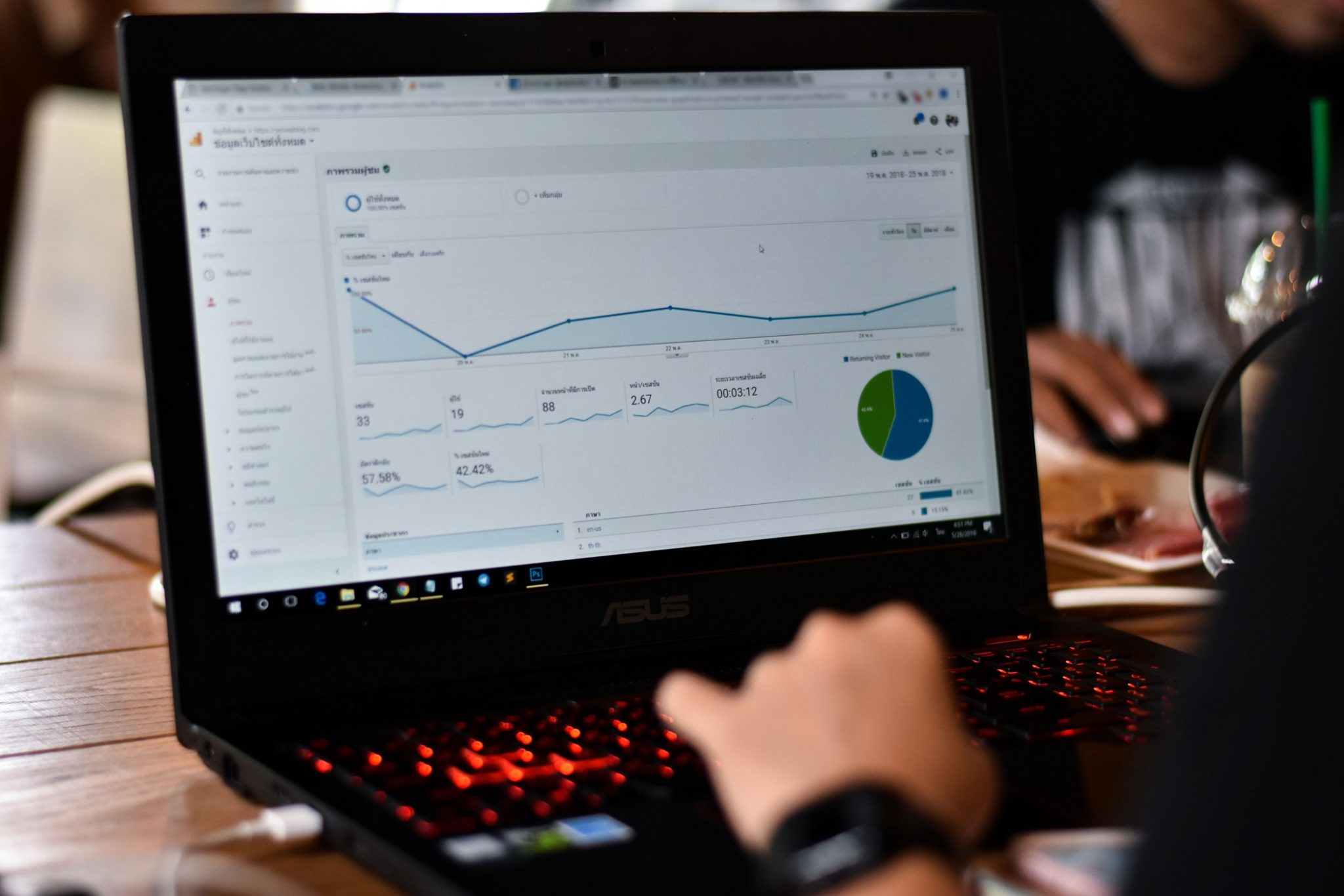
With GBP insights, you can get a full image of how users interact with local listings across Google Search and Google Maps.
With Google Search Console, you can monitor website activity within Google search results. This tool enables effective tracking of rankings, impressions, and click-through rates.
With local query filtering, you can identify requests like “near me” queries and location-specific searches. Geo-modified keywords are very useful for the monitoring of keywords that include cities, neighborhoods, or regions.
Monitoring pages with local intent is your first step to evaluating how they perform in search. For instance, how service-area pages and locally targeted content are shown in search.
Click-through rate by query measures how often users click on the links after seeing the website in search results. By comparing visibility with actual clicks, you can identify pages or keywords that rank well but generate few visits.
Local rank tracking tools such as Whitespark, BrightLocal, and Semrush Local can help your company keep an eye on visibility in local search results and map packs. With accurate map grid tracking, you can analyze rankings by location, device type, ZIP code, or service area.
With Moz Local, BrightLocal, Yext, Whitespark, and Semrush local tools, you can more effectively manage local SEO citations and online reputation. For instance, they can be applied for NAP consistency, citation cleanup, and duplicate removal, saving a great deal of time. They enable simpler review monitoring and response tracking, and also simplify reputation management across local platforms.
Call tracking tools like CallRail help businesses measure how phone calls affect local SEO performance and revenue generation. They are used to track calls and evaluate their quality. Tracking tools also enable lead source and campaign attribution modeling. As a result, you can use local search activities to achieve real business outcomes by identifying which content generates phone leads. With advanced tools, you can more easily understand how local search contributes to conversions and revenue.
Local SEO metrics are valuable when they lead to actions that can change the situation. Following a structured local SEO audit guide makes it easier to prioritize optimization tasks and monitor long-term performance improvements. However, tracking itself doesn’t help until it is combined with signal interpretation and applying actions to fix the core problem.
| Signal | Meaning | Action |
| High impressions + low CTR | Users can see your listing but don’t click. | You can improve the title and meta descriptions. Check the GBP profile text and pay special attention to strengthening reviews and ratings. |
| High GBP views + low calls | Users view the profile but are not interested in conversion. | You can optimize the CTA and improve phone visibility. With extra reviews, photos, and improved Q&A, you can also enhance trust in the brand. |
| High traffic + low conversions | Attractive website, but it doesn’t convert. | We recommend improving landing pages and simplifying UX. You can also increase conversion chances by adding clearer CTAs. |
| Ranking drops in specific areas | Poor local visibility. | The best you can do is to improve local backlinks and optimize service area pages. Try to enhance the multi-location SEO strategy. |
| Low direction request | Users don’t intend to visit your offline facility. | You can strengthen GBP and improve map pack presence to attract more attention to offline services and clarify location. |
| Review score decline | Low customer satisfaction. | Work on fixing operational issues and service quality. Responding to negative reviews and requesting new reviews from happy customers can also spread more trust in the brand. |
A practical example of applying these metrics can be seen in home services lead generation in Canada, where monitoring local rankings and conversions helps identify the channels generating the highest-quality leads.
Monitoring local SEO performance doesn’t mean only data collection. It requires a deep understanding of metrics and continuous optimization to achieve better visibility and higher rankings. With SEO metrics, you can get valuable insights that show signals that you can use to understand the core of the problem and take action to fix it.
With the right tools and wisely chosen metrics, you can improve traffic, attract more customers, and make a step closer to business success. Need assistance with effective local SEO setup? Contact the Livepage team, and we will make it right.


“Livepage has proven to be a reliable source for rapid online growth. We started with 2,000 visitors per month. In 3 years together with Livepage we have reached 70,000 visitors and more than 100 leads from the site per month.”


“As for the results, we’ve been working together since 2015, and our traffic has increased 10x. I cannot say that Livepage was our first SEO company, but they have become the first SEO partner that helped us to achieve the success we were looking for.”


“Livepage delivers SEO efforts that have led to an increase in the site’s users, traffic, and conversions. The team uses a wide range of tools to achieve the client’s goals. They are attentive to the client’s needs, working with them in real-time and bringing in additional specialists when needed.”


“I am pleased with the quick task execution and the instant replies to my messages.”


“I like the complex approach that the Livepage team offers. Absolutely all team members work together; everyone is aware of what is happening on the project. We have one common goal – to increase our service sales, and the team is making every effort to achieve the goal as soon as possible.”


“We’ve been really impressed by how Livepage quickly understood our business and centred our PPC campaign around our objectives. We have achieved good results within a very short time in both revenue and ROI.”


“Everything is clear, timely, and understandable.”


“They have leveraged ideal opportunities to reach our business goals.”