



1 min reading
Review of Cooperation with Livepage from MISSIA Bridal


For most businesses, website redesign usually means growth: a fresh interface, a more modern look, improved UI/UX, a new CMS, or even a shift in brand positioning. All of this should, in theory, attract more users. However, when it comes to website redesign and SEO, it is actually a high-risk zone. Even small changes in structure, content, or technical logic can lead to a sharp drop in organic traffic, loss of rankings, and, as a result, fewer leads or sales.
The core issue is that search engines don’t “see” your website the way users do. They evaluate it structurally through its URLs, internal connections between pages, content, and overall authority. If these elements are disrupted during an update, Google may partially or fully treat your website as a new one. That often leads to a temporary, or sometimes long-term, drop in visibility.
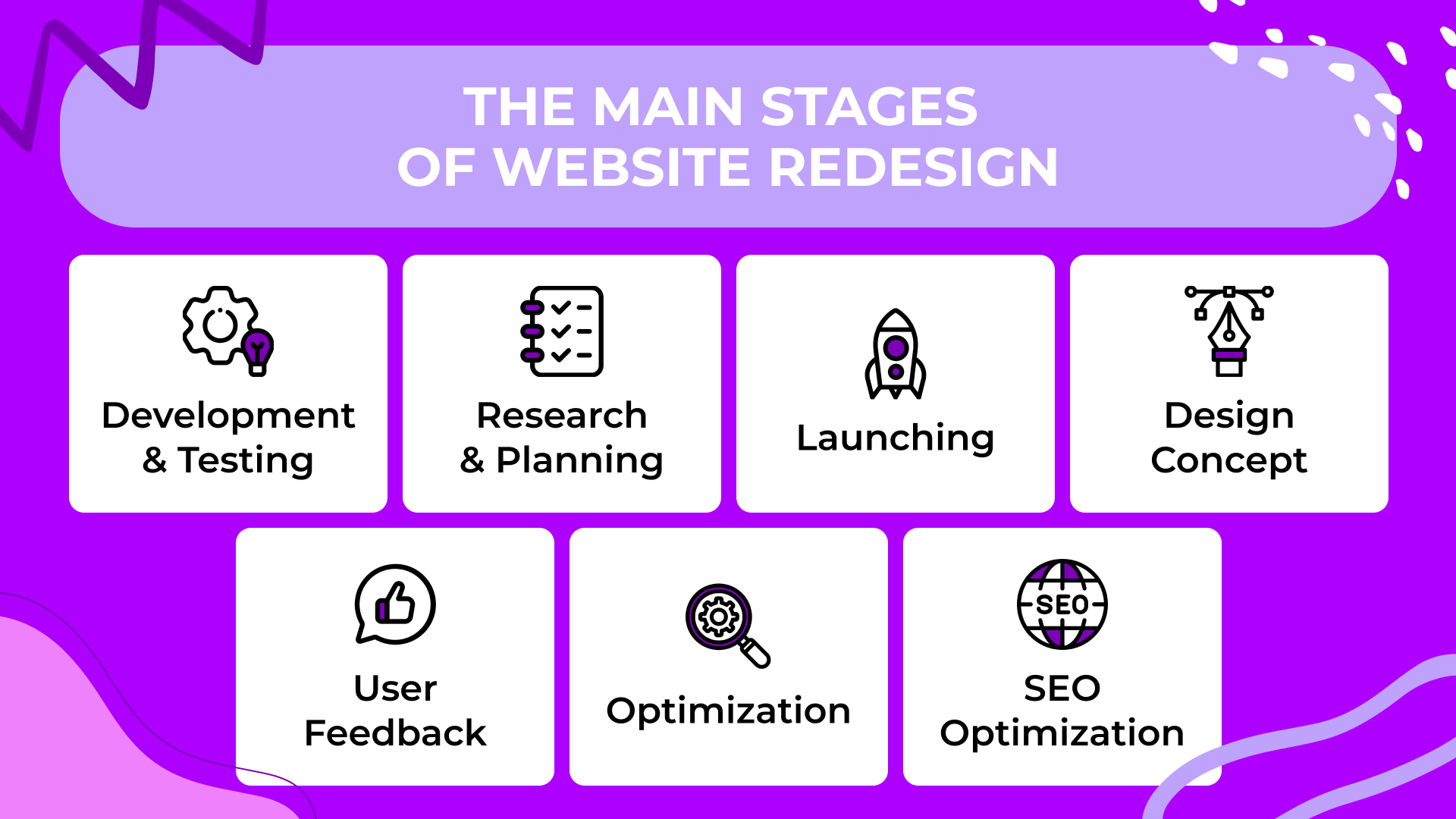
Proper planning reduces redesign risks while helping your website survive Google updates with stable rankings. In this article, we’ll break down which types of redesigns carry the highest SEO risks, the most common mistakes companies make, why traffic drops after a redesign, and what your team should do to turn an update into a growth point, not a setback for your business.
Website redesign is a comprehensive update of a resource that can affect its structure, navigation, content, technical implementation (UI/UX), and sometimes even the domain or URL setup. That’s why, from an SEO perspective, redesign is essentially a partial website migration.
A traffic drop after website redesign doesn’t happen because of the new design itself, but because of changes in the signals search engines rely on for ranking. The most common causes include:
A good example comes from an eCommerce website redesign SEO: during an SEO-driven redesign, stores often merge multiple categories into a more user-friendly structure. From a usability standpoint, this makes sense. But if those categories were previously ranking for different keyword clusters, combining them can cause entire segments of search demand to disappear from rankings.
A similar issue appears in IT or SaaS projects. Teams often rewrite service pages to make them “simpler”, changing headings, removing technical details, or cutting case studies. As a result, the page may lose relevance to specific professional queries it used to rank for consistently.
That’s why SEO during website redesign is critical. The deeper the changes to your website architecture, the higher the risk of losing organic traffic.
Not every redesign carries the same level of SEO risks during website redesign. The impact depends directly on the depth of changes, whether you are only updating visuals or also altering structure, content, URLs, CMS, or even the domain.
The more technical and structural transformations involved, the more complex the SEO support for website redesign becomes and the higher the risk of traffic loss. To understand how to avoid that, let’s start with the least risky type of redesign and what to watch out for.
This is the safest scenario, essentially a visual refresh with minimal SEO impact. In this case, a business updates the look and feel of the website: typography, colors, responsiveness, mobile experience, or overall interface simplicity. If the following conditions remain unchanged, the risks are minimal, and you can achieve website redesign without losing organic traffic:
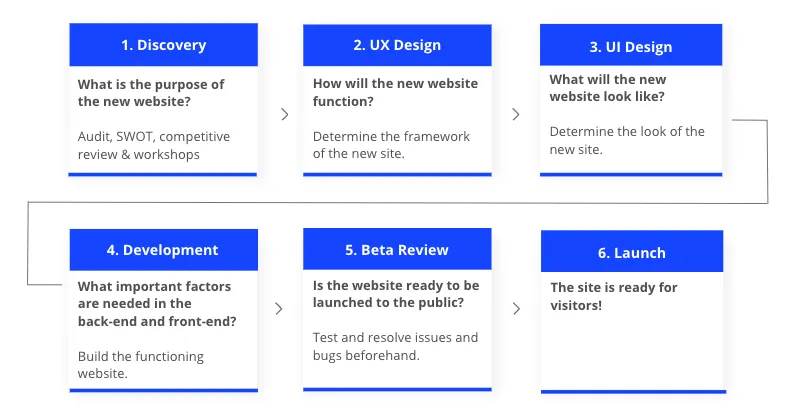
However, even this type of redesign has its pitfalls. During UI updates, teams often:
In this scenario, the role of an SEO specialist is to monitor key technical and content-related factors: ensure strong Core Web Vitals performance, preserve text content and heading structure, verify proper mobile optimization, and check that pages remain correctly indexed after launch.
This type of redesign carries significantly higher SEO risks, especially when the owner or copywriters can:
Rewriting content is not inherently a problem. In fact, updating outdated or low-quality content is often essential for growth. The real issue arises when changes are made without analyzing keyword coverage and existing rankings.
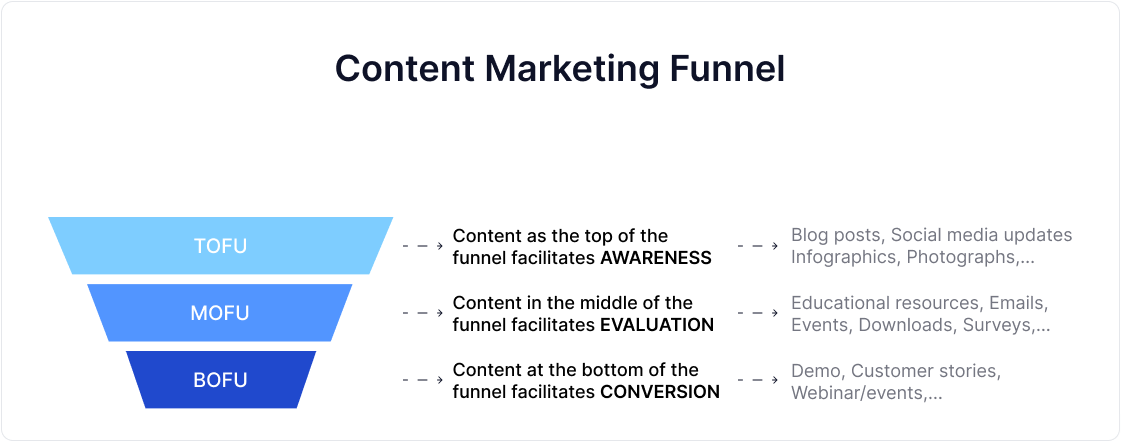
For example, an IT company page might rank for a specific query like “React Native App Development for Startups.” After rewriting, the heading becomes more generic, “Mobile App Development Services.” From a marketing perspective, this sounds logical. But from an SEO standpoint, the page loses precision and relevance for niche queries.
In this case, SEO control should include:
At this stage, redesign is no longer just a visual update, but a partial SEO migration.
This is already a high-risk scenario for SEO when changing website structure. Businesses often change URL structures to make them “cleaner” or more logical. For example:
Even if you have only changed part of the page routing, without a clear reason for those changes and without a proper redirect map, it can still lead to losing the relevance those pages had already built up. Here are some common mistakes during a website redesign:
In cases like this, it is critical to understand how to maintain rankings during a website redesign.
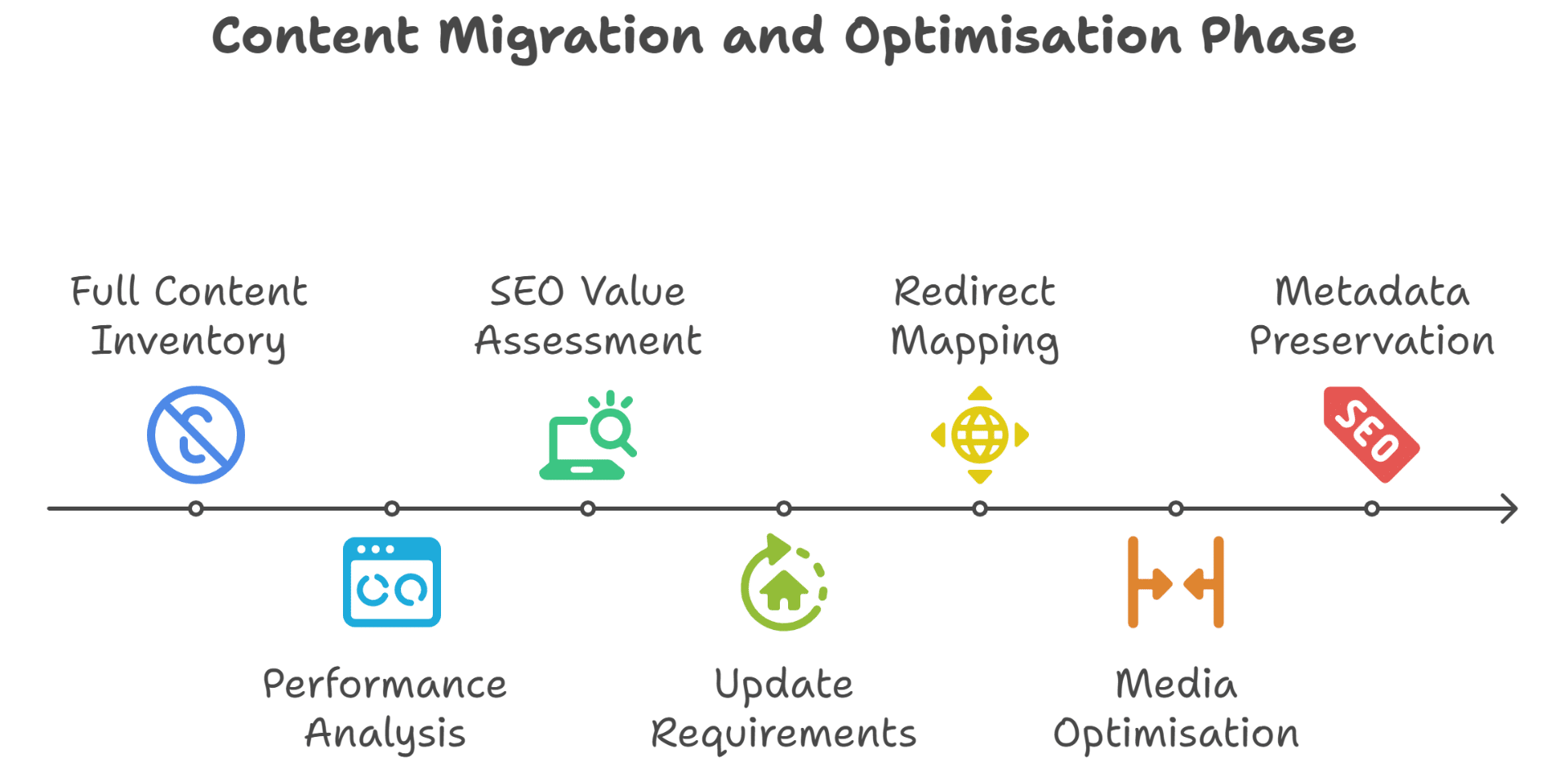
SEO support here always includes a full export of all old URLs before launching the new version of the website, so you don’t lose any pages, even the ones with minimal traffic. Based on that, a detailed mapping is created to match new URLs with the old ones, with a clear understanding of exactly where each address should lead. Before launch, all redirects are tested to avoid the issues mentioned above. After launch, the team continues monitoring for 404 pages and other technical issues, fixing them quickly to maintain the website’s search rankings.
Migrating to a different CMS completely changes the technical logic of your website. A business might move from a custom-built system to WordPress, or from WordPress to Shopify or Magento, for example.
Along with the new platform, it is not just the visual side that changes. You are also dealing with new URL generation logic, template structures, filtering and pagination systems, rules for canonical tags, and changes in how robots.txt and sitemap.xml are configured. Since SEO during website redesign requires extra attention, you should keep in mind that page speed and content rendering work differently across platforms. All of this directly affects how your website gets crawled and indexed, how link equity is distributed between pages, and how stable your rankings stay in search results.
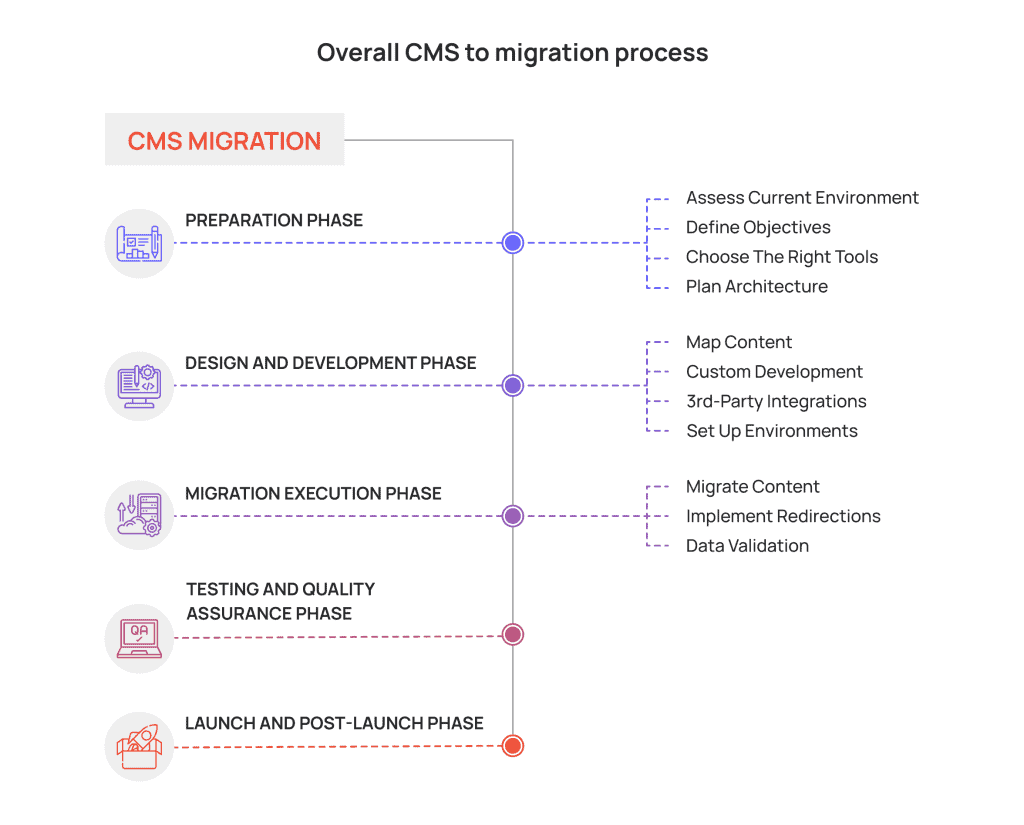
Common risks when migrating to a new CMS:
That’s why when moving to a new CMS, the must-have steps include a full SEO audit before redesign, thorough server response testing during development, and strict control over page indexing after the final launch.
This is currently the riskiest type of redesign because it is basically a full SEO migration combined with a design update. There can be several reasons for doing this:
In this case, Google has to essentially “transfer” authority from the old domain to the new one. If this is not done correctly, you can lose years of accumulated work and optimizations.
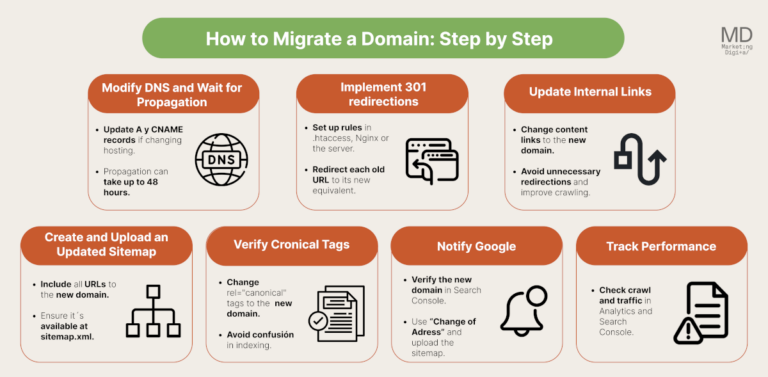
To understand how not to lose traffic after a website redesign of this scale, SEO support needs to include a set of critical actions. First, you build a complete redirect map from all old URLs to the relevant new pages, with zero chance of redirect chains or incorrect redirects. If needed, the URL structure itself can also be updated for certain page types. For example, you might add or remove levels of depth to make the link structure clearer for both users and search engines, and to better reflect what each page is actually about.
It is also essential to double-check your settings in Google Search Console, add and verify the new domain, and update your sitemap.xml and robots.txt files. After launch, the team should continuously monitor the website’s health, indexing status, and page statuses, as well as make sure external links are preserved so you don’t lose the authority you have built up.
A redesign that includes migrating to another domain name requires additional SEO precautions to preserve rankings and authority.
Even a relatively simple redesign can cause a major traffic drop if it is launched without proper SEO oversight.
One of the most common mistakes is removing or merging pages without analyzing their traffic, keywords, and overall ranking potential first. During redesign, teams often get rid of “outdated” or “unnecessary” pages without checking their data in Google Search Console or Google Analytics. As a result, you can lose valuable entry points where users were landing on your website through very specific, but highly converting, search queries. For eCommerce, these can be product subcategories or filtered pages. For an IT company, it can be pages targeting specific technologies or industries. On the surface, these pages may look secondary, but they often bring in high-intent traffic from low-volume, long-tail queries.
Another common issue is breaking your internal linking after changing the navigation. When designers rework the homepage, footer, header, or block structure on commercial pages, the original link hierarchy can easily get disrupted. Pages that used to be strengthened by internal links from these sections can suddenly become isolated. When that happens, they stop receiving enough link equity, so Google is forced to reassess their importance, and over time, they start losing positions in search results. This is especially critical for commercial pages that, for example, used to get extra support from blog content or other informational sections.
Another pretty common scenario: after launching the updated website, technical indexing issues start popping up. Things like noindex/nofollow tags might still be left on pages from the staging version, robots.txt might accidentally block important sections, or canonical tags might still point to old URLs. In more complex cases, that same staging version of the website can even end up indexed in search, along with all its errors. These issues are not always obvious right away, but they can quickly impact your website’s visibility in search results.
All of these problems rarely happen on their own. Most of the time, they show up together because there is no shared vision for how the website should evolve after the redesign between the client’s team and SEO specialists. Designers focus on visuals, developers handle the technical side, and the content team works on copy, but without SEO coordination tying everything together, even small changes in each area can stack up and create a negative impact over time.
That’s why doing a redesign without SEO support is always a risk. And the more complex your website structure is, the more expensive even a single overlooked detail can become down the line.
A professional SEO audit company can identify technical and structural issues before they become costly after launch.
A great example of what a well-executed SEO website design update can achieve — not just preserving but significantly growing traffic and conversions — is the project of the Garvis surgical clinic. At the start of our cooperation, the clinic was already well-known in its region and had strong medical expertise. But its visibility in search didn’t reflect the full range of services it actually offered. Organic traffic was low, most visits came from branded queries, and commercial pages weren’t converting visitors into leads.
Our goal was to increase the number of leads from organic search and not just drive “empty” traffic but boost real macro conversions: appointment bookings, phone calls, and form submissions.
So, understanding how to avoid ranking drops during a website update, we started by rethinking the structure and content presentation on commercial pages. Most operation pages were basically informational articles with a single booking form in the footer. We turned them into full-fledged landing pages with a clear offer, well-structured service blocks, pricing, clinic advantages, proof of expertise, and multiple CTAs placed across different sections of the page.
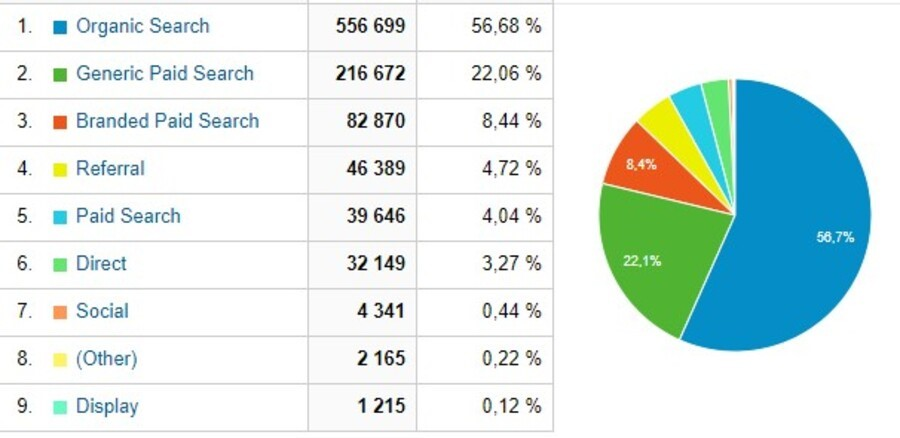
This kind of content redesign, without losing the original search intent and keywords those pages were ranking for, significantly improved their conversion rates. Even at this stage, we started seeing growth in form submissions and calls from organic traffic.
Since healthcare falls under the YMYL (Your Money or Your Life) category, we paid special attention to E-E-A-T factors (experience, expertise, authoritativeness, trustworthiness). We strengthened the doctor profile pages by adding details about their education, degrees, achievements, publications, and reviews on external platforms. Blog articles also started going through expert review by the clinic’s doctors, which further increased trust in the website.
We also improved key informational pages like “About the Clinic,” “Contact Us,” and “Equipment,” refined the FAQ structure, and implemented structured data for doctor pages. All of this helped build stronger trust in the brand, both for users and search engines.
Additionally, we conducted a full technical audit of the website, fixed critical issues, and prepared technical recommendations to improve Core Web Vitals. We put a strong focus on expanding the website structure: added new landing pages for priority operations that previously didn’t have dedicated pages. We also prepared and launched a Ukrainian-language version of the website, which helped expand keyword coverage and capture additional search demand from Ukrainian-speaking users.
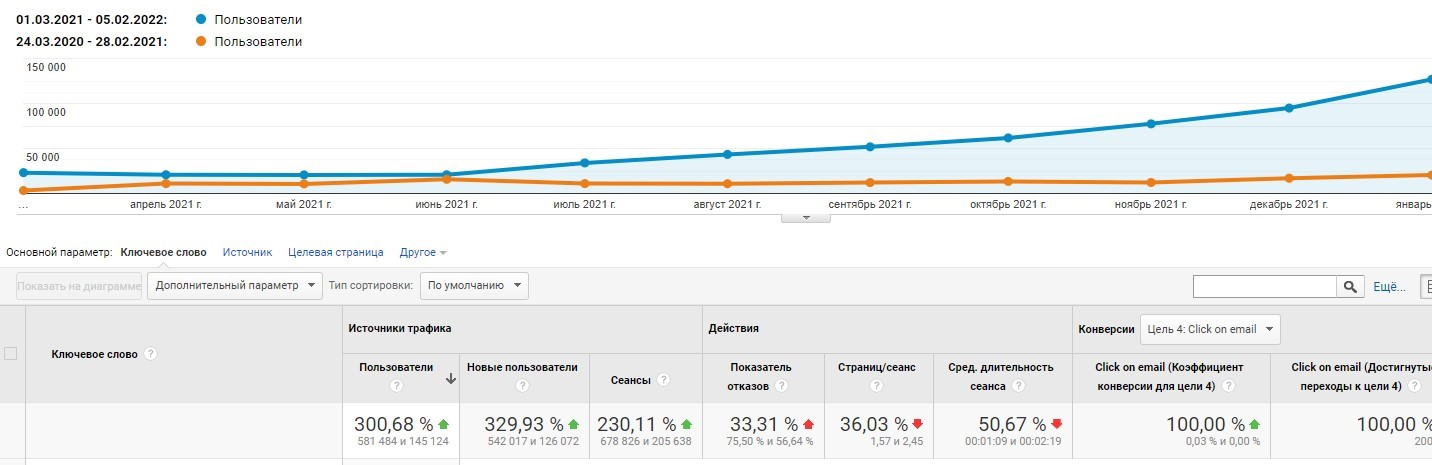
Another key focus area was the website’s backlink profile. We analyzed competitors and built a clear link-building strategy focused on acquiring high-quality, relevant links from medical portals, niche websites, and crowd platforms where mentions of our website would actually add value. We also balanced the anchor list and increased the share of target anchors without losing the natural look of the overall backlink profile.
That’s exactly why this case is a great example of how redesign and website updates can become a growth point when supported by the proper SEO strategy.
Our other practical example of massive URL mapping and redesign support for Apriorit demonstrates how careful migration planning can preserve rankings during large-scale website updates.
Website redesign is always more than just a visual update. In most cases, it affects structure, content, URL logic, and technical page settings, which means it directly impacts how search engines perceive your website. That’s why traffic drops after redesign are not random. They are usually the result of missing SEO preparation and a lack of proper control at every stage of the update.
The biggest risk is not the redesign itself, but the fact that it is often treated as purely a design or technical project, without involving SEO specialists early on. Combining redesign planning with SEO strategy consulting services reduces the risk of traffic loss after launch.
If your business is planning an SEO-driven redesign or you are already in the process of building a new website, it is crucial to bring in an SEO team as early as possible. The Livepage team knows how to prepare your website for redesign: we manage the process at every stage and make sure your organic traffic stays intact after launch. Want to redesign your website without losing rankings or users? Let’s build a plan together before your new website goes live!


“Livepage has proven to be a reliable source for rapid online growth. We started with 2,000 visitors per month. In 3 years together with Livepage we have reached 70,000 visitors and more than 100 leads from the site per month.”


“As for the results, we’ve been working together since 2015, and our traffic has increased 10x. I cannot say that Livepage was our first SEO company, but they have become the first SEO partner that helped us to achieve the success we were looking for.”


“Livepage delivers SEO efforts that have led to an increase in the site’s users, traffic, and conversions. The team uses a wide range of tools to achieve the client’s goals. They are attentive to the client’s needs, working with them in real-time and bringing in additional specialists when needed.”


“I am pleased with the quick task execution and the instant replies to my messages.”

“I like the complex approach that the Livepage team offers. Absolutely all team members work together; everyone is aware of what is happening on the project. We have one common goal – to increase our service sales, and the team is making every effort to achieve the goal as soon as possible.”

“We’ve been really impressed by how Livepage quickly understood our business and centred our PPC campaign around our objectives. We have achieved good results within a very short time in both revenue and ROI.”


“Everything is clear, timely, and understandable.”


“They have leveraged ideal opportunities to reach our business goals.”