How We Helped a Steel Products Manufacturer Attract New B2B Customers Through Google Ads
- Client: Termet Research and Manufacturing Company.
- Product: Wholesale trade and manufacturing of rolled steel products for the engineering industry.
- Business model: B2B manufacturing and sales of rolled steel products.
About the Company
Termet Research and Manufacturing Company specializes in the production and sale of long steel products made from special-grade steel. Its product range includes hot-rolled and cold-drawn steel products, as well as steel wire for the mining, transportation, engineering, oil and gas, and other industrial sectors.
Main Business Objectives
We were tasked with achieving three main objectives:
- Attract smaller manufacturers that did not yet have established suppliers of steel products and were looking for a reliable partner.
- Acquire new large B2B customers – including industrial groups, holding companies, design bureaus, and manufacturing enterprises across Ukraine that might be interested in diversifying their supplier base and securing more favorable purchasing terms for steel products.
- Generate demand for key steel grades by focusing advertising campaigns on the products most important to the business, particularly 30KhGSA and 60S2A.
The Client’s Request
The client’s primary objective was to test Google Ads as a new B2B customer acquisition channel and determine whether digital advertising could consistently generate potential buyers of rolled steel products.
Manufacturing and metalworking are relatively traditional industries, where a significant share of new business comes through personal connections, established customer relationships, and referrals. For this reason, Termet had not previously used paid digital advertising to acquire new customers. However, the company wanted to find out whether Google Ads could become an additional channel for reaching potential buyers.
Since the client had no previous experience with Google Ads, the expectations went beyond simply setting up advertising campaigns. We needed to develop a comprehensive strategy for testing the channel, identify potential audiences, structure the campaigns, and estimate the cost per lead that would meet the company’s requirements and could be passed on to the sales team for further follow-up.
Lead quality presented another important challenge. The client did not want inquiries from intermediaries or companies purchasing steel products for resale under their own brands. The priority was to reach actual end users of steel products – large factories, manufacturing facilities, and industrial enterprises that needed steel directly for their own production processes.
Therefore, the initial objective was not simply to generate the first leads through Google Ads. It was to determine whether paid advertising could provide Termet with a consistent flow of qualified B2B leads from direct customers and become an additional source of new business from major industrial companies.
Stage 1 – Testing Search Demand
Our first task was to identify which advertising tools would be most effective in attracting new B2B customers. After analyzing demand for steel products, we identified the main areas to test and developed the structure of our Search campaigns.
We launched separate campaigns targeting general rolled steel product queries, as well as searches for specific product types and steel grades. We also tested branded and competitor-related traffic separately.
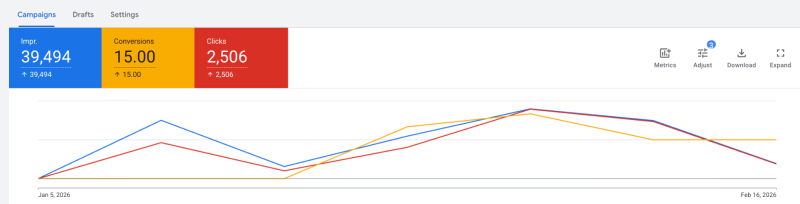
The first results came within the very first month: the campaigns began generating relevant inquiries from companies looking for steel product suppliers. This confirmed that Google Ads could become an additional, scalable B2B customer acquisition channel for Termet.
How We Targeted Actual End Users
To attract direct customers rather than intermediaries, we:
- Analyzed search queries.
- Added negative keywords.
- Segmented searches by product type.
- Reviewed lead quality together with the client.
- Adjusted campaigns based on feedback from the sales team.
Stage 2 – Increasing Brand Awareness
Following the initial results from Search campaigns, we identified another priority for the project’s long-term growth: building brand awareness for Termet alongside capturing existing search demand.
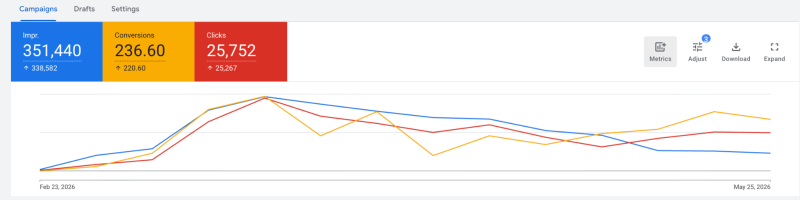
To achieve this, we launched a Google Ads Display campaign and began testing creatives tailored to the target audience. Display traffic showed higher user engagement, indicating that upper-funnel advertising formats were worth exploring further.
Based on this insight, we decided to test another tool – Demand Gen. We introduced video creatives and additional static ad formats to increase the number of touchpoints with potential customers and reach audiences at different stages of the marketing funnel.
Stage 3 – Focusing on Key Steel Grades
After establishing a consistent flow of leads and developing brand-related traffic, we turned our attention to another objective: increasing the number of inquiries for specific steel grades that are central to Termet’s product offering.
A separate campaign targeting different steel types and grades was already running, but it was not generating sufficient traffic. At the same time, we understood that search demand for highly specialized steel grades could be limited.
Rather than scaling the entire campaign area immediately, we decided to test our hypothesis using one specific product – 30KhGSA.
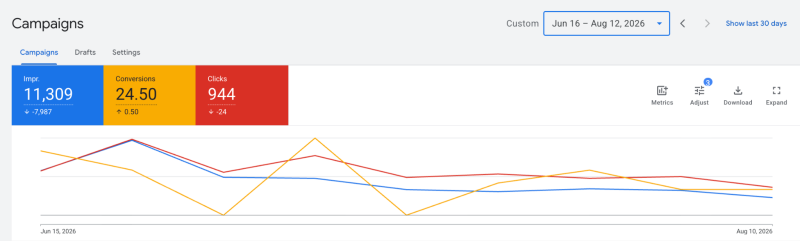
We launched a dedicated campaign and found that even with relatively low search volume, product-specific messaging could generate qualified inquiries. The campaign began attracting leads specifically interested in one of Termet’s key steel grades – 30KhGSA.
Once the hypothesis was validated, we applied the same approach to other grades and launched separate campaigns for 60S2A and 09G2S.
This allowed us to target demand for specific steel products more precisely and attract more qualified B2B leads.
What Made This Strategy Successful
The results of this case study came from combining several Google Ads tools into a single acquisition strategy.
Search campaigns allowed us to capture existing demand and reach companies that were already looking for steel product suppliers.
Display and Demand Gen helped expand our reach, increase brand awareness for Termet, and create additional touchpoints with potential customers. Dedicated campaigns for specific steel grades – including 30KhGSA, 60S2A, and 09G2S – made it possible to target demand for specialized products more precisely and attract more relevant B2B leads.
Continuous optimization based on the quality of incoming inquiries also played a crucial role. Rather than simply increasing traffic, we gradually identified which campaigns, search queries, and product categories attracted the types of customers the business actually needed.
Future Development Plans for the Project
Google Ads has proven to be an effective additional B2B customer acquisition channel for Termet. What began as a test of search demand has developed into a structured advertising system that allows the company to target general product demand, specific steel grades, and audiences at different stages of the marketing funnel.
The next stage will focus on scaling the advertising system and reaching new audience segments.
We plan to make greater use of Performance Max and audience segmentation to engage potential customers at different stages of the funnel – from users who are just discovering Termet and its products to companies with established demand for steel products.
Another priority will be reaching large industrial enterprises, industrial groups, holding companies, and design bureaus, as well as identifying new manufacturing segments that require special-grade steel.
At the same time, we plan to scale campaigns targeting specific steel products that have already demonstrated strong lead quality.
Our goal is to build a predictable advertising system that enables Termet to consistently acquire new B2B customers of different sizes and increase the number of major industrial buyers.