



1 min reading
Review of Cooperation with Livepage from MISSIA Bridal



It is quite rare for people to become truly loyal to a brand after just a single purchase, as loyalty is built gradually. It develops through repeated interactions, a positive user experience, and a genuine sense that the brand truly understands its audience. While marketing surrounds us on all sides today, trust is not easily won, yet it is easily lost. This is where content marketing comes into play. When executed effectively, it helps a product maintain high visibility while fostering loyalty and building long-term relationships with your audience. So, how does content marketing build brand loyalty?
Let’s take a closer look at what brand loyalty is. Essentially, it’s a well-established process in which a customer chooses to purchase a product or service from you on a regular basis, bypassing alternative options offered by your competitors. And this isn’t just about a positive impression of the product, but also about trust and emotional attachment.
Today, loyalty is one of the most valuable levers of influence for business assets. At a time when people are heavily bombarded with advertising, switching choices is incredibly easy.
Brands lucky enough to build a loyal audience gain much more than just a customer who returns again and again.
Let’s take a look at the basic benefits of brand loyalty:
Of course, the product itself and its price can be replicated, but trust is harder to come by. That’s precisely the answer: what role does content marketing play in building brand loyalty and why content focused on it is so valuable.
Content marketing for brand awareness is unique in that it first provides value and only then asks for something in return. Instead of direct sales, it offers education, useful information, entertainment, or support.
Through these interactions, the brand gradually comes to be perceived as an expert, trustworthy, and relevant. And when this happens regularly, loyalty develops naturally.
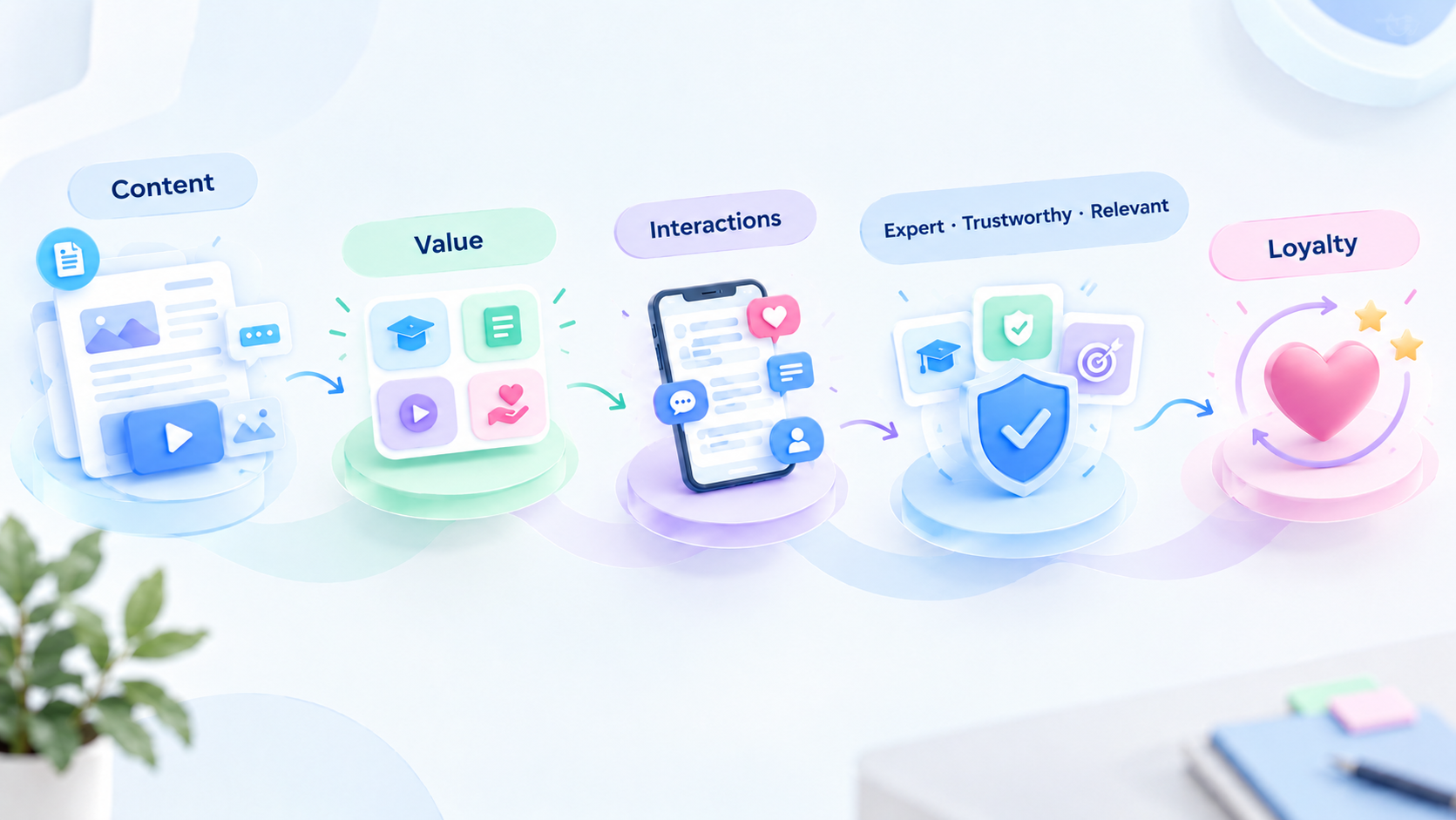
Trust is rarely built through advertising alone. People trust brands more when they communicate openly, consistently, and provide useful content.
Have you noticed that transparency has become even more important in recent years? Customers want to know how a product is made, what principles the company follows, and whether its actions align with its stated values.
For example, the American clothing company Patagonia regularly publishes content about environmental issues, sustainability, and supply chains. The brand doesn’t try to appear perfect and openly discusses its challenges. This makes its communication more honest and convincing.
Here’s another example from the IT company Buffer. For years, they’ve been publishing data on salaries, internal processes, and business results. This transparency helped them build trust long before it became a trend.
Trust isn’t built with a single piece of content—it develops gradually. Every useful article or update adds another “brick” to the overall foundation of trust.
Facts help us understand, while stories help us remember. Storytelling allows brands to go beyond the product and connect with people on a more personal level. A good story creates a sense of recognition—through shared challenges, achievements, or life experiences.
Well-crafted stories aren’t always about the brand itself. Often, they’re about customers, employees, or real-world problems that the company helps solve. That’s why active lifestyle brands tell stories of adventure instead of listing technical specifications. Have you noticed how healthcare organizations share stories of real patients instead of using dry medical jargon? Emotional triggers content marketing begins to be perceived not as a company, but as a part of people’s lives.
Loyalty isn’t built solely through frequent posts. What matters is how well the content meets the audience’s needs—their interests, challenges, and expectations. There are several approaches that consistently work.
Always begin with good content and understanding. Without it, even well-written material misses the mark. Businesses must know their customers, their needs, the challenges they face, and the way they make decisions.
Businesses usually gather this understanding through interviews, surveys, analytics data, CRM systems, and behavioral tracking.
Some common ways to personalize content marketing for brand awareness include:
People engage more when the content is relevant. Relevance is key to building loyalty.
An effective strategy is helping people before selling. This approach addresses problems and answers questions without immediately pushing products.
It can include things like:
When people gain ongoing value from a brand, they view it as skilled and trustworthy. Over time, this builds trust, making that brand memorable when it’s time to buy.
People trust others more than brands. That’s why reviews, testimonials, case studies, and user-generated content are so powerful. They serve as proof that goes beyond marketing claims.
Please include:
This content attracts new customers and strengthens relationships with current ones, especially when their experiences are highlighted.
It’s important to accept that consistency matters a great deal. A user might see a brand on social media, subscribe to an email newsletter, read the blog from time to time, and watch videos. It’s the combination of these touchpoints that shapes the overall impression.
As long as the tone, style, and values remain consistent, trust grows faster.
Channel Overview of building brand loyalty through content:
People don’t make decisions based only on logic. Emotions play a big role in what we remember, trust, and respond to.
Some of the most typical emotional triggers content marketing can face with include:
Brands often combine several of these at once.
For example, Nike uses inspiration through stories of persistence and achievement. Spotify often taps into sentimentality with year-end listening summaries that reflect users’ personal memories.
The goal isn’t to manipulate people. It’s to connect with them. Brand loyalty content reflects real human motivations.
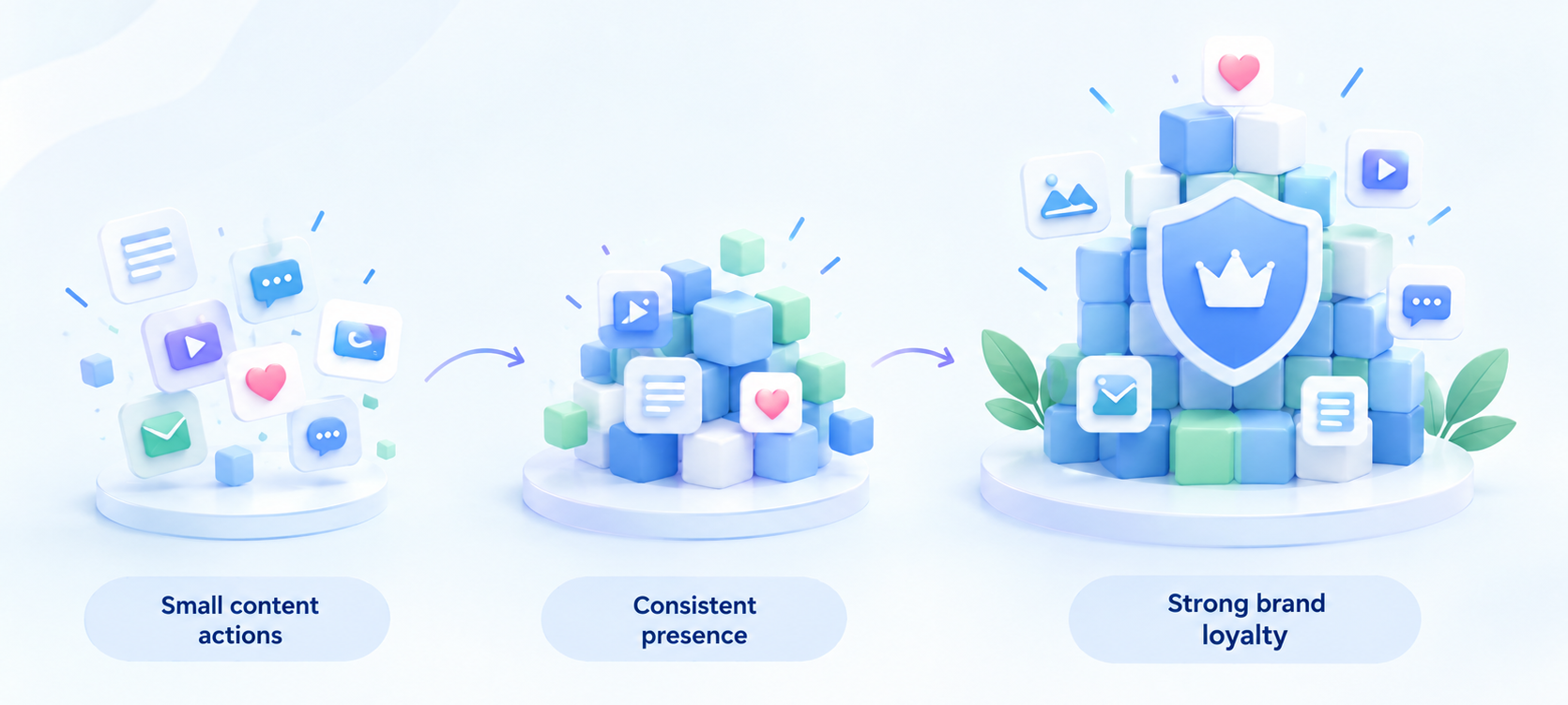
One overlooked aspect of brand loyalty is steady presence. Many focus on big campaigns for quick results, but loyalty usually doesn’t work that way. Trust isn’t built through a single strong message, but through repeated exposure to the same tone, values, and quality. Even small interactions count. Helpful blog posts, useful emails, or replies on social media add up over time.
What really strengthens loyalty is predictability. When customers know what value they’ll get from a brand, they feel more comfortable coming back. This sense of trust is even more important in competitive markets where alternatives are always available.
Staying relevant is another key factor to increase brand loyalty. Audiences change, trends shift, and customer needs evolve. Brands that continually update content stay part of the conversation. Brands that don’t will fade from attention, even if the product stays the same. Not every piece needs to go viral or see quick results. Content works like compound interest: small efforts grow and support each other over time.
In the end, brand loyalty is less about single moments and more about the overall experience people have with a brand over weeks, months, or even years.
Loyalty can’t be measured just by website traffic.
A blog might attract many visitors, but that doesn’t always mean people are becoming more loyal. To see real impact, it’s important to look at behavior over time.
Useful metrics consist of:
To track these properly, businesses regularly rely on:
No single metric shows the whole picture. Loyalty becomes clearer when you look at patterns across different data points.
It’s important to recognize that loyalty doesn’t arise from a single campaign or piece of content. It develops gradually, naturally through consistent positive experiences.
Content marketing plays a key role in this process, helping brands educate, engage, and build trust.
Brands that consistently deliver value will inevitably win the long-term competition for attention and customer relationships. Hope, we were able to shed some light on how to increase brand loyalty through content. If you need help creating content that builds trust and strengthens brand loyalty, feel free to reach out to Livepage team.
Educational articles, tutorials, customer stories, expert insights, insider content, and user-generated content tend to work best. They help people trust the brand while also giving them something useful.
As a rule, it will take several months of consistent effort. After all, loyalty can only be built through repeated positive experiences.
Of course, and sometimes they do it more effectively. After all, they have the opportunity to communicate in person.
It’s important to understand that advertising will give you quick results, but content is what builds long-term trust.


“Livepage has proven to be a reliable source for rapid online growth. We started with 2,000 visitors per month. In 3 years together with Livepage we have reached 70,000 visitors and more than 100 leads from the site per month.”


“As for the results, we’ve been working together since 2015, and our traffic has increased 10x. I cannot say that Livepage was our first SEO company, but they have become the first SEO partner that helped us to achieve the success we were looking for.”


“Livepage delivers SEO efforts that have led to an increase in the site’s users, traffic, and conversions. The team uses a wide range of tools to achieve the client’s goals. They are attentive to the client’s needs, working with them in real-time and bringing in additional specialists when needed.”


“I am pleased with the quick task execution and the instant replies to my messages.”


“I like the complex approach that the Livepage team offers. Absolutely all team members work together; everyone is aware of what is happening on the project. We have one common goal – to increase our service sales, and the team is making every effort to achieve the goal as soon as possible.”


“We’ve been really impressed by how Livepage quickly understood our business and centred our PPC campaign around our objectives. We have achieved good results within a very short time in both revenue and ROI.”


“Everything is clear, timely, and understandable.”


“They have leveraged ideal opportunities to reach our business goals.”