




9 min reading
How Web Design Impacts Customer Experience


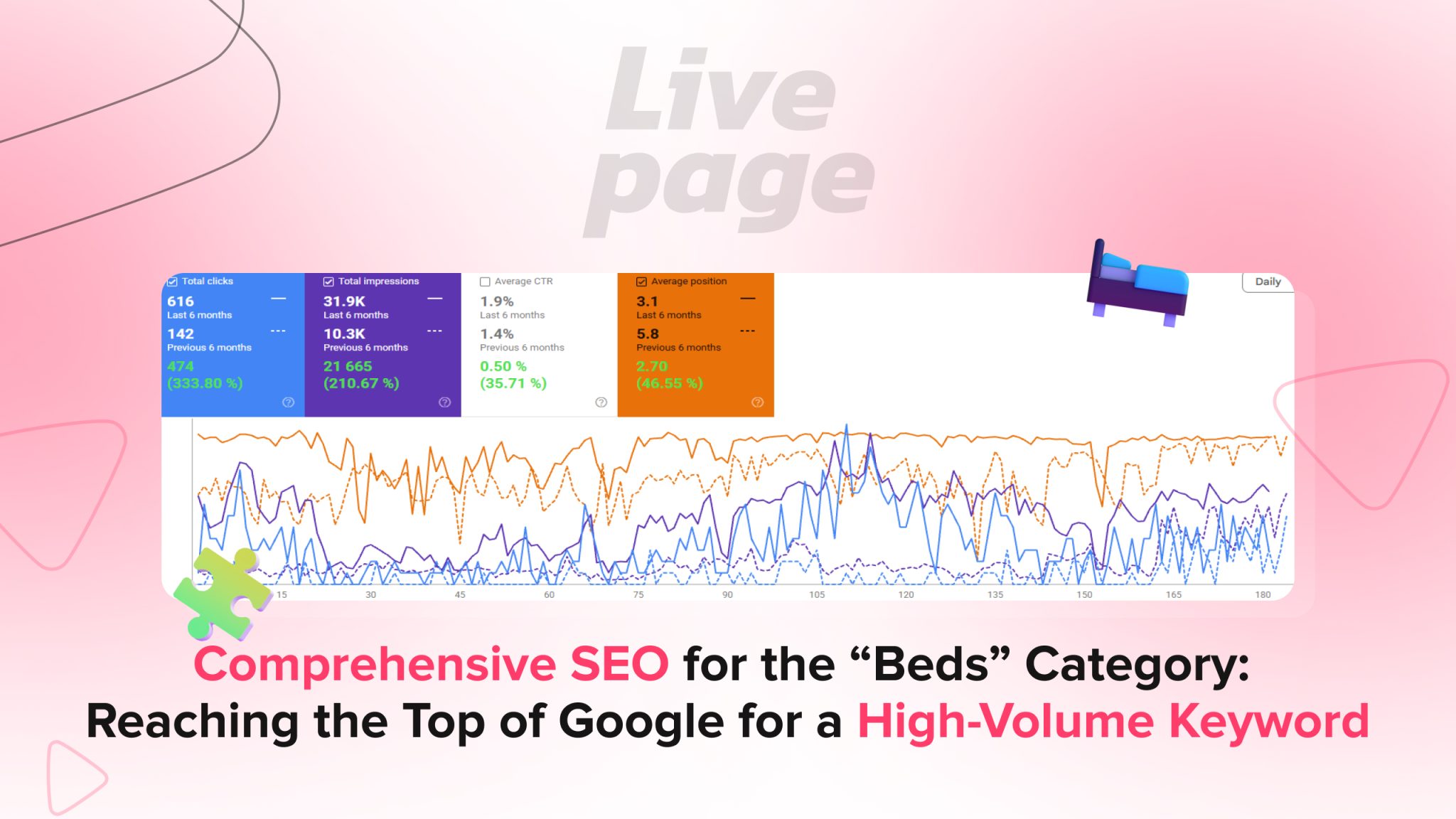
MebelMarket is a Ukrainian eCommerce furniture store with a broad selection of beds, mattresses, sofas, and other home products. The “Beds” category is one of the website’s most important commercial pages and competes for some of the most popular high-volume queries in the market.
The main goal was not only to improve the category’s Google rankings but also to create a comprehensive and useful page that matched user search intent and met modern search engine requirements.
Despite stable indexing and existing organic traffic, the category was not fully reaching its potential in the most competitive segment of search.
During the audit, we identified several areas for improvement:
We decided not to limit the work to isolated changes and instead carried out a comprehensive optimization of the category.
We worked on MebelMarket’s organic search growth for more than two years, combining technical SEO with technical optimization, content development, catalog structure improvements, and internal linking. This comprehensive approach allowed us to gradually increase the website’s organic traffic and build a strong foundation for improving the visibility of individual commercial categories.
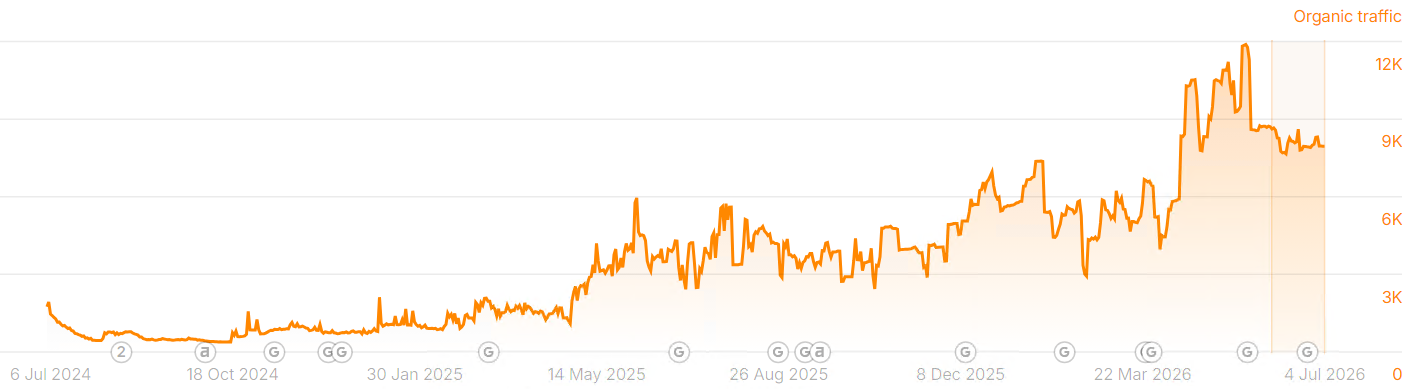
In this case study, we focus specifically on the “Beds” category, one of MebelMarket’s highest-priority pages and a major competitor for high-volume commercial searches.
We focused on making the “Beds” category useful throughout the entire decision-making process—from the first stage of browsing available options to the final purchase decision. To achieve this, we expanded the page content, reworked its structure, added an FAQ section, and covered the most common questions potential buyers ask before choosing a product.
The goal was to turn the category into more than a product listing. It needed to help shoppers understand their options, compare them, and feel more confident about what to buy.
By covering both commercial and informational intent, we made the page more relevant to a wider range of search queries.
At the same time, we carried out a number of technical improvements. The main changes included:
These changes made the page easier for search engines to understand, allowing them to interpret its content more accurately and use it more effectively in ranking.
The next step was to strengthen the relationship between the “Beds” category and the rest of the site. We built a hub-based internal linking structure around the category so both users and search engines could move through a clear network of related pages.
As part of this work, we:
This approach helped distribute internal link equity more effectively and created a clearer topical structure for search engines.
The hub model also reinforced the authority of the main category. Supporting pages fed relevance back into the core “Beds” page, while users gained a smoother path from research and comparison to product selection.
After the full set of changes was implemented, the category showed steady growth in organic visibility.
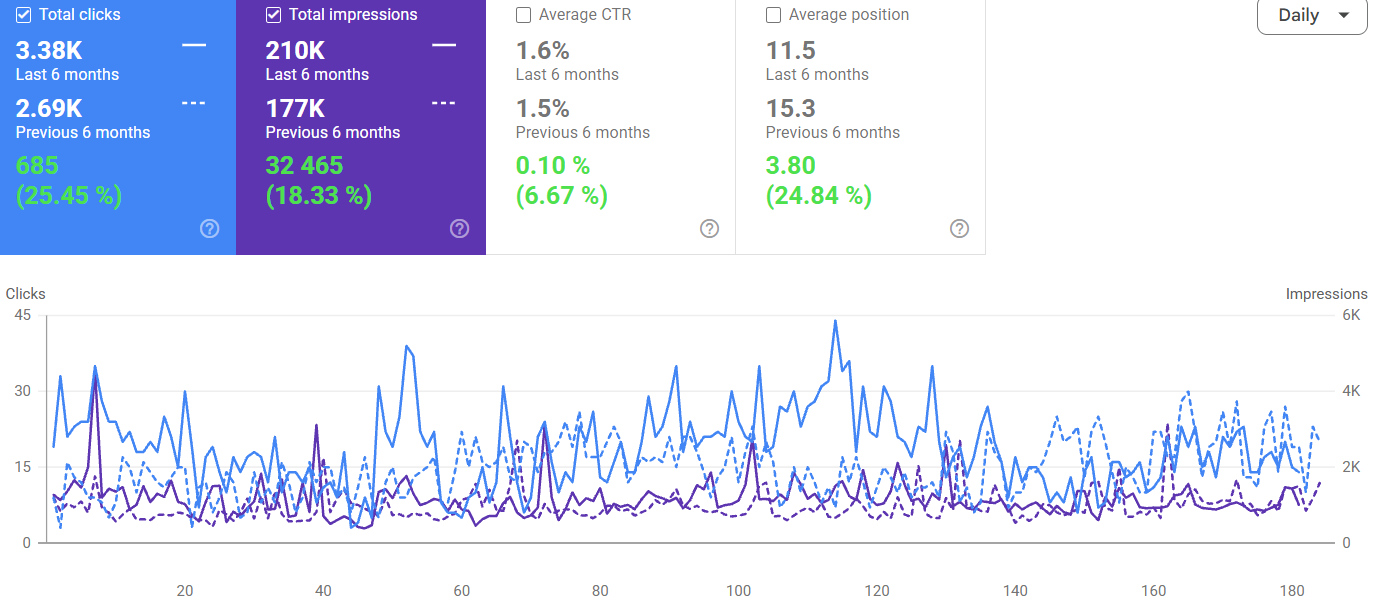
Over the last six months:
The strongest growth came from high-volume commercial queries, confirming that the category gained visibility in the most competitive segment of search.
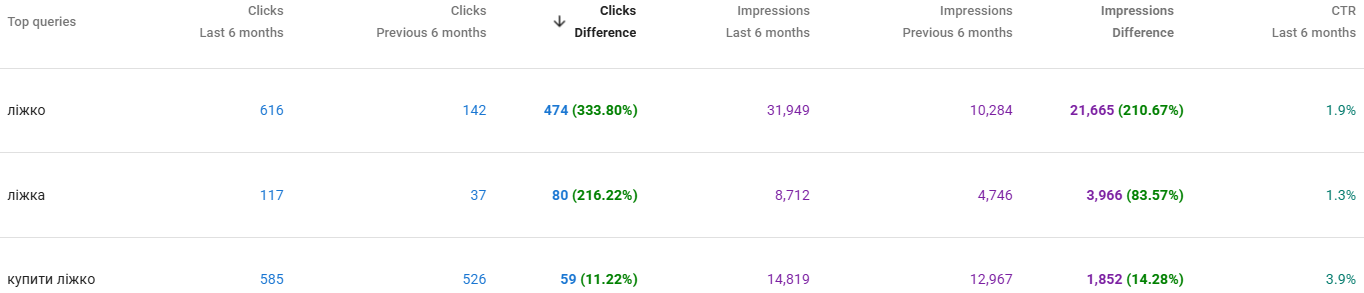
The keyword “bed” has a search volume of around 14,800 searches per month and is one of the most competitive queries in the niche.
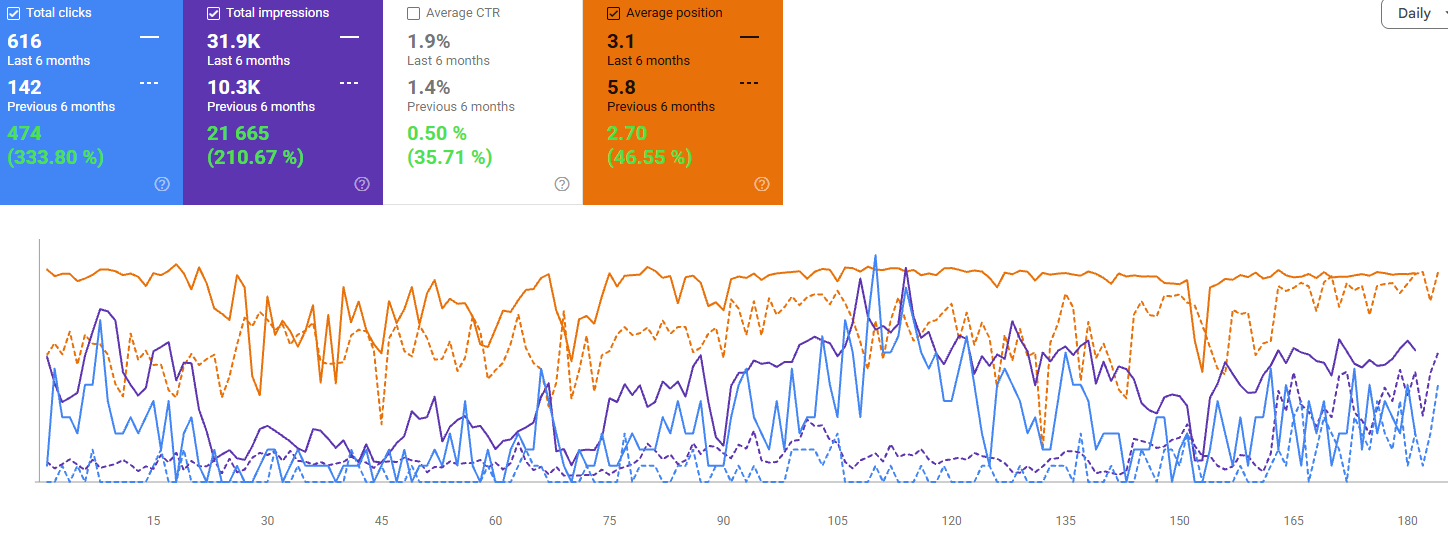

Following the optimization work:
As a result, the page appeared much more frequently near the top of the search results for one of the category’s key commercial queries.
One of the most interesting results was that, after the full range of SEO work, the website’s pages began appearing in AI search monitoring tools.
According to Ahrefs, MebelMarket pages started appearing in responses from:
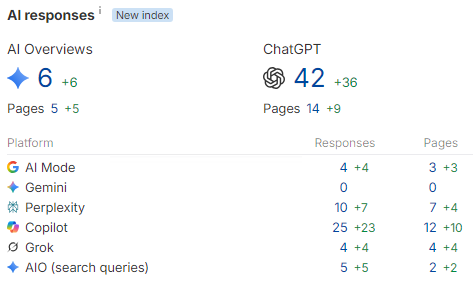
This indicates that AI systems started using the website’s pages as one of the information sources when generating answers for users.
While working on the category, we took current search trends into account and adapted our approach to SEO recommendations accordingly. In addition to traditional ranking factors, we focused heavily on comprehensive topic coverage, logical content structure, user search intent, and building topical connections between related pages.
We consider this AI visibility a natural extension of the broader SEO work. This was not a separate set of changes made specifically for ChatGPT but a logical evolution of modern SEO, where high-quality, structured, and easy-to-understand content matters for both traditional search engines and AI platforms.
A comprehensive SEO approach helped improve the category’s visibility for high-volume commercial queries, increase organic traffic, and strengthen the page’s positions in search results.
The case also reflects how much SEO has changed. Strong performance today depends on more than ranking well in traditional Google results. Content depth, site architecture, internal relationships between pages, and technical quality also shape visibility across AI-driven search experiences.
An additional sign of this came directly from the client, who reported that one customer had found the website through ChatGPT. While a single case cannot be treated as statistical proof, it is a promising example of the direction search is moving in. Pages built to be useful, clear, and authoritative are increasingly being discovered through both traditional search engines and AI platforms.


“Livepage has proven to be a reliable source for rapid online growth. We started with 2,000 visitors per month. In 3 years together with Livepage we have reached 70,000 visitors and more than 100 leads from the site per month.”


“As for the results, we’ve been working together since 2015, and our traffic has increased 10x. I cannot say that Livepage was our first SEO company, but they have become the first SEO partner that helped us to achieve the success we were looking for.”


“Livepage delivers SEO efforts that have led to an increase in the site’s users, traffic, and conversions. The team uses a wide range of tools to achieve the client’s goals. They are attentive to the client’s needs, working with them in real-time and bringing in additional specialists when needed.”


“I am pleased with the quick task execution and the instant replies to my messages.”


“I like the complex approach that the Livepage team offers. Absolutely all team members work together; everyone is aware of what is happening on the project. We have one common goal – to increase our service sales, and the team is making every effort to achieve the goal as soon as possible.”


“We’ve been really impressed by how Livepage quickly understood our business and centred our PPC campaign around our objectives. We have achieved good results within a very short time in both revenue and ROI.”


“Everything is clear, timely, and understandable.”


“They have leveraged ideal opportunities to reach our business goals.”