




9 min reading
GA4 BigQuery Export: When You Really Need It


Key Takeaways:
To find a product, service, or company in your area, you simply pick up your smartphone and type in a query using terms like “near me,” and you’ll get a whole bunch of options in an instant. This is how local landing pages work. For businesses operating in specific geographical regions, landing pages streamlined for local search can make a huge difference in driving local traffic, generating leads, and boosting conversions.
In this guide, we’ll explore the essential strategies for building local SEO landing pages that truly work. Whether you’re a beginner or looking to refine your existing pages, you’ll find actionable tips and insights to help your business stand out in local search results.
Localized landing pages can make or break the presence in “near me” searches for location-bound businesses and companies, making some brands show up in the search in top positions and others fall out completely. The power of local landing pages is often underrated, while they can become a game-changer for capturing high-intent local leads when they are ready to convert.
Location landing pages are highly targeted, standalone web pages built to promote a particular product or service to customers in a specific city, region, neighborhood, or service area. Unlike a homepage introducing your business as a whole and a service page explaining a particular service without a focus on location, local landing pages match a clear transactional intent with geo focus, making your brand visible to conversion-ready prospects in your area.
Basically, location-based landing pages are a helpful marketing tool for any business with geo-bound physical presence or specific service coverage, including:
Our detailed local SEO audit guide will help ensure every local landing page performs at its full potential.
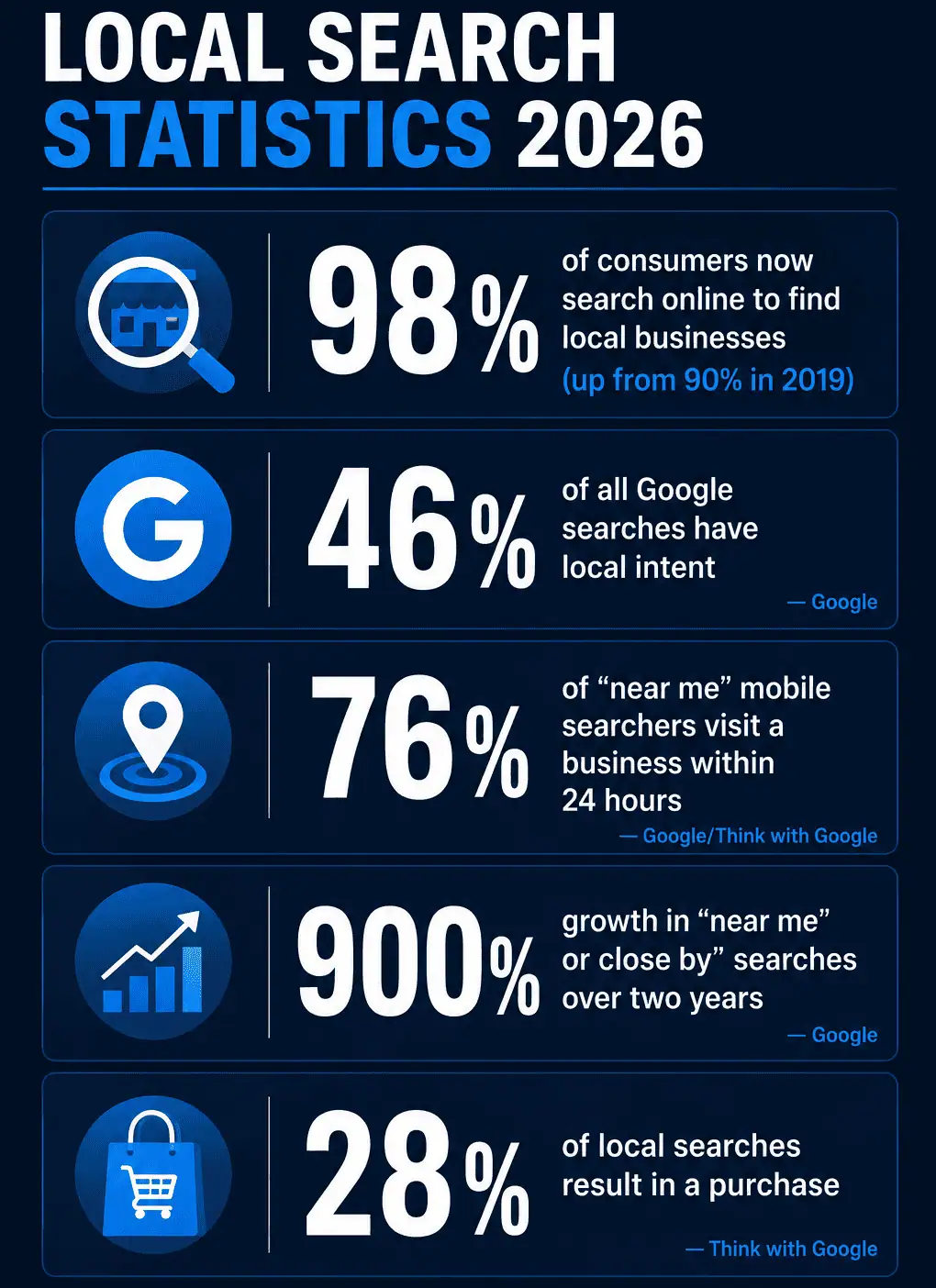
The answer lies in user behavior. Nearly 97% of users discover local businesses online, and in early 2026 alone, “near me” queries with high local search intent hit a 200 million mark monthly. If your company doesn’t pop up in these localized results, you miss opportunities to connect with potential customers who are actively searching for your products or services in their area.
The key to success for a service area business and companies running their operations within a certain territory is creating geo-targeted landing pages. They help keep up with Google algorithms and make it easier for search engines to rank your business for top positions on SERPs. At the same time, they help precisely match search results with user requests based on prominence, proximity, and relevance, thus driving more qualified traffic and improving conversion rates. So, understanding the important parameters for local search will help streamline optimization efforts that have the biggest impact on local rankings.
Crafting efficient landing pages within your local SEO content strategy that will truly perform and convert visitors into loyal customers is a multi-step process that involves more than simply switching between location names.
Local SEO landing pages only make sense when they reach the right audience and meet their needs. So primarily, you should find out who your best local prospects are, what they want, and what actually drives their searches for the products and services you offer. To better understand pain points, problems, frustrations, and priorities of local customers, review and analyze:
This research will help you reveal major regional pain points and build geo personas, highly specific customer profiles for each area to further create relevant content that resonates with locals.
To connect with your audience and attract their attention, you need to speak their language. Run thorough SEO keyword research to identify search terms users actually use when looking for your services in the area. Your aim is not only high-volume keywords but also specific local phrases combined with service terms and geo modifiers, such as city names, neighborhoods, and regional landmarks. Also spot long-tail keywords and more specialized user queries like “the best pet-friendly cafes downtown Portland” that convey user intent in more detail.
Tools like Google Keyword Planner, Serpstat, Ahrefs, and Ubersuggest will help you identify high-traffic, low-competition local terms to make an efficient local keyword list for your exact region and service offer.
Generic and templated content won’t work for local SEO landing pages. They require an original localized copy that will be geo-relevant and match the needs and pain points of the audience in a target location. Notably, combining high-quality content with on-page SEO services helps local landing pages achieve even stronger organic performance.
To prove to visitors and search engines that this page is built for one particular place:
Images reinforce authenticity and relevance and make your business recognizable to locals, further promoting trust and brand awareness. However, this impact can only be achieved with original visuals of your team, completed projects, or storefronts taken in a real environment in the target location. Polished generic photos and stock pictures won’t work. And don’t forget to support your images with geo-specific alt text to improve searchability.
User experience is yet another important aspect you can’t overlook when creating SEO landing pages for different localities. Effective web design for local business landing pages should be simple and accessible, embracing the following elements:
You can implement heatmap tools like Hotjar to analyze how users interact with your page and further refine your layout.
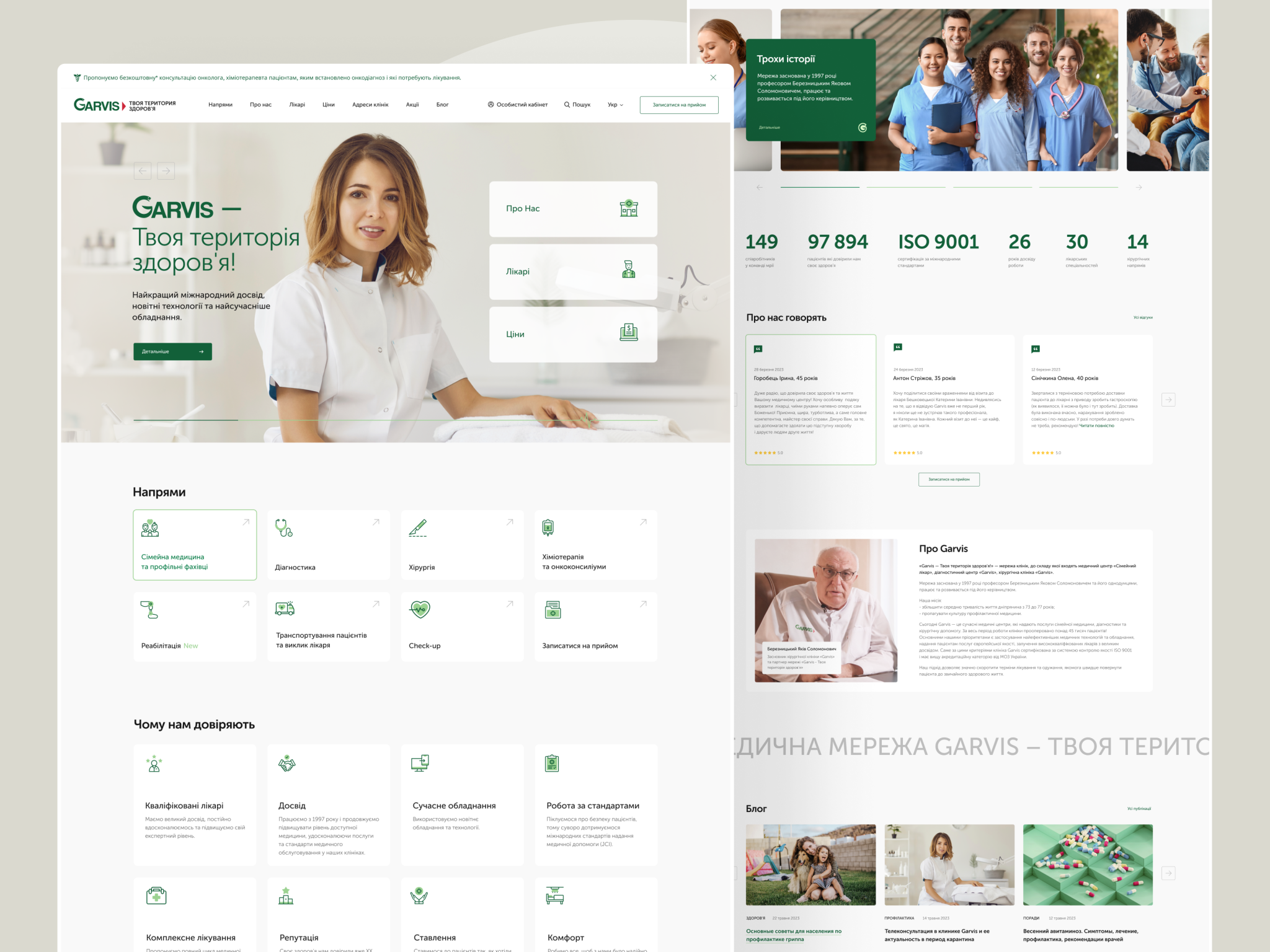
It’s one of the efficient local landing page examples with an easily scannable layout, convenient navigation, proper info block allocations, correct CTA positioning, visible contacts, and great visuals.
A high-performing local landing page should capture attention, provide valuable information, and naturally push visitors to take action. Our specialists know how to create and optimize a local SEO page, so we outlined an optimal local landing page structure that hinges on several key sections or elements.
| Structural Element | Description |
| Engaging headline (H1) | It should mention the target location to establish immediate relevance and be clear, concise, and benefit-driven to grab attention. |
| Hero section | It’s the topmost area of your page that should combine high-quality images of your business, a headline, and an actionable CTA button above the fold like “get a free quote” or “schedule your service now,” and a short tagline highlighting your local expertise. |
| Service or product description | Clearly describe your offer. Emphasize features and benefits that make your service or product stand out. |
| Value proposition | Normally, it’s a “Why choose our company” section displaying unique advantages of the local business. |
| Accurate contact information | Include your company’s NAP in a prominent spot. Place a contact form for quick online inquiries. |
| Social proof | Include real customer reviews, star ratings, and real images of your work or happy customers. |
| Call-to-action (CTA) | Use clear, motivating language and place CTAs strategically at the end of sections, in the sidebar, or as floating buttons for mobile users. |
| Localized FAQs | Address common questions that local customers might have about your services or business. |
| Embedded Google map | Use an interactive Google map, showing your exact location with markers. Add details like nearby landmarks or parking. |
| Special offers and promotions | Highlight localized discounts or time-sensitive deals to encourage immediate action. |
| Trust signals | Certifications, licenses, awards, or security badges for online transactions signalize service quality. |
Landing page optimization means improving the page elements to maximize its impact and increase the number of users who convert. Optimization is an ongoing process of testing and refining to ensure consistently high page performance. Here is how to optimize local landing pages for both user experience and search engines.
Along with conducting local keyword research, using localized content, and adding social proof when creating local SEO landing pages, there are a few more tweaks you can make to improve their visibility and increase their rankings in SERPs:
Local business schema markup is machine-readable code normally added to your page’s backend. A solid local business schema should cover such fields as NAP, business hours, service area, ratings, and reviews. You can also add pricing, payment methods accepted, and geo-coordinates to further enhance the markup.
You can automatically generate the corresponding schema with Google’s Structured Data Markup Helper, while Schema.org will help select properties and formats for building structured data. To verify your schema is working correctly, use Google’s Rich Test Results tool, which is a part of Search Console’s testing suite.
Linking your website data to your GBP and translating your business details into the language search engines and AI systems best understand, local schema helps establish your NAP consistency and increases your chances of winning a place in rich results and AI summaries relying on clear structured data for business descriptions.
A slow-loading page can deter visitors and negatively impact your rankings. One of the effective methods of landing page optimization for advertising and UX is increasing the page speed by:
Once your landing page goes live, you should consistently monitor its performance to identify areas for improvement, adjust your strategies, and maintain the page’s effectiveness. Tools like Google Analytics (GA4) and Google Search Console will let you track metrics such as organic traffic, click-through rates, bounce rates, and conversion rates.
GBP Insights enables analytics for local businesses, tracking actions like calls, website clicks, direction requests, bookings, and messages, showing how users interact with your listings on Google Search and Google Maps. Finally, by tagging the links in your GBP to UTM parameters, you’ll be able to track traffic and conversions from GBP listings against those from paid ads and organic search, all seen in GA4.
Modern digital search keeps changing shape as AI-enabled search engines and LLM assistants keep gaining pace. It’s expected that by 2028, traffic from AI search will outperform that from traditional search, with AI Overviews alone already hitting 2 billion monthly users.
In this realm, quality geo-targeted landing pages become even more important as they serve as a valuable source of information for AI systems that widely rely on well-structured, authoritative, localized content, favoring clear business details (NAP), concise answers, descriptive headings, customer testimonials, FAQs, and well-implemented schema. All of these elements are a part of localized landing pages, proving your business authenticity and worth for location-specific AI queries. This is where GEO promotion in LLM will be helpful for winning a decent place in growing AI searches.
As you expand your business to multiple locations and service areas, you cannot create city landing pages by duplicating the same page and simply switching the location names. To build an effective local SEO content strategy, you should create a separate page for each location with unique content. Speaking of content, under Google’s Spam Policies, the so-called doorway pages built solely for different geographic keywords and stuffed with geo modifiers are considered spam. Hence, to efficiently scale landing pages for multiple locations, create reusable page frameworks and fill them with informative, genuine, and valuable content.
Additionally, businesses serving large metropolitan areas with many smaller districts can rely on a content hub approach, creating a single city-level landing page with useful subcontinent content (blog posts, FAQs, service area notes) that covers specific neighborhoods. This strengthens internal linking and doesn’t look spammy.
To bring the theory together and see how local landing page best practices work in real life, let’s consider examples of efficient location-specific landing pages of two service-based companies.
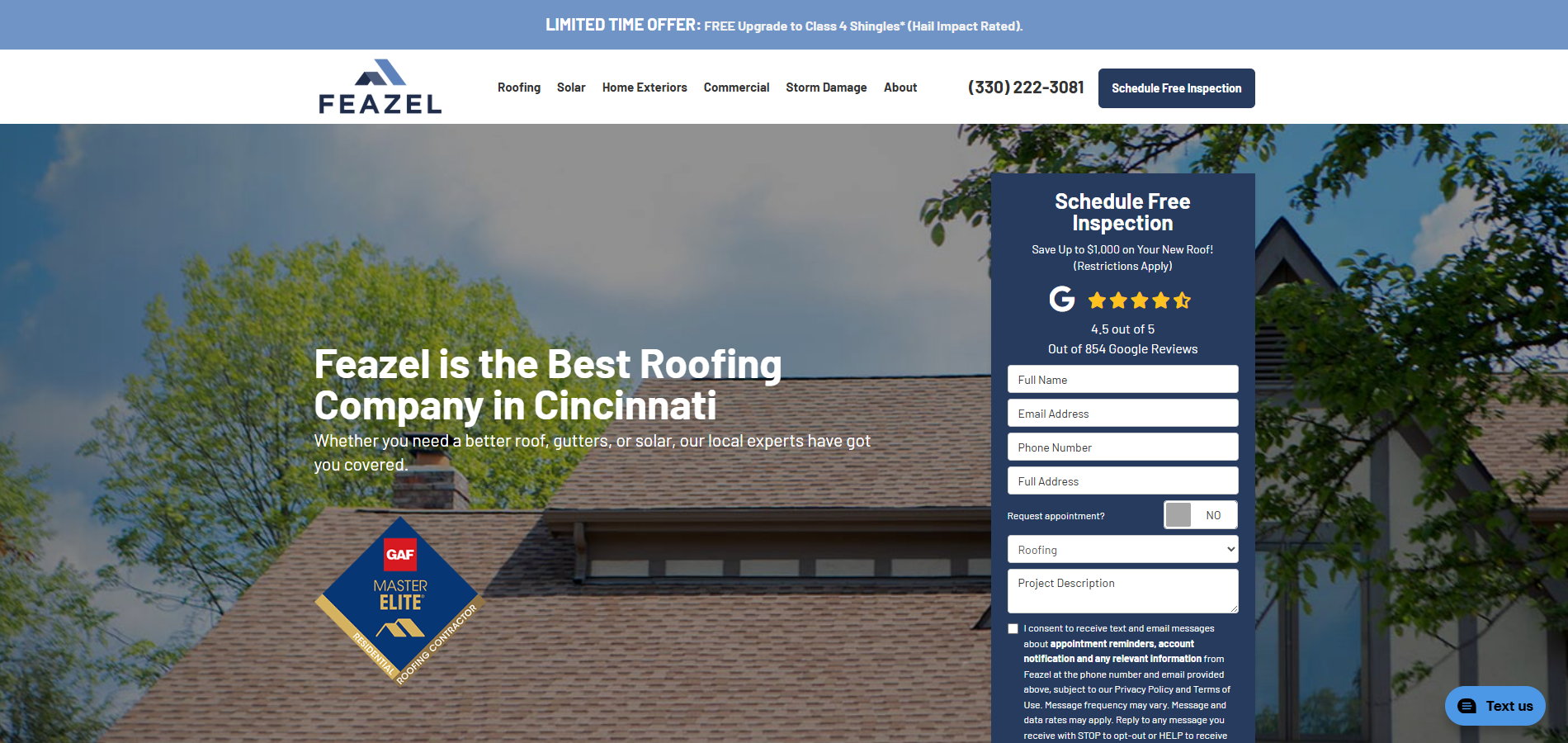
Feazal is a great example of a visually appealing and well-structured local landing page, covering all essentials, such as visible NAP, contact forms, trust signals, real customer reviews, concise yet informative descriptions, completed projects info, an embedded map, and even limited offers. All elements are easily scannable, don’t mess up, and are supported by multiple genuine photos.
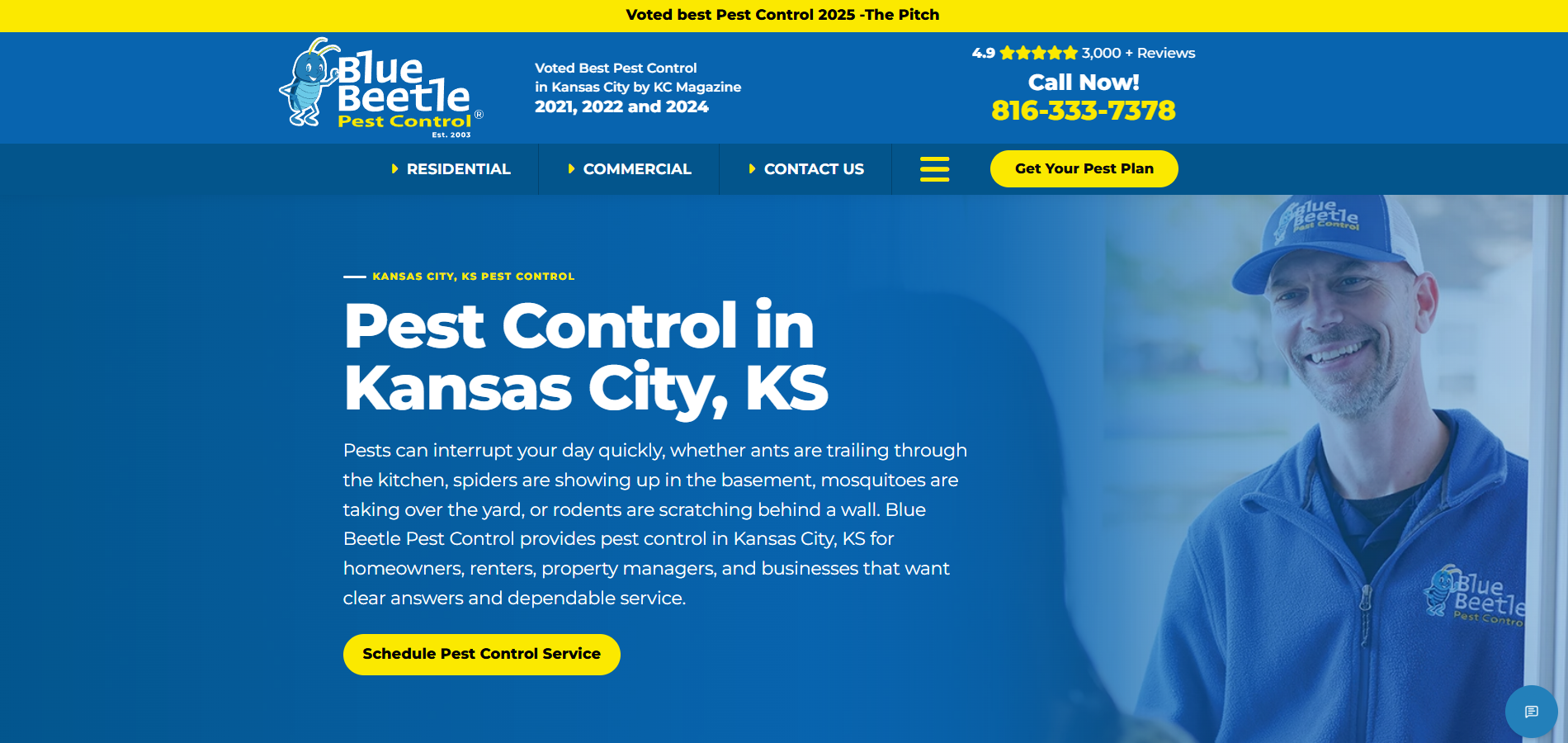
Blue Beattle is yet another well-set local landing page, with less visual appeal and fewer images, yet featuring great content, service descriptions, and an FAQ section built around local seasonal trends and pain points. It’s strengthened with customer reviews, star ratings, and a helpful interactive chatbot.
Other good examples demonstrating how local SEO improvements and a well-implemented local PPC strategy helped strengthen organic visibility and attract more leads across targeted locations are search visibility optimization for STI Garage Door and PPC for Orlando Appliance Repair by Livepage.
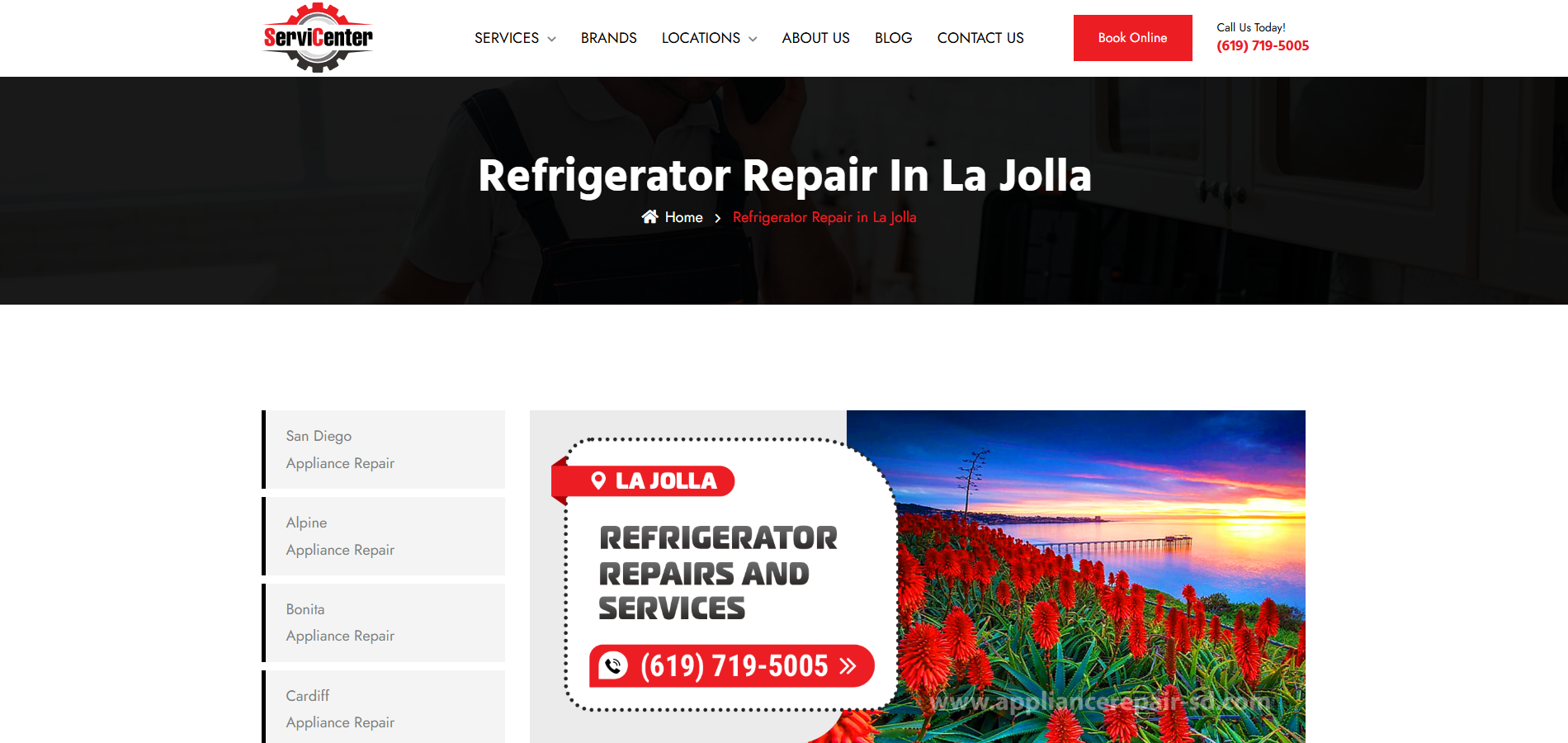
In contrast to the above quality landing pages, ServiCenter is an example of a poor local landing page that lacks trust signals, testimonials, and visuals. Besides, the page content is quite thin, abounding in repetitive phrases and constructions, and stuffed with keywords. The worst part is that the website has quite a few location-based pages, and all of them are nearly identical, looking like mass-produced copy.
Establishing a high-performing local landing page example requires precision and attention to detail. Even small missteps can derail your efforts and lead to missed opportunities. Here are the most common mistakes you should avoid when creating localized landing pages:
At this point, it’s clear that localized landing pages are not just a marketing tool. They are a direct bridge between your business and local customers, capturing their attention, building connections, gaining leads, and winning loyal clients.
Here is an optimization list in a nutshell for efficient local landing pages:
If you need help in ensuring your business stands out in local search results, contact Livepage today, and we’ll make sure your local customers will find you.
The math here depends on your business structure. Normally, you need a single page for each city or area you actively serve. Multiply this by the number of core services you provide. If you also have physical storefronts, each of them requires a separate location-related page as well.
A service page describes your offer in general, irrespective of the location. A local landing page will tie your offer to a particular service area.
You might see first improvements in about 4 to 8 weeks, yet meaningful results are achieved in 3 to 6 months. The final timing will depend on your domain authority and niche competitiveness.
It can, yet it’s not recommended, since the page will lack its local relevance for local searches. For the best SEO and GEO performance, create a dedicated, duly optimized landing page for each major city or service area.


“Livepage has proven to be a reliable source for rapid online growth. We started with 2,000 visitors per month. In 3 years together with Livepage we have reached 70,000 visitors and more than 100 leads from the site per month.”


“As for the results, we’ve been working together since 2015, and our traffic has increased 10x. I cannot say that Livepage was our first SEO company, but they have become the first SEO partner that helped us to achieve the success we were looking for.”


“Livepage delivers SEO efforts that have led to an increase in the site’s users, traffic, and conversions. The team uses a wide range of tools to achieve the client’s goals. They are attentive to the client’s needs, working with them in real-time and bringing in additional specialists when needed.”


“I am pleased with the quick task execution and the instant replies to my messages.”


“I like the complex approach that the Livepage team offers. Absolutely all team members work together; everyone is aware of what is happening on the project. We have one common goal – to increase our service sales, and the team is making every effort to achieve the goal as soon as possible.”


“We’ve been really impressed by how Livepage quickly understood our business and centred our PPC campaign around our objectives. We have achieved good results within a very short time in both revenue and ROI.”


“Everything is clear, timely, and understandable.”


“They have leveraged ideal opportunities to reach our business goals.”